


| Received: May 24 2022; Accepted: June 20 2022 |
Traumatization and victimization experiences are significantly associated with the frequency and severity of symptoms and psychiatric disorders that affect the transgender population.1
An instrument developed in 1995 by Pilkington and D'Augelli2 evaluated the frequency of victimization experiences in young LGBT individuals throughout life. The questionnaire, called the 10-Item Victimization Scale, is composed of 10 items that evaluate the number of times an individual has suffered specific forms of victimization (verbal insults, threats of physical violence, physical or sexual aggression, persecution, material damage, etc.) due to the fact that the individual was or was considered to be LGBT.
The objective of this study was to describe the process of transcultural adaptation into Brazilian Portuguese and validation of the 10-Item Victimization Scale, so that it may be utilized in clinical and research contexts in our population of transgender individuals.
The first phase was transcultural adaptation, outlined according to the orientations proposed by Beaton et al.3 The scale underwent an English-Portuguese translation process - performed independently by two bilingual, native Brazilian translators - and a two-person back-translation team who had no prior knowledge of the original version. Both Portuguese and English synthesized versions created in the earlier phases were submitted to an expert committee of nine professionals (four bilingual translators, a nurse, and four psychiatrists) responsible for evaluating semantics, idiomatic expressions, and cultural and conceptual equivalence. Afterward, a test of the pre-final version was performed on five transgender individuals. Finally, a last meeting took place to discuss the pre-test results and obtain the final version of the questionnaire, which was sent for author approval.
The fact that the original authors approved the resulting merged version (back-translation) shows that the employed methodology was adequate. In the second phase, validation, the scale was applied to 51 transgendered individuals linked to Espaço Trans (Trans Space), a clinic of the Hospital das Clínicas da Universidade Federal de Pernambuco - Clinics Hospital (HC/UFPE), between April and July 2019. It was a non-probabilistic, convenience sample. Individuals over 18 years of age of both sexes were included after granting written informed consent.
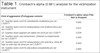
In reliability analysis, Cronbach's alpha was 0.861 (varying between 0.837 and 0.860), even when one of the questions was removed (Table 1). These coefficients were similar in magnitude to those reported in other reliability analyses, such as those of Mustanski and Liu (a = 0.87) and Birkett et al. (a = 0.86).4,5 Therefore, the values obtained in our study with the validated instrument are similar to those observed in the original questionnaire in English.
| Kind of aggression (Portuguese version) | Cronbach's alpha value if the item is dropped |
|---|---|
| Q1. Quantas vezes você foi verbalmente insultado(a) por ser L/G/B/T? | 0.860 |
| Q2. Quantas vezes você foi ameaçado(a) com violência física por ser L/G/B/T? | 0.837 |
| Q3. Quantas vezes jogaram um objeto em você por ser L/G/B/T? | 0.839 |
| Q4. Quantas vezes o(a) esmurraram, chutaram ou espancaram por ser L/G/B/T? | 0.840 |
| Q5. Quantas vezes você foi ameaçado(a) com uma faca, arma de fogo ou outro tipo de arma por ser L/G/B/T? | 0.840 |
| Q6. Quantas vezes você foi atacado(a) sexualmente por ser L/G/B/T? | 0.860 |
| Q7. Quantas vezes alguém ameaçou contar a alguém que você é L/G/B/T? | 0.856 |
| Q8. Quantas vezes alguém perseguiu ou seguiu você por ser L/G/B/T? | 0.853 |
| Q9. Quantas vezes você teve sua propriedade danificada por ser L/G/B/T? | 0.844 |
| Q10. Quantas vezes você já foi cuspido(a) por ser L/G/B/T? | 0.851 |
The 10-Item Victimization Scale adapted to Brazilian culture has produced results that indicate satisfactory equivalence to the U.S. version and suggest that it is a reliable, user-friendly option for evaluating victimization in the Brazilian transgender population.
ACKNOWLEDGMENTS
The authors would like to thank Dr. Anne Michelle Birkett for the support and suggestions throughout this work.
 PDF
 Print
 Send this article by email
 How to cite this article
 Submit a comment
 Mendeley
 Pocket
 Share on Facebook
 Share on Twitter