


FIGURES
| Received: March 21 2023; Accepted: April 06 2023 |
Autophagy is a vital intracellular biological process that enables cells to recycle their own components. This evolutionarily conserved mechanism was first discovered in 1963 and has since become a topic of intense research. In 2016, Yoshinori Ohsumi received the Nobel Prize for identifying the genes involved in autophagy. This process is critical for maintaining cellular homeostasis, especially in conditions of stress or nutrient deprivation, and helps remove damaged organelles, misfolded proteins, and other cellular wastes that can cause cell dysfunction. In neurodegenerative diseases and certain types of dementia,1 the buildup of toxic proteins and cellular waste products can cause cell death, inflammation, and tissue damage.
Recent research has shown that autophagy also plays a crucial role in mood disorders such as depression.2 Chronic depression is associated with reduced hippocampal volume,3 and alterations in hippocampal function are linked to age-related cognitive decline and psychiatric disorders.3 In a recent study, the fast-acting antidepressant ketamine induced autophagy and inhibited inflammation in the brain, resulting in decreased oxidative stress and neuroprotection.4
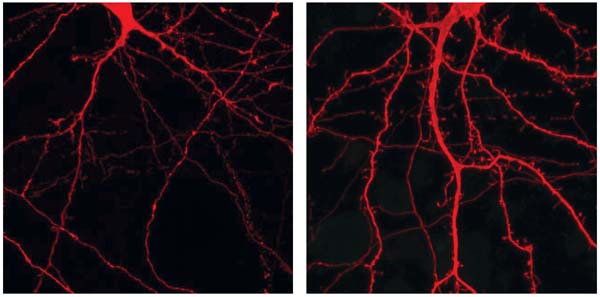
Growth differentiation factor 11 (GDF11) is a molecular target that has recently gained attention in psychiatric disorders. Supplementation with recombinant GDF11 has been shown to induce both olfactory and hippocampal neurogenesis and improve cerebral vasculature in aged mice (Figure 1).5,6 In a recent study published in Nature Aging, Moigneu et al. found that systemic administration of GDF11 improved the depression-like phenotype associated with aging and reversed memory decline in aged mice.7 Direct infusion of GDF11 into the brain had the same outcome. Additionally, GDF11 administration had an antidepressant effect on mice with induced depressive-like symptoms.7 The researchers also measured circulating GDF11 levels in the blood of young adults with MDD and found a decrease compared to healthy controls.7
Moigneu et al. also showed that GDF11 stimulates autophagy via inhibition of mTOR, and that this mechanism of action is necessary for GDF11-mediated enhancement of neuronal activity to occur.7 These findings point to a common mechanism that might be shared by food deprivation, rapamycin treatment, or physical exercise, and suggest the exciting possibility of a new class of neuronal autophagy-based treatments in psychiatry, to rival the serotonergic class of antidepressants. Further research is needed to examine the potential clinical implications of these findings and the long-term effects of GDF11 on neurogenesis.
 PDF
 Print
 Send this article by email
 How to cite this article
 Submit a comment
 Mendeley
 Pocket
 Share on Facebook
 Share on Twitter