



ABSTRACT:
OBJECTIVE: To conduct a thorough examination of the current understanding of the effect of maternal
depression exposure on the executive functions (EFs) of offspring.
METHODS: Following the Preferred Reporting Items for Systematic Review and Meta-analyses (PRISMA)
statement, a comprehensive search for peer-reviewed cohort studies was performed on
the MEDLINE (via PubMed), ScienceDirect, LILACS, PsycINFO, and SciELO databases. Study
quality was assessed using the National Heart, Lung, and Blood Institute (NHLBI) Quality
Assessment Tool for Observational Cohort and Cross-Sectional Studies. The evidence
was evaluated using the Grading of Recommendation, Assessment, Development, and Evaluation
framework.
RESULTS: Thirty-three cohort studies from different countries, enrolling a total of 38,981
participants, were analyzed. Twenty-four studies confirmed the hypothesis of a harmful
effect of maternal depressive symptoms on offspring EF. However, high heterogeneity
among studies was found, and meta-analysis was not feasible. Fetal programming, genetics,
and parental practices have been identified as potential mechanisms that can affect
the EFs of children born to mothers who have experienced depressive symptoms.
CONCLUSION: Our findings suggest a negative association between maternal depressive symptoms and
offspring EF. Further studies on the effects of chronicity/severity of maternal symptoms
and changes in EFs in different sensitive periods are needed.
REGISTRATION NUMBER: PROSPERO CRD42020221193.
Keywords: Maternal health; executive control; cohort studies.
FIGURES
| Received: June 06 2023; Accepted: January 10 2024 |
INTRODUCTION
Maternal depression refers to non-psychotic major depressive episodes occurring during pregnancy or the entire first postpartum year.1,2 Globally, approximately 17% of women who give birth experience this condition, with rates ranging from around 15% in high-income countries to as high as 20% in low-income countries.3 Such depressive states render mothers more vulnerable to reduced emotional involvement and diminished positive affect. These effects extend to their relationship with their children, resulting in impaired communication and affection, alongside heightened hostility and irritability.4-7 Disruptions in the mother-child relationship during early life can have an impact on the child's brain development and may increase the child's levels of stress hormones.8,9 Consequently, these effects have the potential to influence the child's long-term neurobehavioral development and overall well-being.10,11 The chronic stress and emotional instability associated with maternal depression can potentially affect the neural pathways underpinning executive functions (EFs).12
EFs are a set of control mechanisms that module the operation of various cognitive subprocesses and regulate goal-directed behavior.13-15 Despite variation in definitions,16,17 EFs are broadly construed to include three subcomponents: inhibition, working memory, and cognitive flexibility.18,19 The development of EFs is intricately linked to both neurodevelopment and social growth throughout childhood and adolescence.20-22 Age-related improvement in measures of EF reflects individual experiences and acquisition of knowledge, beliefs, and values.23 EFs predict a wide range of outcomes in mental, social, and physical health in early life and adulthood, with lifelong impact.18,24,25 Adequate development of EF is associated with higher academic and professional achievement.26,27 Conversely, inadequate EF development is associated with higher odds of engaging in high-risk behaviors, such as addiction and violence.28-31 Exposure to highly stressful environments in childhood has been shown to be associated with deficits in EFs such as working memory, attention, and inhibitory control development.32
Examining the impact of maternal depressive symptoms on EF from the perspective of cohort studies not only aids in comprehending child development but also provides insights into implications for individuals' long-term well-being and success as they face challenges along the life course. Cohort studies are the most robust form of medical research after experiments such as randomized controlled trials, and the most appropriate designs to study this relationship.33
In a meta-analysis published in 2021, Power et al.34 comprehensively examined the prevalence and impact of maternal depression during pregnancy and the first year postpartum. Their analysis included 26 cohort studies and found a small, statistically significant relationship between perinatal depression and child EF (effect size r = 0.07; 95%CI 0.03 to 0.10).
This systematic review aims to provide a more comprehensive and updated synthesis of the available literature and to broaden its scope by not imposing restrictions on the timing of assessment of symptoms of maternal depression. Our specific objectives include: to describe and compare the findings of cohort studies that explore the association between maternal depression symptoms and offspring EF; to assess the quality of these studies using standardized tools for cohort study evaluation; and to discuss the limitations of these studies and future perspectives.
METHODS
Design
This is a systematic review of cohort studies. The protocol was registered with the University of York Centre for Reviews and Dissemination (CRD) international prospective register of systematic reviews (PROSPERO) (record CRD42020221193) and the study was carried out in accordance with the 2020 version of the Preferred Reporting Items for Systematic Review and Meta-analyses (PRISMA) statement.35
Systematic search
We searched the following databases from inception to August 20, 2023: MEDLINE (via PubMed), ScienceDirect, LILACS, PsycINFO, and SciELO.
The final search query was developed for use in PubMed and then adapted for the other databases (Supplementary Table S1), as follows: maternal depression: maternal depression OR maternal depression trajectories OR maternal depression trajectory OR depression symptomatology, OR perinatal depression OR postpartum depression OR depression pregnancy; development: cognitive development OR child development OR executive function development OR adolescent development; EFs: executive functions OR executive function OR working memory OR inhibitory control OR cognitive control OR executive function attention-related OR attention-related, executive function OR cognitive flexibility OR self-regulation OR cognitive function. These search terms were combined in the following rule: 1 AND (2 OR 3).
In addition, we conducted a hand search of the reference lists of the selected articles to identify potential studies of interest missed by the original query.
Selection of articles
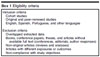
Eligibility criteria are described in Box 1. The selection of relevant studies, based on titles and abstracts, was carried out in the Rayyan app,36 independently by two authors (JSR and ABB). Any disagreements were resolved by consulting a third author (AM). Duplicates identified through the electronic databases were manually checked and removed. Finally, the full articles were retrieved. Interobserver variability was calculated using Cohen's kappa coefficient (k).
Data extraction
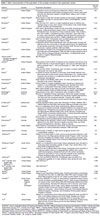
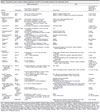
Data extraction was carried out independently by two authors (JSR and ABB); again, any disagreement was resolved by consulting a third author (AM). To extract the most relevant information, we created a data extraction sheet including 24 items grouped into six categories: 1) study description; 2) population characteristics; 3) exposure characteristics; 4) main outcomes; 5) results, including information regarding control for potential confounding factors and mediation analysis; and 6) conclusion. The extracted data are available at <https://osf.io/32ez8/>. This checklist was applied by JSR, and information was reviewed by AM. Table 1 37-69 lists the main characteristics of the population under study; Table 2 includes information on measurement tools used to evaluate maternal depression and EFs. Supplementary Table S2 provides detailed information on statistical analyses, main outcomes, and limitations.
| Inclusion criteria |
| Cohort studies |
| Original and peer-reviewed studies |
| English, Spanish, Portuguese, and other languages |
| Exclusion criteria |
| Overlapped extracted data |
| Books, conference papers, theses, and articles without available full text (conferences, editorials, author responses) |
| Non-original articles (reviews and analyses) |
| Articles with different exposures or outcomes |
| Non-compliance with study objectives |
| Authors | Country | Population description | Sample size |
|---|---|---|---|
| Comas37 | United States | Prospective cohort of primiparous adolescent mothers, which were recruited during their last trimester of pregnancy from various community services and resources located in South Bend, Indiana, and in Aiken, South Carolina. | 165 |
| Hughes38 | United Kingdom | Study based on data from groups residing in low-income neighborhoods and support groups for young mothers within Cambridgeshire, United Kingdom. | 126 |
| Rhoades39 | United States | Data from the FLP, which is a large longitudinal study of children and families living in rural, lower income communities in the United States (North Carolina and Pennsylvania). | 1,155 |
| Priel40 | United Kingdom | Birth cohort representing a large low-risk community (excluding cases of poverty, single parenthood, preterm birth, or teenage motherhood). Participants were recruited from three maternity wards. Only mothers who were healthy, completed secondary education, were older than 21 years, were married or cohabiting, earning above the poverty line, and whose infants were full-term, healthy singletons were included. | 900 |
| Lagasse41 | United States | Data from the MLS. Participants were recruited postpartum at four participating hospital sites from 1993 to 1995. | 1,388 |
| Dhaliwal42 | Canada | Prospective cohort whose participants were recruited either through self-referrals from the community or through referrals from the departments of reproductive psychiatry and family medicine at BC Women's Hospital, Vancouver, Canada, between 2003 and 2009. | 118 |
| Faleschini43 | United States | Study based on Project Viva, a prospective pre-birth cohort study of mother and child pairs enrolled between 1999 and 2002 at initial prenatal visits at Atrius Harvard Vanguard Medical Associates, a multispecialty group practice in eastern Massachusetts. | 1,225 |
| Gueron-Sela44 (sample overlapped with Rhoades39) | United States | See Rhoades.39 | 1,037 |
| Jensen45 | United Kingdom | Study based on the ALSPAC. Pregnant women residing in the former Avon Health Authority in South West England, who had an estimated date of delivery between April 1, 1991 and December 31, 1992, were included in the study. | 6,979 |
| Oh46 | Korea | Data from the PSKC. Participants were recruited in medical institutes nationwide from April to July 2008. | 1,191 |
| Rinne47 | United States | A subset of women recruited to Community Child Health Network from three study sites (Lake County, Illinois; Washington, D.C.; Eastern North Carolina) who enrolled in a longitudinal follow-up study of the child's subsequent development. | 125 |
| Hermansen48 | Norway | Study based on the MoBA, NIPH 2010, for which participants were recruited in the period 1999-2008. | 103 |
| Poehlmann49 | United States | Cohort nested in a larger longitudinal study, focusing on infants born preterm or low birthweight. Participants were recruited from three NICUs in southeastern Wisconsin between 2002 and 2005. | 172 |
| Wade50 | Canada | Birth cohort located in the cities of Toronto and Hamilton. Women were recruited between 2006 and 2008 through a program called HBHC. | 501 |
| Berthelsen51 | Australia | Study based on the LSAC. Participants were recruited in 2004. | 4,819 |
| Vänskä52 | Finland | Married or cohabiting Finnish Caucasians. Half of the sample included couples with history of infertility and successful assisted reproduction; the other half had conceived naturally. Couples with multiple pregnancies were excluded, and only women older than 25 years of age were included. | 360 |
| El Marroun53 | Netherlands | Ongoing population-based cohort (the Generation R Study). Mothers with a delivery date from April 2002 until January 2006 were enrolled in the study. | 5,883 |
| Weikum54 | Canada | Part of a longitudinal cohort study examining the effects of prenatal exposure to selective serotonin reuptake inhibitors and maternal mood disturbances. Participants were physician-referred or self-referred from the Reproductive Mental Health Clinic at BC Women's Hospital and Health Centre, community midwife clinics, or family physician practices in the greater Vancouver metropolitan area. | 57 |
| Ross55 | Canada | Study based on a subsample of maternal-child pairs enrolled in the APrON prospective cohort recruited between 2009 and 2012 in Alberta, Canada. | 625 |
| Plamondon56 | Canada | Study based on the Hamilton, Ontario cohort. Participants in Hamilton were referred from the SJHC Women's Health Concerns Clinic and SJHC Ultrasound Department, Hamilton, Ontario, Canada. | 236 |
| Buss57 | United States | Study based on a prospective cohort study. Women were recruited early in pregnancy for study participation between 1998 and 2002. | 89 |
| Neuenschwander58 | Canada | Cohort study of middle- to high-income pregnant women from southwestern Canada. | 107 |
| Hutchison59 | Canada | Based on a cohort study in which women were physician-referred or self-referred from the Reproductive Mental Health Program at BC Columbia Women's Hospital and Health Centre, family physician practices, and community midwife clinics in the Vancouver Metropolitan area in British Columbia, Canada. | 191 |
| Rotheram-Fuller60 | South Africa | Based on a prospective cohort study whose participants were recruited in three peri-urban townships outside of Cape Town, South Africa, from May 2009 to September 2010. | 1,119 |
| Nolvi61 | Finland | Data from the FinnBrain Birth Cohort Study. Participants were recruited at maternal welfare clinics of a geographically defined area, which performed pregnancy ultrasound scans for the women eventually referred to give birth at Turku University Hospital in the Southwest Finland Hospital District and the Åland Islands in Finland. | 304 |
| Hackman62 | United States | Data from the NICHD SECCYD. Participants were recruited from designated hospitals at 10 data collection sites during the year 1991. | 1,364 |
| Yan63 (sample overlapped with Hackman62) | United States | See Hackman.62 | 1,364 |
| Ku64 (sample overlapped with Hackman62) | United States | See Hackman.62 | 1,364 |
| Wang65 | United States | See Hackman.62 | 1,364 |
| Baker66 | United States | Based on the Head Start FACES study. FACES used children and families recruited from the 2007 to 2008 Head Start PIR, which included 2,600 Head Start programs in the 50 U.S. states and the District of Columbia. | 3,349 |
| Familiar67 | South Africa, Malawi, Uganda, and Zimbabwe | Data from IMPAACT P1104S, an observational longitudinal study of three cohorts of children enrolled between 5 and 11 years of age conducted at six research sites: South Africa (Wits RHI Shandukani Research Centre in Johannesburg, Perinatal HIV Research Unit in Soweto, and Family Clinical Research Unit in Cape Town), Malawi (University of North Carolina Project at Kamuzu Central Hospital in Lilongwe), Uganda (Makerere University - Johns Hopkins University Clinic Mulago National Referral Hospital in Kampala), and Zimbabwe (Parirenyatwa General Hospital in Harare). | 611 |
| Feng68 | China | Based on a prospective cohort study whose participants were recruited at birth in the Haidian Maternal and Child Health Hospital and Peking University Third Hospital from December 2012 to November 2014. | 176 |
| Yu69 | United States | The participants consisted of 414 mothers from a secondary analysis using data from the 18-year follow-up from the New Mothers' Study in Memphis, Tennessee. | 414 |
ALSPAC = Avon Longitudinal Study of Parents and Children; APrON = Alberta Pregnancy Outcomes and Nutrition; FACES = Family and Child Experiences Survey; FLP = Family Life Project; HBHC = Healthy Babies Healthy Children; IMPAACT = International Maternal Pediatric Adolescent AIDS Clinical Trials Network; LSAC = Longitudinal Study of Australian Children; MLS = Maternal Lifestyle Study; MoBA = Norwegian Mother and Child Cohort Study; NICHD SECCYD = National Institute of Child Health and Development Study of Early Child Care; NICUs = neonatal intensive care units; NIPH = Norwegian Institute of Public Health; PIR = Program Information Report; PSKC = Panel Study on Korean Children; SJHC = St. Joseph's Health Center.
| Maternal depression | EFs | |||
|---|---|---|---|---|
| Authors | Instruments | Time point(s) of assessment (child's age as reference) | Instruments | Time point(s) of assessment(child's age as reference) |
| Prenatal | ||||
| Hermansen48 | BDI-II | 3rd and 7th months of pregnancy | NEPSY-II (Statue Subtest), ANT | 5 and 6 years |
| El Marroun53 | BSI | 20.6 weeks of pregnancy | BRIEF-P, NEPSY-II (attention and executive functioning) | 4 and 7 years |
| Prenatal and postpartum | ||||
| Buss57 | CES-D, BDI | 2nd trimester of pregnancy, 6-9 years | Flanker task, Sequential Memory task | 6-9 years |
| Weikum54 | HAM-D | 3rd trimester of pregnancy, 6 years | Hearts & Flowers task | 6 years |
| Jensen45 | EPDS | 8th month of pregnancy, 2 and 8 months postpartum, 1 year and 9 months, 3 year and 9 months | TEAch | 8 years |
| Plamondon56 | EPDS | 3rd trimester of pregnancy, 6 months postpartum | CANTAB, ECBQ | 1 year and 6 months, 4 years |
| Vänskä52 | GHQ-36,72 BDI | 2nd trimester of pregnancy, 2 and 12 months postpartum | FTF | 6 and 7 years |
| Neuenschwander58 | HAM-D | 3rd trimester of pregnancy, 6 years | Hearts & Flowers task | 6 years |
| Nolvi61 | EPDS | 14th, 24th, and 34th gestational weeks, 6 months postpartum | Delayed Response task | 8 months |
| Rotheram-Fuller60 | EPDS | 2 weeks postpartum, 6, 18, and 36 months | Executive Function Battery | 3 years |
| Hutchinson59 | EPDS, BDI, HAM-D | 2nd and 3rd trimester of pregnancy, 6 months postpartum, 3 and 6 years | BRIEF | 6 years |
| Faleschini43 | EPDS | Mid-pregnancy, 6 and 12 months postpartum | BRIEF | Mid-childhood |
| Oh46 | K6 | 9 months of pregnancy, 6 months postpartum, 1 and 2 years | EFDSQ | 7 years |
| Dhaliwal42 | HRSD | 6th and 9th months of pregnancy, 6 years | BRIEF | 6 years |
| Ross55 | EPDS | 2nd and 3rd trimesters of pregnancy, 3 months postpartum | BRIEF-P | 2 years |
| Rinne47 | EPDS, CES-D | 2nd and 3rd trimesters of pregnancy, 3 months postpartum | Dimensional Change Card Sort task, Flanker Inhibitory Control-Attention task | 5 years |
| Postpartum | ||||
| Poehlmann49 | CES-D | At discharge, 4, 9, 16, 24, and 36 months postpartum | Snack Delay, Gift Bag Towers, Shapes Walk-a-Line Slowly Whisper | 2 and 3 years |
| Rhoades39 | BSI-18 | 1 and 7 months postpartum | Simon task, Flexible Item Selection Span-type Working Memory | 3 years |
| Hughes38 | BDI | 2-4 and 6 years | Beads Working Memory task, Day-Night Game, Tower-of-London task | 2 and 6 years |
| Comas37 | BDI | 3, 5, 8, 10 years | D-KEFS, TEA | 18 years |
| Hackman62 | CES-D | 1 month postpartum | WJ Psychoeducational Battery - Revised, Tests of Cognitive Ability, Tower of Hanoi task | 4 years and 6 months, 1st, 3rd, and 5th grade |
| Yan63 (sample overlapped with Hackman62) | CES-D | 6 months postpartum, 1 year and 3 months, 2 and 3 years, 4 years and 6 months, 6 years | CPT, CBQ | 4 years and 6 months |
| Lagasse41 | BDI, BSI | 4 and 30 months postpartum, 4 years, 5 years and 6 months, 9, 11, and 13 years | Delay of Gratification task, Prohibition task, TOVA, CANTAB | 5, 9, and 13 years |
| Wang65 (sample overlapped with Hackman62) | CESD | 6 and 15 months postpartum, 2 and 3 years, 4 years and 6 months | CPT, Memory for Sentences Subtest from the WJ Psychoeducational Battery, Tower of Hanoi task | 1st grade |
| Berthelsen51 | K6 | 4 and 5 years | Cogstate Assessment Battery | 14-15 years |
| Wade50 | CES-D | 2 months postpartum | Bear/Dragon, DCCS | 4 years |
| Feng68 | EPDS | 3 days postpartum, 8 months postpartum | Working memory and Inhibition task, Two-Cup task, Three-Cup task, Planning test | 8 months |
| Gueron-Sela44 (sample overlapped with Rhoades39) | BSI-18, CES-D | 6, 15, and 24 months postpartum | Working Memory Span, Pick-the-Picture Game, Silly Sounds Stroop, Spatial Conflict, Animal Go/No-Go, Something is the Same Game | 3 and 4 years |
| Baker66 | CES-D | 1st year postpartum | Pencil-tapping task | 5 years |
| Priel40 | SCID and DSM-IV Axis I Disorders | 6 and 9 months postpartum, 6 and 10 years | CANTAB | 10 years |
| Familiar67 | HSCL-25 | At discharge, 8 months, 2 years | BRIEF | 7.2 years |
| Ku64 (sample overlapped with Hackman62) | CES-D | 6 months postpartum, 1 year and 3 months, 2 and 3 years, 4 years and 6 months, 1st, 3rd, and 5th grades | Tower of Hanoi task | 1st, 3rd, 5th grades |
| Yu69 | RAND MHI | 2 years | Digital Span task, Attention Sustained Subtest of the Leiter, International Performance Scale, Gambling task | 6 and 18 years |
ANT = Attentional Network task; BDI = Beck Depression Inventory; BRIEF = Behavior Rating Inventory of Executive Function; BRIEF-P = Behavior Rating Inventory of Executive Function - Preschool version; BSI = Brief Symptom Inventory; CANTAB = Cambridge Neuropsychological Test Automated Battery; CBQ = Children's Behavior Questionnaire; CES-D = Center for Epidemiological Studies Depression; CPT = Continuous Performance Test; DCCS = Dimensional Change Card Sort; D-KEFS - Delis Kaplan Executive Functioning System; ECBQ = Early Childhood Behavior Questionnaire; EFDSQ = Executive Function Difficulty Screening Questionnaire; EFs = executive functions; EPDS = Edinburgh Postpartum Depression Scale; FTF = Five to Fifteen; GHQ = General Health Questionnaire; HAM-D = Hamilton Depression Rating Scale; HRSD = Hamilton Rating Scale for Depression; HSCL-25 = Hopkins Symptom Checklist; K6 = Kessler Psychological Distress Scale; MHI = Mental Health Inventory; TEA = Test of Everyday Attention; TEAch = Test of Everyday Attention for Children; TOVA = Test of Variables of Attention; WJ = Woodcock-Johnson.
Assessment of reporting quality
The National Heart, Lung, and Blood Institute (NHLBI) Quality Assessment Tool for Observational Cohort and Cross-Sectional Studies was used to assess the reporting quality of the studies.70 This tool is a critical appraisal instrument designed to evaluate the quality of cohort studies, including population description/recruitment, sources of bias (e.g., attrition), confounding, study power, and strength of causality in the association between exposure and outcome. It consists of 14 items with three possible answer categories: yes, no, or cannot determine/not applicable/not reported. Studies were categorized as good if they addressed 80% or more of the required items, fair if they covered between 60 and 80% of the items, and poor if they addressed less than 60% of the required items.
Two coauthors (JSR and ABB) applied the tool and rated the articles independently. According to NHLBI recommendations, studies were evaluated comprehensively, based on the details reported and strategies adopted to minimize bias. Any disagreements between the reviewing coauthors were resolved by a third researcher (AM).
Assessment of certainty in evidence
Meta-analysis was unfeasible because of the high heterogeneity found among studies. To assess the accuracy of the evidence collected, a summary of the limitations in study design (risk of bias), inconsistency of results, indirectness of evidence, and imprecision was created using the Grading Quality of Evidence and Strength of Recommendations (GRADE) framework for systematic reviews.71
RESULTS
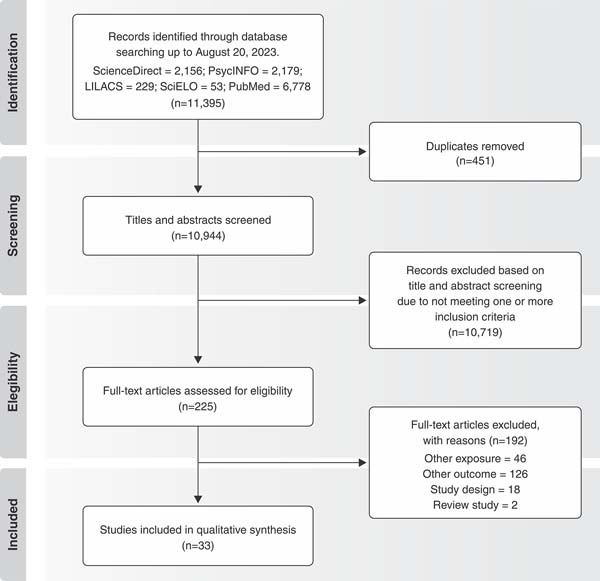
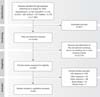
Using the search criteria described above, 11,395 references were retrieved (2,156 from Science Direct, 2,179 from PsycINFO, 229 from LILACS, 53 from SciELO, and 6,778 from PubMed), of which 451 duplicates were removed. After evaluation of titles and abstracts, 10,719 records were discarded. We retrieved and analyzed a sample of 226 articles for full-text reading and rejected 192. Thus, 33 articles were ultimately included in this review (Figure 1). Assessment of study quality was carried out by two authors (JSR and ABB), with high interobserver agreement (k > 90%). Disagreements were resolved by a third author (AM).
The main characteristics of the study populations included in our review are shown in Table 1. All studies were published between 2010 and 2022. Sample sizes ranged from 57 to 6,979 participants. Most studies were conducted in the general population, with exception of Comas et al.,37 Hughes et al.,38 and Rhoades et al.39 which used cohorts from low-income communities, and Priel et al.,40 whose cohort that included only low-risk families, excluding cases of poverty, single parenthood, preterm birth, or teenage motherhood. Notably, with the exception of Lagasse et al.,41 the samples under examination primarily consisted of mothers living with partners; the mean (SD) age was 30.84 (5.18) years. Only nine studies described inclusion and/or exclusion criteria.37-39,42-47
The study populations were geographically distributed as follows: 21 studies were conducted in North America, seven in Europe, two in Africa, two in Asia, and one in Oceania, as illustrated in the Supplementary Figure S1.
Five studies incorporated variables related to the child's father, grandmother, and teacher. For instance, two studies included paternal educational level and age as covariates.48,49 Another study evaluated the mother's history of cumulative risk as a covariate, operationalized as the grandmother's experience of adversities during her own motherhood.50 Berthelsen et al.51 considered teachers' reporting on children's effortful control and self-regulation and used these variables as a level of the hierarchical model. Comas et al.37 considered teachers' reporting on attentional regulation and approaches to learning as mediators of the association between ecological risk factors and executive functioning.
Detecting and reporting maternal depression symptoms
Of the 33 studies examined, 32 used screening tools to detect maternal depressive symptoms (Table 2 37-61,64-69). Screening tools are very useful, despite not providing clinical diagnoses. The Edinburgh Postpartum Depression Scale (EPDS), for instance, is a specific tool adopted by most authors to detect maternal depressive symptoms in the prenatal and/or postpartum period. In addition, general depression screening tools were used, such as the six-question short form Kessler Psychological Distress Scale (K6), the Beck Depression Inventory 13 (BDI), the Center for Epidemiological Studies Depression (CES-D) scale, the Hamilton Rating Scale for Depression (HAM-D), the Brief Symptom Inventory 18 (BSI), the General Health Questionnaire 36 (GHQ), and the Hopkins Symptom Check List-25 (HSCL-25).
Three studies constructed trajectories of maternal depression.46,47,52 Oh et al.46 employed latent profile analysis (LPA) to identify three distinct classes: no symptoms (scores under 10 points), mild symptoms (scores ranging from 11 to 13 points), and moderate symptoms (scores falling between 15 and 19 points). Rinne et al.47 used latent curve growth analysis with standardized depressive symptoms at four time-points. Vänskä et al.52 used factor mixture modeling and identified five trajectory classes: stable low symptoms, prenatal problems (psychological distress mainly during pregnancy), early postpartum problems (psychological distress mainly 2 months after birth), late postpartum problems (psychological distress mainly 12 months after birth), and heterogeneous high problems (higher rates of psychological distress from pregnancy to 12 months after birth).
Assessing and reporting executive functions
Studies included in the present review described two approaches to EF assessment: performance-based and/or reporting (Supplementary Figure S2). Performance-based measures are used to assess components of EF through a child's performance on either tests or tasks; measurements of EF through reporting are based on parents' or teachers' reports about children's skills and/or behaviors regarding EF. Of the 33 studies, 26 relied on performance-based measurements to assess EFs.
EFs were evaluated from ages 1 to 18. Eight studies conducted assessments at multiple time points, with five studies at two time points, three studies at three time points, and one study at four time points. In 29 studies, EFs were assessed between the ages of 3 and 11 (Supplementary Figure S3).
Seven studies measured EFs through maternal and/or paternal and teacher reporting. Thirty-one studies relied solely on the mother's report. However, Vänskä et al.52 considered both mothers' and fathers' reports. The father's observations were statistically correlated with maternal observations in the EF subdomain of planning and organizing (r range: 0.52-0.71, p < 0.01). In this study, combined mental health status of both parents significantly predicted children's EFs, rather than the mental health of either the mother or father alone (ß = 0.15, p < 0.05). In Faleschini et al.,43 teachers' reports were considered a primary outcome of EFs, although mothers' reporting was assessed too.
Among the 33 studies included in this review, three different ways of reporting EF outcomes were observed: nine studies reported domain-specific outcomes (e.g., inhibition control, working memory, planning, attention-related EFs, and cognitive flexibility); 23 reported total scores including multiple domains; and 14 studies presented the results according to the task assessed during the interview. Sixteen studies used more than one method to report their outcomes.
Association between maternal depression and executive functions
The negative association between exposure to maternal depressive symptoms and children's EFs was consistent in 26 studies, suggesting that children whose mothers had higher levels of maternal depressive symptoms had poorer EF than children of mothers who had either no symptoms or only mild symptoms.
In assessing the association between maternal depression symptoms and children's EFs, control for a wide range of confounding variables was reported. Most notably, these variables included family socioeconomic status, maternal intelligence quotient (IQ), child age, sex, birth weight, gestational age, and maternal education.
Two studies assessed maternal depressive symptoms only during pregnancy. El Marroun et al.53 found an association between maternal depressive symptoms in the second trimester and attention shift problems (ß = 0.33, 95%CI 0.60 to 1.58) and emotional control problems (ß = 0.26, 95%CI 0.41 to 1.45) at 4 and 7 years of age. In contrast, Hermansen et al.48 compared children from mothers with depressive symptoms versus children from mothers without depressive symptoms during pregnancy and found no differences on attention-related (F = 0.60, p = 0.55) and inhibitory control (F = 0.11, p = 0.90) EF domains at 5 years of age.
Fourteen studies examined maternal depressive symptoms both during pregnancy and postpartum. Impaired EFs in children were associated with both exposures in six studies.43,45-47,52,54 A negative effect of exposure to maternal depressive symptoms only in the prenatal period on children's EFs was observed in five studies,42,55-58 while one study found an effect only with postpartum exposure.59 Two studies found no association between prenatal or postpartum exposure to maternal depressive symptoms and children's EFs.60,61
The effects of postpartum maternal depressive symptoms exposure were examined in seventeen studies. Twelve studies observed a negative impact of exposure to maternal depressive symptoms during early and late childhood on children's EFs, while five studies found no association.39,59,51,62,63
Reporting quality
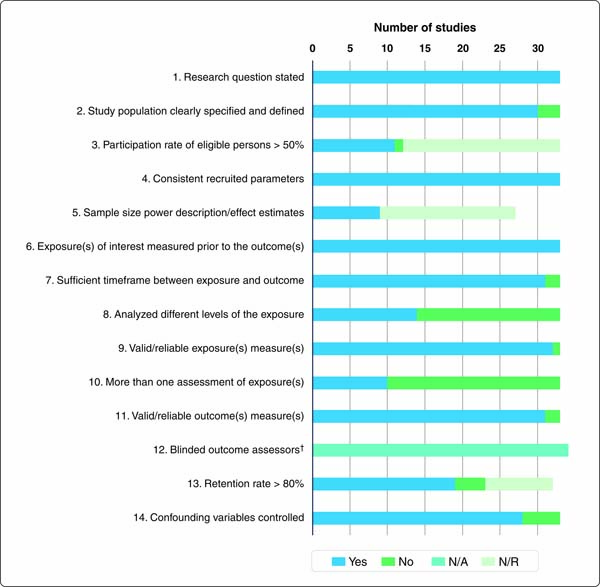
The number of studies that met each of the criteria established by the NHLBI Quality Assessment Tool for Observational Cohort and Cross-Sectional Studies70 is shown on Figure 2. The overall quality rating for each of the included studies is summarized in Supplementary Table S3. According to the three-category scale of quality of reporting (good, fair, and poor), nine studies were classified as good, 21 as fair, and two as poor. There was complete agreement between the two independent assessors regarding these evaluations.
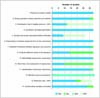
All 33 studies included in this review had a prospective design. Most authors stated characteristics of maternal depressive symptoms and EFs, such as their definitions, methods of measurement, and time points of assessment. However, in 20 of the 33 studies, the participation rate was below 50%, and 19 studies had a retention rate below 80%. In addition, most studies did not include a justification for sample size or description of statistical power.
Overall, the included studies yielded evidence of fair quality. Selection and/or reporting bias were identified in 18 of 33 studies (Supplementary Table S3). Different levels of maternal depressive symptoms were poorly investigated among studies. Most analyzed maternal depressive symptoms as a dichotomous variable, while a few examined trajectories of maternal depression and/or considered categories of different levels of exposure.
Grading the evidence
All 33 studies included in this systematic review were assessed according to the GRADE criteria for narrative evidence.71 Risk of bias was mainly due to attrition and selection bias (Supplementary Table S4). However, in most studies, both exposed and unexposed participants were from the same population and had the same risk of developing EF problems. Inconsistency and indirectness of results were not severe, although some variability between studies was noted. In general, results were not imprecise, but this aspect must be interpreted with caution because of the lack of sample size descriptions in most studies.
DISCUSSION
Systematic review
This systematic review analyzed 33 cohort studies that examined maternal depressive symptoms during pregnancy and the postpartum phase, as well as their combined occurrence in both periods. The negative association between exposure to depressive symptoms before and after childbirth and children's executive functioning in early, mid, and late childhood - and, in some cases, adolescence - was consistent in 25 studies, even after accounting for the large variability in geographic populations. In addition, some insights were gained into possible mechanisms related to prenatal and postpartum exposures, including evidence of fetal programming, genetics, and parenting practices.
Exposure to prenatal depressive symptoms has been associated with alterations in early brain development that may impair executive functioning in childhood and adolescence, as has been observed in many studies included in this review.43,45-47,52,54,57,58,60 This may be related to the fetal programming hypothesis that occurs during embryonic and fetal development, a critical period for neurodevelopment. Several biological systems have been hypothesized as mechanisms by which maternal depression and fetal programming influence child development.73 The hypothesis put forth by Sohr-Preston and Scaramella74 suggests that prenatal depression is related to alterations in the development and regulation of the hypothalamic-pituitary-adrenal (HPA) axis, which is a central component of the hormonal stress response system.75 The HPA axis is responsible for the release of glucocorticoids, including cortisol, which warn the organism of potential threats and maintain homeostasis.76 Disorders of the HPA axis can affect placental function, cross the placenta, and reach the fetus.77 Therefore, maternal prenatal depression may affect the development of the HPA circuit and the brain development of offspring, as well as later risk for mental illness.78,79 These changes may lead to altered cortisol patterns later in infancy, which has been associated with problems in EFs and behavioral changes.58 The mediating role of cortisol reactivity on the association between prenatal depressive symptoms and EFs was reported by Neuenschwander et al.58 Cortisol reactivity mediated the effect of prenatal maternal depression on lower EFs for boys, suggesting that there are probably different mechanisms underlying the effects of exposure to depressed/anxious prenatal maternal mood symptoms on EFs for girls.
An interesting finding from the study by Weikum et al.54 is the significant role played by the gene SLC6A4 in inhibition, working memory, and cognitive flexibility in children exposed to maternal depressive symptoms. This gene encodes the serotonin transporter (5-HTT), which is central to the regulation of synaptic serotonin levels and behavior, and has been observed to be a risk factor in studies of EF impairment.80,81 Weikum et al.54 have expanded the knowledge of the role of this gene by showing that children who have a long allele of SLC6A4 are less resilient when exposed to maternal depressive symptoms; they performed better in EFs when not exposed to maternal major depressive symptoms and worse when exposed to them than all other groups. In the presence of a mother with more depressed mood, EFs were best preserved in children with at least one short SLC6A4 allele.
The examined studies have contributed valuable insights into the complex relationship between postpartum depressive symptoms and children's EF impairments, employing path analysis to uncover underlying mediators.40,44,50,64,65 The mechanisms were mainly related to parenting practices. The first year of life, when maternal depression was measured in most of the studies included in this review, is a critical period for neurodevelopment, characterized by robust gray matter growth, rapid myelination, and maturation of white matter pathway microstructure in the child's cerebral cortex.82 During childhood and adolescence, there is a dramatic increase in brain plasticity - as a result of the dynamics between the dopaminergic and GABAergic systems - and consequent facilitation of the development and consolidation of higher-order neural networks, including those related to EFs.83,84 These processes could be influenced by the mother-child relationship, primarily due to stimulation of the child's cognitive abilities during infancy.44 The parenting practices of mothers with postpartum depressive symptoms are impaired, including by increased interpersonal stress and a lack of maternal sensitivity, warmth, and regulatory behaviors.40,45,64-66 Ku et al.64 found an interesting mediating effect of maternal sensitivity (the mother's ability to perceive and appropriately respond to her child's emotional and physical needs), suggesting that mothers with lower maternal depression symptoms are more likely to accurately detect their child's signals and respond to their child in a warm, prompt, and appropriate manner, which in turn predicts better EF. Negative parenting practices reduce cognitive stimulation in the environment and impair children's abilities to regulate attention, emotions, and stress,84,85 which undermines the development of EFs.32
The negative impact of maternal depression on offspring EFs is not restricted to clinical cases of depression. Exposure to depressive symptoms can be understood as a continuum capable of negatively influencing the neurodevelopment throughout childhood and adolescence.86 A strategy adopted by some authors to assess the chronicity/persistence of the effects of maternal depression over time was to work with trajectories of depressive symptomatology. These studies revealed that EFs were most impacted during childhood among those children whose mothers either had increasing depression symptoms in early and mid-childhood or had chronic and severe trajectories of maternal depression.48,54 This finding converges with results from previous studies that analyzed the impact of this exposure on offspring outcomes, such as intelligence and internalizing and externalizing behaviors.11,87,88 This review has found that few studies employ this approach, highlighting a gap in the existing literature. Examining the trajectory of maternal depression symptoms provides more information and insight into their duration, intensity, and variability over time. Furthermore, when studies encompassed both prenatal and postpartum periods, contradictory results emerged. Specifically, five of the reviewed studies exclusively found a negative impact of prenatal exposure, while one study emphasized an exclusive postnatal influence. Interestingly, all of these studies employed multiple linear regression models to assess these associations.
The sensitive period for the typical development of EFs occurs from 3 to 5 years of age, followed by two other developmental peaks during the adolescence and early adulthood.20,89,90 In this systematic review, the time at which EFs were measured varied considerably, ranging from 3 to 11 years in most of the studies. Thus, the impact of maternal depression between different sensitive periods could not be compared. Future investigation on sensitive periods for the development of EFs is necessary.
A great diversity of instruments used to measure EFs was identified, largely divided between instruments based on direct observation of individual performance and instruments based on third-party reports (mainly maternal). The first approach was most popular among the studies in our sample, and is more robust regarding psychometric parameters and environmental control.91 On the other hand, measures based on third-party reports enable assessment of EFs in a more naturalistic context, including aspects of everyday life.92,93
Studies relying on maternal reports are susceptible to information bias, as mothers exhibiting symptoms of depression may perceive their children's behavior and development differently.94,95 Notably, two studies, conducted by Vänskä et al.52 and Faleschini et al.,43 compared maternal reports with those of fathers and teachers, respectively. Surprisingly, contrary to expectations based on previous research, no significant differences were found between mothers' and fathers' or between mothers' and teachers' reports. While the results did not reveal significant disparities in EF reports between mothers and fathers, it is worth noting that we did anticipate the possibility of bias, especially when mothers were experiencing depression. Additionally, both studies focused on more socioeconomically advantaged populations. Differences related to socioeconomic status could occur.
Studies that have found no association between maternal depressive symptoms and children's EF may be explained by several reasons. First, none of these have accounted for examination of the severity of maternal depression. Second, selection bias can be present in studies in which mothers with higher socioeconomic status are overrepresented.50,51,65 In addition, shorter measurement periods between exposure and outcome may not capture the full effects.62 Finally, limited sample sizes could also make studies underpowered to detect associations.41
Achieving a theoretical definition of EFs that is consensual among researchers in the field is challenging, as new theories and concepts have emerged over the past 20 years with the advancement of neuroimaging techniques.17,96-101 For example, some studies considered attentional outcomes to be part of EFs,41,43,46-48,50,62,68 while others understood EFs and attention as two different outcomes.39,53,56-58,69,98 These divergences were reflected in our comparisons across studies, and is consistent with previous research.34,102 Considering the marked heterogeneity of EF definitions used in the literature, the establishment of a common concept is needed, although this may not be an easy task because the exact neural basis involved in this theoretical construct is still unknown.
Limitations of the studies included in the review
The results of this systematic review should be interpreted with caution due to the limitations identified in the included studies. Most were classified as having fair quality, with only nine studies39-41,44-46,55,58,64 classified as having good quality. Lack of information regarding sample power, losses to follow-up, and severity of maternal depression were the most frequent problems identified. In addition, many studies were affected by selection bias, which limited the generalization of results.
Limitations of the systematic review
The heterogeneity of the studies precluded meta-analysis. Different instruments were employed to assess maternal depressive symptoms and evaluate EF. The assessment of EFs was conducted either through maternal reports or through objective measures. Given the methodological limitations identified by the GRADE assessment and the variability of study quality detected by the NHLBI checklist, we considered that a meta-analysis would have been an inappropriate summary. A previous systematic review pooled the effect of correlation coefficients between maternal depression and EFs and found considerable heterogeneity (I2 = 50%, p = 0.01) and a small observed effect size (r = 0.07; 95%CI 0.03 to 0.10).34
Application of the search query resulted in many articles that were ultimately not relevant to the study objective. This could be due to the broad search equation constructed, as different terms are currently used to refer to EFs.
Implications and future directions
This comprehensive review, based on multiple cohort studies, provides compelling evidence that both prenatal and postpartum exposure to maternal depressive symptoms can impair executive functioning in offspring, extending the knowledge of previous studies that focused only on one time period.103,104 Additionally, this study goes further by providing a thorough examination of the mechanisms behind the relationship between exposure to maternal depressive symptoms and EFs, filling important gaps in the current literature and further advancing the understanding of the issue, as highlighted by Power et al.34 These findings underscore the need to address maternal mental health during pregnancy and the postpartum period.
Future research should examine in greater detail the interplay of neural, environmental, and social factors in the relationship between maternal depression and the development of EFs in children. Two particularly important aspects require further investigation: the effects of chronic exposure to maternal depressive symptoms in childhood on the development of EFs and the specific effects of maternal depressive symptoms on the development of EFs during sensitive periods. Another important aspect that should be considered in future studies is the role played by pregnancy planning and a strong support network. These aspects can have a significant impact on maternal mental health, particularly in the context of maternal depression.105,106 A support network that includes partners, family, friends, and medical professionals plays a key role in providing emotional and practical assistance to mothers. These support systems offer a safety net for mothers and reduce the isolation that can contribute to maternal depression.
In conclusion, this systematic review found that exposure to maternal depressive symptoms during and after pregnancy has a negative impact on children's EFs throughout their development. Although this finding was consistent across cohorts, methodological variability was identified among the included studies. Our findings are in line with previous research on other aspects of cognitive development and indicate that the serious effects of maternal depression on child development warrant attention. Future research is needed to further investigate the mechanisms involved in this relationship and the possibility that specific sensitive periods may have a greater impact on development.
ACKNOWLEDGEMENTS
JSR is supported by Fundação de Amparo à Pesquisa do Estado de São Paulo (FAPESP; grant no. 2020/13425-3; 2023/05522-9). AM received a postdoctoral fellowship from the Fundación Carolina and Grupo Tordesillas (Convocatória C. 2021, Programa de Movilidad de Profesorado de Universidades del Grupo Tordesillas).
 PDF
 Print
 Send this article by email
 How to cite this article
 Submit a comment
 Mendeley
 Pocket
 Share on Facebook
 Share on Twitter



