



ABSTRACT:
OBJECTIVE: The risk of suicide is higher among health care workers than other workers. This study
investigated the association between social support and suicidal ideation and behavior
during the COVID-19 pandemic among Brazilian health care workers.
METHODS: This study used data from 10,885 respondents to the first (time point 1 - between
May and June of 2020) and second (time point 2 - between December 2020 and February
2021) cross-sectional online surveys about mental health and quality of life among
Brazilian health care workers during the COVID-19 pandemic. The relationship between
social support as the independent variable (time point 1) and suicidal ideation and
behavior as the outcomes (time point 2) was investigated through logistic regression
analysis.
RESULTS: Greater social support was associated with a significantly lower risk of reporting
suicidal ideation and behavior in the month prior to follow-up assessment (adjusted
OR: 0.71, 95%CI 0.66-0.76 and adjusted OR 0.61, 95%CI 0.54-0.68, respectively). These
associations were independent of sex, age, feelings of loneliness, and self-reported
psychiatric disorders.
CONCLUSION: Social support is associated with a lower risk of suicidality among health care workers,
and its protective role appears more closely related to suicidal behavior.
Keywords: Suicide; COVID-19; pandemic; social support; health care workers.
FIGURES
| Received: November 07 2023; Accepted: February 28 2024 |
INTRODUCTION
The risk of suicide is higher among health care workers (HCWs) than other workers.1,2 During the COVID-19 pandemic, several stressors may have contributed to an increased risk of suicide in this population.3,4 For instance, events that threaten or endanger someone's life, and stressful episodes that are outside the normal range of experience are associated with an increased risk of psychological distress and suicidal ideation.5,6 Economic uncertainty, financial stress, and lack of resources may be risk factors for poor outcomes. For example, financial hardship during the COVID-19 pandemic may increase suicide risk and dampen the protective role of emotional stability against suicidal behavior.7,8 Therefore, the abrupt and disruptive effects of the COVID-19 pandemic could have been "additional stressors" triggering a mental health crisis.9
Clinically significant emotional responses can occur during events such as the spread of contagious diseases, the most frequent of which are fear, anxiety, and depression.10-12 A study after the 2003 severe acute respiratory syndrome epidemic reported that health care professionals experienced depression, anxiety, and post-traumatic symptoms for up to 3 years.4 In fact, the severe acute respiratory syndrome epidemic was associated with a higher than expected suicide rate in older adults, which was likely related to loneliness and disconnectedness among this population.13 Loneliness, a distressing feeling due to a perceived lack of social support, may present emotional and social dimensions.14-16 In a Brazilian longitudinal study during the COVID-19 pandemic, loneliness was the only factor associated with suicidal ideation among other social relationship risk factors.17
HCWs often work in high-risk environments, experience periods of isolation, and may have a higher frequency of sleep problems and psychological distress,5,18,19 which may have been aggravated by the COVID-19 pandemic.
A lack of social support has long been considered a risk factor for suicide.20 Unlike loneliness, social support is related to the emotional, instrumental, or informational resources available to a person for coping with life stressors.16,21 Several studies have reported the importance of social support as a protective factor against suicidal ideation and behaviors (SIBs) in recent decades,22-24 although few have explored its role among HCWs. During the COVID-19 pandemic, the workload and many other social stressors were unprecedented, and investigating the association between social support and SIBs may provide additional evidence for suicide prevention strategies in this population.
Thus, this study investigated the association between social support and SIBs during the COVID-19 pandemic among Brazilian HCWs. We hypothesized that greater social support would be associated with a lower risk of suicidal ideation and suicidal behavior in this population, which could have implications for future prevention strategies.
METHODS
This study used data from 10,885 respondents to the first (time point 1: May-June 2020) and second (time point 2: December 2020-February 2021) rounds of a cross-sectional online survey on mental health and quality of life among HCWs during the COVID-19 pandemic in Brazil. Recruitment and assessment were conducted through an online platform developed in SurveyMonkey.25 The original study included assessments at four time points (time points 1 and 2, in addition to time point 3 [May 2021] and time point 4 [November 2021-January 2022]). HCWs were invited to participate by the Brazilian Ministry of Health's Secretariat of Work Management and Health Education (Secretaria de Gestão do Trabalho e da Educação na Saúde) via e-mail. After being informed that the average questionnaire duration was about 25 minutes, potential participants provided informed consent and were enrolled in the study. All collected data were de-identified to maintain confidentiality. A detailed description of the study's methods and procedures can be found elsewhere.26,27
Participants
The participants were adults (= 18 years of age) who declared themselves to be HCWs. At time point 1, 205,591 individuals participated. At time point 2, 58,218 individuals participated. The sample consisted of the 10,885 participants who responded to the survey at time point 1 and time point 2. The attrition rate was 71.68% between time point 1 and time point 2.
Measures
Social support
The independent variable for this study was the Medical Outcomes Study Social Support Survey score (overall social support), which was developed by Sherbourne & Stewart28 as a measure of social support; the short version used in this study was developed by Holden et al.29 as a unidimensional scale. The question that evaluates social support is "How often is each of the following kinds of support available to you if you need it?" The kinds of support include emotional and informational support, tangible support, affectionate support, and positive social interaction, which are assessed as follows: "Someone to help you if you were confined to bed"; "Someone to take you to the doctor if you needed it"; "Someone to share your most private worries and fears with"; "Someone to turn to for suggestions about how to deal with a personal problem"; "Someone to do something enjoyable with"; "Someone to love and make you feel wanted." Each of these items is scored on a 5-point Likert scale (from 1 = never to 5 = always). For the analysis, we used a factorial score, which is a standardized score ranging from -3 to +3 with a mean of 0. Although the psychometric properties of the abbreviated version have not been established for the Brazilian population, Griep et al.30 adapted the complete version to Portuguese in the Pró-Saúde study, which was conducted in Rio de Janeiro. In our sample, the instrument's internal structure showed evidence of validity (?2[9] = 74.269, p < 0.001, comparative fit index = 0.983 Tucker-Lewis index = 0.971, root mean square error of approximation = 0.094 [90%CI = 0.092-0.097], standardized root mean square residual = 0.075), and excellent precision (? = 0.90).
Suicidal ideation and behavior outcome measures
Suicidal ideation and behavior were measured by one question each: "I thought about killing myself at some point in the last month" and "I tried to kill myself at some point in the last month," respectively. The range of responses included: 1) I strongly disagree; 2) I moderately disagree; 3) I disagree; 4) I neither agree nor disagree; 5) I agree; 6) I moderately agree; 7) I strongly agree. For each question we considered responses that indicated any possibility (i.e., elevated risk) of suicidal ideation or behavior, i.e., from 2 (moderately disagree) to 7 (strongly agree), as a positive answer for each outcome.
Psychiatric disorders
Participants were considered to have a diagnosed psychiatric disorder if they responded positively to the question "Have you ever been diagnosed with a mental disorder by a health care professional (e.g., depression, anxiety, ADHD)?" Positive responses were followed up by specifying from a list of 21 psychiatric disorders, plus a blank for "other."
Loneliness
We assessed loneliness through items from the Brief Symptom Inventory. This instrument consists of 53 items that assess distinct psychological symptoms.31 The items are answered on a 5-point Likert scale (from 0 = not at all; to 4 = extremely). For this study, we used three items related to loneliness: item 14 ("Feeling lonely even when you are with people"), 16 ("Feeling lonely"), and 44 ("Never feeling close to another person"). We investigated the validity of this loneliness index through confirmatory factor analysis of the internal structure, finding a perfect goodness-of-fit (?2[3] = 6321.566, p < 0.001, comparative fit index = 1.0, Tucker-Lewis index = 1.0, root mean square error of approximation = 0.000 [90%CI = 0.00-0.00]) and excellent reliability (? = 0.87).
Data analysis
Descriptive and inferential statistical methods were used. First, we calculated a factorial score for each instrument through CFA, since this is more accurate than sum scores.32 Then, using descriptive statistics, we assessed the variables' frequencies, percentages, means, and SD. Because previous research has found sex differences in suicidal ideation and behavior, we performed a chi-square test of independence with Yates' continuity correction to determine whether there was a relationship between these categorical variables. Using the RBtest package, we also determined whether the missing data were (a) missing completely at random, (b) missing at random, or (c) not missing at random.33 Subsequently, generalized linear model regression using separate logistic regression analyses was performed to investigate the relationships between social support as the independent variable (time point 1) and suicidal ideation and suicidal behavior as the two outcomes (time point 2), with sex, age, psychiatric diagnosis, and loneliness as covariates (all from time point 1) using the forced entry method. The odds ratio and 95%CI were calculated by the probability of the predictor, indicated by differences observed in SIB. These analyses were performed in R software34 and RStudio (3.6.1)35 (https://cran.r-project.org/). The significance level was set at p < 0.05.
Ethics statement
This study was approved by the National Commission of Ethics in Research (CAAE 30823620.6.0000.5149) and complied with the Helsinki Declaration (1989).
RESULTS
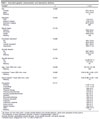
The sample consisted predominantly of women with a high educational level. About 30% of the participants reported a psychiatric diagnosis. Table 1 shows descriptive statistics for the variables. About 12% of the participants reported suicidal ideation, and 2.9% reported suicidal behavior.
| Variable┼ | n | n (%) |
|---|---|---|
| Sex | 10,828 | |
| Female | 8721 (81.0) | |
| Male | 2107 (19.0) | |
| Missing | 57 | |
| Education | 10,023 | |
| PhD | 516 (5.0) | |
| Master's degree | 1188 (12.0) | |
| Bachelor's degree | 8319 (83.0) | |
| Missing | 862 | |
| Marital status | 10,725 | |
| Married | 5280 (49.2) | |
| Divorced | 946 (8.8) | |
| Single | 4499 (42.0) | |
| Missing | 160 | |
| Psychiatric disorders╬ | 10,885 | |
| No | 7641 (70.0) | |
| Yes | 3244 (30.0) | |
| Anxiety disorders§ | 2851 (26.2) | |
| Depression | 1884 (17.0) | |
| Suicidal ideation | 10,507 | |
| No | 9267 (88.0) | |
| Yes | 1240 (12.0) | |
| Missing | 378 | |
| Suicidal behavior | 10,793 | |
| No | 10,480 (97.1) | |
| Yes | 313 (2.9) | |
| Missing | 92 | |
| Age, mean (SD) (min, max) | 10,646 | 38 (10) (18, 82) |
| Missing | 239 | |
| Loneliness,|| mean (SD) (min, max) | 10,800 | 0.00 (0.95) (-0.85, 2.67) |
| Missing | 85 | |
| Social support,|| mean (SD) (min, max) | 10,811 | 0.00 (0.96) (-2.95, 1.03) |
| Missing | 74 | |
| Occupation | 10,771 | |
| Nursing | 1,187 (11.0) | |
| Psychology | 1,177 (11.0) | |
| Dentistry | 1042 (9.7) | |
| Physical therapy | 933 (8.7) | |
| Pharmacy/biochemistry | 910 (8.4) | |
| Nursing assistant/technician | 661 (6.1) | |
| Nutrition | 597 (5.5) | |
| Biomedicine/biology | 486 (4.5) | |
| Physical education | 453 (4.2) | |
| Physician | 448 (4.2) | |
| Veterinary medicine | 439 (4.1) | |
| Social worker | 394 (3.7) | |
| Speech therapy | 355 (3.3) | |
| Other | 1,689 (15.7) | |
| Missing | 114 |
┼ All values are from time point 1 except suicidal ideation and suicidal behavior, which were assessed at time point 2.
╬ The frequency of each psychiatric disorder is shown in Supplementary Table S1.
§ Anxiety disorder: generalized anxiety disorder, social anxiety disorder, and panic disorder.
|| Factorial score, ranging from -3 to +3, with a mean of 0.
We used a chi-square test with Yates' continuity correction to investigate the association between sex and SIB. This test was chosen to examine potential dependence variables while accounting for the potential bias introduced by small sample sizes. The results of the chi-square test indicated no significant association between sex and suicidal ideation (?2[1] = 0.036, p = 0.84) or suicidal behavior (?2[1] = 0.828, p = 0.36), indicating that the variables are independent. Examination of the nature of missing variables indicated that sex, age, loneliness, and social support were missing completely at random, while ideation and suicide behavior were missing at random, which allowed us to retain all participants with missing data in subsequent analyses without affecting the results.
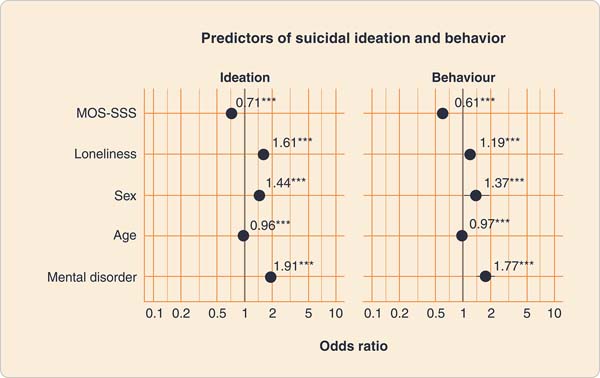
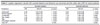
The independent variables had a significant overall effect on the probability of suicidal ideation (?2[df] = 7357.4 [10137], p < 0.001, Tjur's R2 = 0.10) and suicidal behavior (?2[df] = 2712.6 [10414], p < 0.001, Tjur's R2 = 0.022). A generalized regression model with the binomial family was fitted to investigate the relationship between SIB and the predictors (social support, loneliness, sex, age, and psychiatric disorders). Loneliness, male sex, and a history of psychiatric disorders increased the probability of reporting suicidal ideation (Table 2).
| Suicidal ideation | Suicidal behavior | |||||
|---|---|---|---|---|---|---|
| Predictors | OR | 95%CI | p-value | OR | 95%CI | p-value |
| (Intercept) | 0.35 | 0.27-0.46 | < 0.001 | 0.05 | 0.03-0.09 | < 0.001 |
| Social support | 0.71 | 0.66-0.76 | < 0.001 | 0.61 | 0.54-0.68 | < 0.001 |
| Loneliness | 1.61 | 1.51-1.72 | < 0.001 | 1.19 | 1.06-1.35 | 0.003 |
| Sex (male) | 1.44 | 1.22-1.70 | < 0.001 | 1.37 | 1.02-1.82 | 0.033 |
| Age | 0.96 | 0.95-0.97 | < 0.001 | 0.97 | 0.96-0.98 | < 0.001 |
| Psychiatric disorder | 1.91 | 1.67-2.18 | < 0.001 | 1.77 | 1.39-2.26 | < 0.001 |
| Tjur's R2 | 0.100 | 0.022 | ||||
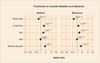
Older professionals and individuals with more social support had less SIB. The individual coefficients showed the same pattern of results for both suicidal behavior and suicidal ideation. However, the variance explained by Tjur's R2 was much more modest for suicidal behavior than suicidal ideation. In contrast, greater loneliness was linked to a higher probability of SIB. Figure 1 shows the effect size for each predictor. In conclusion, the binomial generalized regression model successfully captured the relationship between the independent variables and the probability of reporting SIB.
DISCUSSION
Brazilian HCWs who reported greater social support during the pandemic also reported less SIB, even after accounting for loneliness, self-reported psychiatric disorders, and demographic covariates. The results were more pronounced for suicidal behavior than suicidal ideation (OR = 0.61 vs. OR = 0.71, respectively).
The prevalence of suicidal ideation among these Brazilian HCWs (12%) was similar to that reported by American adults during the COVID-19 pandemic (June 24-30, 2020) (10.7%).36 However, our assessment probably included a broader spectrum of severity for suicidal ideation, since all answers from moderately disagree to strongly agree were considered positive (Supplementary Figure S1). Czeisler et al.36 may have included only more severe cases (i.e., those who "Seriously considered suicide in past 30 days"). In Spain, Mortier et al.37 found a lower prevalence of 30-day suicidal behaviors among HCWs during the first wave of the COVID-19 pandemic than our study: 2.7% of their sample reported active suicidal ideation (i.e., involving a plan or an attempt) in the 30 days before the assessment, while 2.9% of our respondents reported suicidal behavior in the previous month. However, if we considered only respondents who reported strong agreement regarding suicidal behavior, the proportion would have been even lower (Supplementary Figure S1). Although the categorization of our outcomes may limit comparison with other studies, dichotomization of SIB according to different criteria (e.g., considering any response from 5 [agree] to 7 [strongly agree] as a positive answer for the outcome) did not change the main results (Supplementary Table S2 and Supplementary Figure S2). In addition, it is likely that the characteristics of the pandemic at the time of assessment and the specificities of each health care system varied, affecting the risk of SIB among HCWs from distinct populations differently.
Unlike general population samples, our results showed a higher frequency of suicidal ideation (11.9 and 11.7%, respectively) and behavior (3.2 and 2.8%, respectively) among men than women (Supplementary Table S3). Differences in substance use patterns during the pandemic and their effects on stress may account for the higher risk among men. These findings highlight the need to learn more about SIB drivers in specific HCW subgroups.18,36
Social support has been described as a protective factor for mental health among HCWs in previous epidemics and pandemics.38 An association between lack of social support and suicidal ideation has been reported for the general population during the COVID-19 pandemic.39 A systematic review by Farooq et al.40 found that the main risk factors for suicidal ideation among frontline HCWs were low social support, loneliness, and physical and mental exhaustion. In a study conducted during the first wave of the COVID-19 pandemic in Spain, Ortiz-Calvo et al.,41 after controlling for sociodemographic, clinical, and work-related factors, found an association between self-perceived social support from colleagues, relatives, and friends and a lower risk of suicidal ideation. They also found a significant inverse relationship between social support and risk factors for suicidal behavior, such as depressive symptoms and psychological distress. The need for self-isolation as a prophylactic measure may have contributed to a heightened feeling of loneliness for a significant proportion of HCWs during the pandemic, as reported by Vicentini et al.42 in a sample of Italian HCWs. In the same study, however, less than half of the participants reported finding social support from family, friends, and colleagues, despite regular communication (women 48%; men 32%).42 Considering the protective role of social support on mental health, strategies to strengthen it among HCWs are needed, especially during health crises. Hou et al.43 reviewed social support interventions for suicide prevention, including regular communication in the form of letters, text messages, and e-mails, weekly outpatient group encounters, online counseling, and assistance from trained peers and community volunteers. According to the pooled results, the interventions were associated with a significantly lower risk ratio for suicidality. Of the four studies that measured loneliness as a social support-related outcome, only one found significantly lower loneliness in the intervention group,43 which suggests that the therapeutic effect of social support can be achieved regardless of its impact on loneliness. In fact, low social contact may moderate the association between suicidality and loneliness by increasing the risk of suicidal ideation in individuals with a low tolerance for solitude.44 Waqas et al.45 reviewed the efficacy of social support interventions for anxiety and depressive symptoms, which are risk factors for suicidal behavior, among HCWs, finding positive results, especially for interventions delivered in person with mental health supervision. Most interventions increased social skills, improved the quality of current relationships, and provided workplace support.45 The mechanisms by which social support positively affects mental health may involve mediation by resilience, which could be targeted to improve mental health outcomes in HCWs.46,47 Social support is also associated with decreased risk behaviors and increased treatment adherence.48
Our data are drawn from two time points of a large national survey supported by the Brazilian Ministry of Health. Despite the large number of participants, only a portion of HCWs were represented, and an even smaller proportion participated at both selected timepoints. Online survey data is essentially non-probabilistic and, in conjunction with self-reporting methods, can involve selection bias, a common feature of web surveys. Therefore, caution is required when generalizing these findings. Another limitation is the lack of information about lifetime suicide attempts, since this is the main risk factor for future suicide attempts.49-51 We also do not know whether our findings would have differed if we had included data from the entire time interval, e.g., if our outcome assessment included the time since the last evaluation rather than the past month. The results may also vary among different health care professions.52 Our results suggest an association between global lifetime psychiatric disorders and suicidality, i.e., the potential vulnerability is not limited to specific disorders.53 Although the self-reported nature of the diagnosis may limit its credibility, a study found that online self-reported mental illness was a reasonable indicator of psychopathology.54 In addition, because we considered lifetime diagnosis of psychiatric disorders, we do not know if the disorder was active or in remission at the time of assessment. Comorbid disorders or specific combinations, as well as their severity, may affect risk differently. Finally, we did not include other risk factors in our analysis, such as hopelessness, traumatic stress, or burnout.55,56
In conclusion, social support has a protective role in the mental health of HCWs independently of important risk factors, such as lifetime psychiatric disorders, and this effect appears to be stronger for suicidal behavior than suicidal ideation. Although social support's protective role against SIBs is well established in the literature, our study reinforces this possible association among Brazilian HCWs. Scalable, evidence-based strategies are needed to strengthen social support among Brazilian HCWs. Health care systems are well positioned to monitor and offer support services during crisis situations. Policies for systems that employ HCWs should anticipate their needs, including mental health services and 24/7 support helplines. Some relevant initiatives include the National Alliance on Mental Illness' resources for health care professionals (peer support resources, confidential and professional support),57 the Centers for Disease Control and Prevention's support for public health workers and health professionals,58 and the 988 Suicide & Crisis Lifeline.59
ACKNOWLEDGEMENTS
The authors would like to thank the Brazilian Ministry of Health for distributing the survey and the Pan American Health Organization for creating the conditions for this study to occur. This publication was made possible through a National Institute of Mental Health grant for postdoctoral training in suicide prevention research to APD (T32 MH20061) at the University of Rochester's Center for the Study and Prevention of Suicide. APD was supported by a 2020 National Alliance for Research on Schizophrenia & Depression (NARSAD) Young Investigator Grant from the Brain & Behavior Research Foundation. This study was funded by the Pan American Health Organization (grant SCON2020-00202) and the Conselho Nacional de Desenvolvimento Científico e Tecnológico (grant 401542/2020-3).
 PDF
 Print
 Send this article by email
 How to cite this article
 Submit a comment
 Mendeley
 Pocket
 Share on Facebook
 Share on Twitter



