



ABSTRACT:
OBJECTIVE: We investigated whether social skills are impaired in patients with obsessive-compulsive
disorder (OCD), whether they changed over the course of treatment, and whether OCD
severity, age of onset, and illness duration were associated with social skills deficit.
METHODS: A total of 41 treatment-naïve patients with OCD and 34 healthy controls were assessed
using the Social Skills Inventory. Patients were reevaluated 12 weeks after standardized
treatment. Group differences and the effects of treatment on OCD symptomatology over
time were analyzed with independent and paired tests, respectively. OCD severity,
age at illness onset, and illness duration were tested as predictors of social skills.
RESULTS: The patient group had lower overall social skill scores than controls (p < 0.001).
After treatment, although OCD symptomatology (p < 0.001) improved, there was no significant
difference in social skills (p = 0.673). Earlier age of symptom onset predicted lower
social skill scores (p = 0.016).
CONCLUSION: Our results suggest that, despite improved OCD symptoms, social skills did not change
after treatment. Subsequent investigations with larger sample sizes and longer follow-up
periods could determine whether social skills are likely to increase over time.
Keywords: Obsessive-compulsive disorder; social skills; social functioning; treatment.
| Received: February 05 2024; Accepted: May 20 2024 |
INTRODUCTION
Obsessive-compulsive disorder (OCD) is characterized by unwanted thoughts (obsessions), followed by repetitive behaviors (compulsions) performed to reduce the anxiety produced by the obsessions.1 Evidence suggests that patients with OCD have poorer social functioning2,3 than healthy controls or patients with major depressive disorder, schizophrenia, or panic disorder.4 The exact nature of this deficit in social skills (SS) is unknown. Higher OCD symptom severity may worsen social functioning and vice versa.5 The relationship between OCD and social functioning is not well understood, i.e., it remains unclear whether SS deficit precedes OCD, whether it is a consequence of low socialization due to OCD symptoms, or both.
SS refers to the ability to organize thoughts, feelings, and actions about one's values and goals6 in a way that is relevant for proper social functioning.7 However, this phenomenon is understudied in OCD: only two studies have examined SS performance in patients with OCD before and after treatment.8,9 Welkowitz et al.8 found overall improvement in both SS and OCD severity after exposure and response prevention therapy, while Mckay and Neziroglu9 reported the case of a patient with OCD and schizotypal personality who was treated with SS training for 6 months, resulting in improved both SS and OCD symptoms.
This study's goals were: 1) to investigate whether SS are lower in treatment-naïve patients with OCD than controls, hypothesizing that patients with OCD would have impaired SS; 2) to investigate whether SS would change during treatment, hypothesizing that SS deficit would improve; 3) to investigate whether OCD severity, age of onset, and illness duration are associated with SS deficit. Given that poor social functioning and OCD symptoms may form a vicious circle, we hypothesized that greater OCD severity, earlier onset, and longer illness duration would correlate with greater SS deficit.
METHODS
Participants
The present study is part of a research protocol evaluating multiple measures in treatment-naïve patients with OCD.10 From 2006 to 2009, 50 treatment-naïve patients with OCD were selected based on the following inclusion criteria: age between 18 and 65 years old, OCD diagnosis according to DSM-IV, OCD as the main nosological entity, and Yale-Brown Obsessive-Compulsive Scale (Y-BOCS) score = 16.
The exclusion criteria were prior exposure to any psychotropic medication or cognitive behavior therapy (= 12 sessions), patients with a general medical condition or a severe mental illness other than OCD (i.e., psychotic disorder, active phase bipolar disorder). Healthy controls were selected from among college students and hospital and university staff and had no history of neurological or psychiatric disorders according to the DSM-IV Structured Clinical Interview.
Clinical assessment
The following clinical measures were used: the DSM-IV Structured Clinical Interview for Axis I Disorders,11 the Y-BOCS,12 and the Beck Depression and Anxiety Inventories.13,14 Intelligence quotient was evaluated with the Wechsler Abbreviated Scale of Intelligence.15
Social skills
The SS Inventory was validated in a sample of 4,250 Brazilian adults with at least an elementary education level.8 This self-report instrument consists of 38 items eliciting responses to everyday social situations. Based on past experiences, the participants report how frequently they react or would react in a certain way. Higher overall scores indicate greater SS. The results can be evaluated as the overall score or according to the following five factors: 1) assertive conversation, 2) affective sexual expression, 3) expression of positive feelings, 4) self-control and confrontation, and 5) social resourcefulness. The inventory has excellent psychometric characteristics, with a Cronbach's alpha of 0.994 in internal consistency analysis.6
Treatment
Patients were randomly allocated into two treatment groups: 12 weeks of pharmacological treatment, consisting of weekly doses of fluoxetine that increased to an upper limit of 80 mg/day or the maximum tolerated dose, or 12 weeks of group cognitive behavior therapy, consisting of weekly 2-hour standardized cognitive behavior therapy sessions.
Statistical analysis
The Mann-Whitney U and chi-square tests were used to assess demographic and clinical variables. The pre- and post-treatment differences in Y-BOCS and SS Inventory scores were analyzed with the Wilcoxon test or a paired t-test, depending on data normality. Bonferroni correction for multiple comparisons indicated different values for each type of analysis: for clinical, demographic, and SS scores we considered p < 0.004 statistically significant, whereas for linear regressions p < 0.05 was considered significant. For the pre- and post-treatment analyses of clinical data, p < 0.005 was considered significant. Finally, a stepwise general linear model was performed with overall SS score as the dependent variable and Y-BOCS score, age of onset, and illness duration as independent variables. The statistical analyses were performed in Jamovi 2.4.11.
Ethics statement
All participants provided written informed consent to terms approved by Universidade de São Paulo research ethics committee.
RESULTS
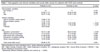
At baseline, 41 patients were enrolled in the clinical trial and 34 controls completed the SS inventory. After treatment, SS data were available for 29 patients. There were no significant differences between patients and controls regarding age, sex, intelligence quotient, or education level. As expected, the patient group had more depressive and anxious symptoms (Table 1).
| Patients (n=41) | Controls (n=34) | p-value | |
|---|---|---|---|
| Demographic variables | |||
| Sex (male), n | 15 | 11 | 0.701 |
| IQ | 91.80 (1.77) | 97.60 (2.93) | 0.084 |
| Age | 30.07 (1.30) | 27.62 (1.40) | 0.177 |
| Clinical variables | |||
| Age at symptom onset (years) | 12.66 (1.10) | - | - |
| Illness duration (years) | 17.37 (1.37) | - | - |
| BDI┼ | 18.68 (1.43) | 2.35 (0.39) | < 0.001 |
| BAI┼ | 18.54 (1.79) | 1.76 (0.28) | < 0.001 |
| Y-BOCS | 25.6 (0.84) | - | - |
| SSI | |||
| Assertive conversation┼ | 30.12 (1.38) | 38.24 (0.94) | < 0.001 |
| Affective sexual expression | 4.12 (0.53) | 4.71 (0.49) | 0.294 |
| Self-control and confronting | 21.66 (0.94) | 24.47 (0.97) | 0.029 |
| Expression of positive feeling | 11.15 (0.68) | 12.06. (0.66) | 0.344 |
| Social resourcefulness┼ | 10.93 (0.88) | 14.47 (0.67) | 0.003 |
| Total social skills score┼ | 68.46 (2.79) | 81.21 (1.93) | 0.001 |
Data presented as mean (standard error), unless otherwise specified.
BAI = Beck Anxiety Inventory; BDI = Beck Depression Inventory; IQ = intelligence quotient; SSI = Social Skills Inventory; Y-BOCS = Yale-Brown Obsessive-Compulsive Scale.
┼ Statistically different between patients and controls (p < 0.004).
Social skills performance at baseline
Regarding the SS Inventory, patients with OCD scored lower in "assertive conversation" (factor 1) and "social resourcefulness" (factor 5) (p < 0.001 and 0.002, respectively) and had lower overall scores (p = 0.001) than controls (Table 1).
Social skills and treatment outcomes
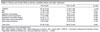
After treatment, patient Y-BOCS and Beck Depression Inventory scores significantly decreased, regardless of intervention type, while SS scores remained stable in relation to baseline for both overall and individual factor scores (Table 2). Separate analysis of the cognitive behavioral therapy and medication groups showed no significant differences in SS before or after the intervention (Supplementary Tables S1 and S2). The percentage of improvement in Y-BOCS and Beck Depression Inventory scores was also similar between treatment groups (Supplementary Table S3).
| Pre (n=29) | Post (n=29) | p-value | |
|---|---|---|---|
| Y-BOCS┼ | 25.10 (0.79) | 17.28 (1.34) | < 0.001 |
| BAI | 17.00 (2.08) | 12.10 (1.50) | 0.017 |
| BDI┼ | 17.50 (1.45) | 11.77 (1.54) | 0.002 |
| Assertive conversation | 30.12 (1.67) | 30.31 (1.8) | 0.791 |
| Affective sexual expression | 4.14 (0.68) | 4.03 (0.54) | 0.839 |
| Expression of positive feeling | 21.62 (1.17) | 22.59 (1.15) | 0.162 |
| Self-control and confrontation | 10.59 (0.75) | 10.28 (0.79) | 0.638 |
| Social resourcefulness | 9.93 (0.96) | 10.93 (0.94) | 0.103 |
| Total score | 67.86 (3.36) | 68.52 (3.40) | 0.681 |
Data presented as mean (standard error).
BAI = Beck Anxiety Inventory; BDI = Beck Depression Inventory; SS = social skills; Y-BOCS = Yale-Brown Obsessive-Compulsive Scale.
┼ Significant difference between pre- and post-treatment values (p < 0.005).
Social skills, age, disorder severity, age of onset, and illness duration
In the regression analysis, age of onset predicted overall pretreatment SS Inventory score (B = 1.08, R2= 0.14, p = 0.017), although overall Y-BOCS score (p = 0.873) and illness duration (p = 0.340) did not. Earlier age of onset predicted worse overall SS Inventory scores. Since age could be a predictor of SS scores, we performed a linear regression analysis to investigate the influence of age on overall SS scores, but the results were not significant (p = 0.189).
DISCUSSION
Our results show that social functioning is impaired in adult patients with OCD. Regarding individual SS Inventory factors, assertive conversation (factor 1) was significantly impaired in the patient group. This factor refers to self-affirmation skills in risky coping situations, in which the interlocutor may have an undesirable reaction. Factor 5, social resourcefulness, was also impaired in the patient group. These findings support clinical experience that patients with OCD have SS deficits, yet little attention has been paid to SS in OCD studies.
The lack of post-treatment changes in SS scores, despite symptom improvement, did not replicate the results of previous studies.8,9 Our findings suggest that, over the same period of standard treatment, SS are less sensitive than OCD symptoms. One explanation for this is that SS require longer time to change. It is also possible that the SS deficits that accompany OCD may not be reversed by OCD treatment and that specific interventions to improve SS may be necessary.
In line with the above speculation, we observed that the earlier the age of onset, the worse the SS. Obsessions and compulsions early in life could impact patient functionality and social exposure, i.e., lower social exposure could affect SS. Thus, the earlier the symptom onset, the more severe the SS deficit, since the patient would be less exposed to social learning over time. However, illness duration did not predict SS in our analysis. This could suggest that independently of illness duration, the OCD symptom onset during a critical window of SS development (i.e., childhood and adolescence) is crucial. We found no association between SS and OCD severity. It is still unclear whether patients with greater SS manage their OCD symptoms more effectively.8,9
These findings should be interpreted with caution. Our patient sample had numerous comorbidities, which could have introduced variability into our findings. The small sample size may also have limited our power to detect SS changes over time.
Finally, we conclude that patients with OCD had poorer overall SS than controls and that these impairments were not modified by first-line OCD treatment. Although early age of onset may impact SS development, the causal relationship between OCD symptoms and SS deficits requires further investigation. Future clinical trials should also assess social adjustment and SS, since these may represent additional treatment targets.16
 PDF
 Print
 Send this article by email
 How to cite this article
 Submit a comment
 Mendeley
 Pocket
 Share on Facebook
 Share on Twitter



