


ABSTRACT:
OBJECTIVE: To systematically review studies on schizophrenia in Brazil, addressing geographical
coverage as an indicator of sampling representativeness - an essential precondition
for inferences regarding the generalizability of findings - and, secondarily, of variation
in research funding across different regions.
METHODS: We searched for studies carried out until July 2023. The inclusion criteria were studies
of patients diagnosed with schizophrenia (or its spectrum) recruited in Brazil. The
following parameters were extracted: geographic region of the first and last authors,
recruitment setting, research subfield, and funding sources. This review followed
the Preferred Reporting Items for Systematic Reviews and Meta-Analyses (PRISMA) guidelines.
RESULTS: Of 296 studies reviewed, most (63.18%) took place in the Southeast region, particularly
the state of São Paulo (48.98%). Clinical trials comprised the majority (41.6%); genetic
studies were primarily conducted in the Southeast or South (81.5%). Funding was reported
in 64% of papers. The Northeast region was less likely to receive study funding compared
to the Southeast.
CONCLUSION: Schizophrenia research in Brazil shows a clear geographic concentration, with significant
disparities in funding allocation and underrepresentation of certain regions. Broadening
research coverage through equitable distribution of funding opportunities and fostering
collaborations with local institutions are of utmost importance to enhance the understanding
and treatment of schizophrenia within Brazil's diverse socioeconomic and ethnic landscape.
Keywords: Schizophrenia; diversity; scientific inequality.
FIGURES
| Note: How to cite this article: Freitas TH, Ziebold C, Santoro ML, Belangero SIN, Lorencetti PG, Leal LMB, et al. A call for greater diversity and representativeness within countries in psychiatric research: lessons and challenges from a systematic review of schizophrenia research in Brazil. Braz J Psychiatry. 2025;47:e20243834. http://doi.org/10.47626/1516-4446-2024-3834 |
| Received: July 18 2024; Accepted: December 10 2024 |
INTRODUCTION
Incorporating diversity across ethnic, geographic, demographic, and social dimensions is a central component in advancing medical research toward more precise medical approaches.1 Historically, most studies of schizophrenia have been conducted in populations from high-income countries (mainly in North America and Europe), leading to a continuous underrepresentation of populations from low- and middle-income countries with diverse racial and ethnic backgrounds.2 This lack of diversity has severe implications, preventing a broader understanding of the disease, its etiology, and the development of novel treatments. Additionally, it hinders the applicability of research findings to specific, oft-overlooked populations, such as the Latin-American (LatAm) population.3
Recently, several grants and initiatives have tried to include samples from underrepresented nations. For instance, the U.S. National Institute of Mental Health (NIMH) established the Ancestral Population Network (APN) in 2020 to encourage genetic discovery among non-European ancestry populations.4 The APN's endeavors include the Populations Underrepresented in Mental illness Association Studies (PUMAS), focusing on schizophrenia and bipolar disorder genetics in LatAm and African populations. A pertinent question is whether including countries from underrepresented regions ensures sufficient diversity coverage.
Specifically, Brazil stands out as the largest country in LatAm and ranks seventh globally, with an estimated population exceeding 210 million.5 Brazil is administratively divided into 26 states plus a federal district, organized into five major regions. Its population is unevenly distributed, with significant ethnic and cultural diversity, characterized by distinct admixture patterns that are specific to each region and even within the same geographical region.6 Historically, centuries of slavery led to increased African ancestry in coastal areas, especially in the states of Bahia, Pernambuco, and Rio de Janeiro, while Indigenous ancestry is more prevalent in northern and inland regions of the country.6 There are vast economic inequalities: some cities boast a Human Development Index (HDI) comparable to that of developed countries, while others fall below the LatAm average. Variability within Brazil is also evident in health system coverage and quality, mass transportation, violence, and other indicators.7 In short, social determinants and genetic backgrounds vary significantly throughout regions.
A lack of diversity in schizophrenia research can lead to significant challenges across various areas. Neurobiological studies lacking diversity can produce biased estimates, which reduces both the interpretability and reproducibility of findings.8 Similarly, the accuracy of schizophrenia polygenic risk scores, derived from genome-wide association studies (GWAS), is strongly influenced by ancestry, with reduced predictive power for non-European populations. Economic disparities have also been shown to impact brain measurements in patients with schizophrenia.9
Moreover, diagnostic accuracy can be compromised due to cultural and environmental factors that influence disease onset, complicating diagnosis when baseline data from diverse populations is insufficient.10,11 Socioeconomic and cultural factors also affect the effectiveness of interventions: for example, a longer duration of untreated psychosis and a worse treatment response have been associated with variables such as transportation availability and distance to mental health facilities.12 To advance schizophrenia research, it is crucial to more thoroughly consider both social and genetic contexts.
Identifying and addressing gaps in diversity within a country is essential for guiding research agendas and informing investment decisions. Adequate sampling is critical for producing accurate and generalizable research findings. However, does the focus on diversity sufficiently capture regional differences within each country? Despite the growth in Brazilian research output, a comprehensive understanding of these regional aspects remains lacking. To address these concerns, we systematically reviewed studies on schizophrenia in Brazil, with an emphasis on geographical representation, research types, and funding distribution.
METHODS
The review followed the Preferred Reporting Items for Systematic Reviews and Meta-Analyses (PRISMA) guidelines.13 The PubMed, EMBASE, and LILACS databases were searched; the search protocol is available in Supplementary Table S1.
Articles evaluating Brazilian samples of patients diagnosed with schizophrenia, schizoaffective disorder, schizophreniform disorder, or delusional disorder were included. We only considered those utilizing validated scales or structured interviews in line with the DSM or the ICD-10. The inclusion criteria covered studies published up to July 2023, with no language restriction.
We excluded studies that did not meet the specified diagnostic criteria, those not available for full-text reading, with patients recruited outside Brazil, insufficient patient data (i.e., if they did not report, for the sample of people with schizophrenia, the number of subjects, place of origin, sex, or age), animal studies, case reports or case series (with n<10 patients), and non-original articles. Some studies enrolled Brazilian and foreign subjects; in such cases, we excluded them if samples were merged without a separate description of the Brazilian subsample.
Two researchers assessed each study independently. The variables extracted from each publication included year, journal, region of Brazil from which patients were recruited, research subfield, and whether there was any funding. Discrepancies in primary screening, secondary screening, and extraction were solved by a third investigator (AG).
RESULTS
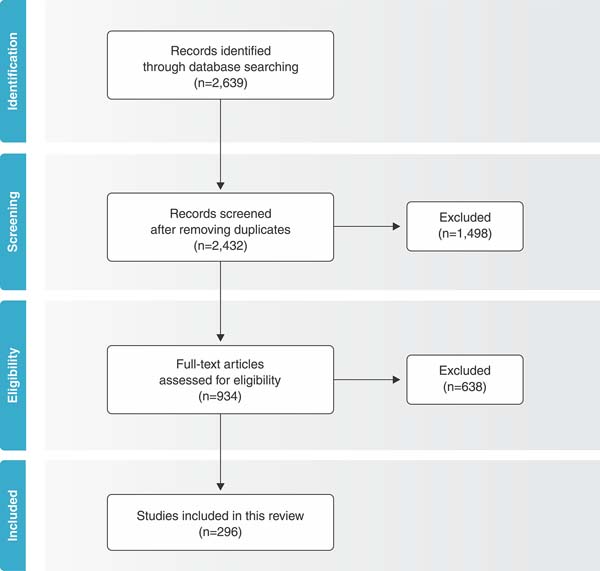
In the primary screening, after removing duplicates, 2,432 references were assessed, of which 935 were eligible for full-text review. From this subset, 296 papers were included in our analysis. Figure 1 shows a flow diagram detailing each step of study selection in accordance with the PRISMA protocol.
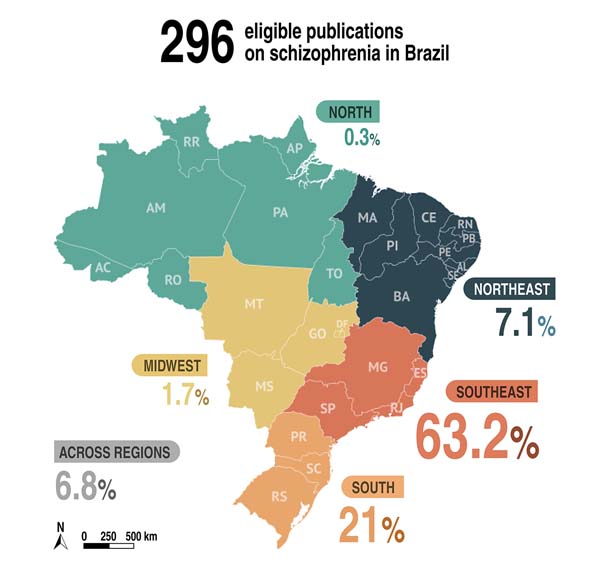
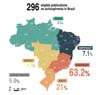
Most publications originated from the Southeast (n=187; 63.18%) - with the state of São Paulo alone contributing the majority (145; 48.98%) - followed by the South region (n=62; 20.95%). Twenty studies (6.76%) spanned more than one region of the country (Figure 2). The North, Northeast, and Midwest regions accounted for 0.3, 7.1, and 1.69%, respectively; less than 10% of included studies altogether.
When analyzing sample sizes, three institutions - Universidade Federal de São Paulo (UNIFESP) and Universidade de São Paulo (USP) in the Southeast, and Universidade Federal do Rio Grande do Sul (UFRGS) in the South - contributed over 40% of all studies, leading to potential double-counting due to repeated participation of the same subjects. As a result, clinical data from these individuals were not included in this publication.
The mean (SD) sample sizes of the included studies, categorized by the region where subjects were recruited, were as follows: Southeast, 96.31±160.89; Northeast (excluding three outliers), 82.65±90.01; South, 61.56±50.35; Midwest, 46.6±37.02; and North, 62.
Regarding study subfields, the majority (41.6%) were clinical trials, followed by genetic studies (12.9%,); nearly 10% investigated immunoinflammatory parameters; and 8.7% were neuroimaging studies, while epidemiological studies made up 4.7% of the sample. Among genetic studies, 31 (81.5%) were conducted by institutions located in the Southeast or South regions.
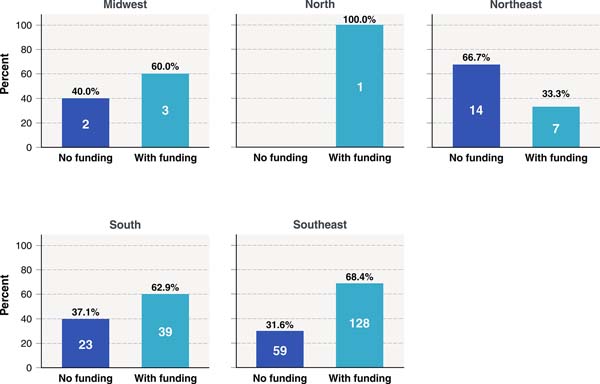
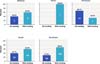
A total of 189 (64%) papers mentioned some source of funding. Most was provided by government-supported institutions, such as Coordenação de Aperfeiçoamento de Pessoal de Nível Superior (CAPES), Conselho Nacional de Desenvolvimento Científico e Tecnológico (CNPq), and state-level research support foundations. When assessing the presence of funding by the last author's region of origin (Figure 3), we found that studies from the Northeast had a lower likelihood of receiving funding from any institution compared to those in the Southeast (odds ratio [OR]: 0.23, 95%CI 0.09-0.60, p = 0.003).
DISCUSSION
Our findings indicate schizophrenia research is concentrated in the South and Southeast regions of Brazil, predominantly in large urban areas, and funding distribution mirrors this trend. Collectively, the studies assessed a relatively small number of subjects - fewer than 10,000 over the past 30 years, without considering potential overlaps across studies.
Economic and social inequalities can influence both diagnosis and treatment of schizophrenia in numerous ways. Limited access to mental health services may reduce the likelihood of accurate diagnosis and appropriate care, while greater exposure to social disadvantage can impact diagnostic liability and treatment outcomes, even when proper care is available. For instance, Black individuals are more likely to receive a diagnosis of schizophrenia, while White individuals are more frequently diagnosed with bipolar disorder,10 suggesting that diagnostic assessments may be influenced by social and ethnic background. In genetic studies, these social and economic factors can alter ORs and the variance explained by genomic variants within a model where both genetic and environmental risks contribute to disease onset.14,15 As a result, two individuals with similar genomic variants may present different phenotypes due to external factors related to social, cultural, or economic disparities. This rationale can also extend to other biomarkers and interventions. For instance, a randomized clinical trial examining a pediatrics-based behavioral intervention for anxiety and depression found significant effects among Hispanic participants, but not among White participants, suggesting that cultural factors may mediate outcomes in specific subpopulations.16
Given Brazil's extensive land area and its diverse ethnic, cultural, and socioeconomic landscape, failing to address or consider the country's diversity may perpetuate historical bias by underrepresenting certain populations, especially those with limited access to the healthcare system, low educational attainment, and living in regions plagued by poverty, crime, and violence.2 Despite the North, Northeast, and Midwest regions together comprising over 40% of Brazil's population, studies from these locations accounted for less than 10% of those included in this review.
Recent international collaborations17 have shifted their focus towards the historically underrepresented LatAm and African populations, recognizing their considerable ethnic and social complexity and their potential to contribute to risk studies and development of psychosis therapies. Nevertheless, even with these efforts, there may still be significant biases in these studies, potentially overlooking subgroups that, while substantial, constitute a minority of the recruited samples. It is noteworthy that genetic studies require robust funding and adequate infrastructure, which could explain their concentration in the Southeast and South regions of Brazil. Such studies are essential for expanding knowledge about disease, making it imperative to include a broader ethnic spectrum in their samples to better reflect the target population.8
Another key finding was the disparity in the concentration of funded studies, particularly in the Southeast region when compared to the Northeast, which differ greatly in terms of economy and ethnicity.6 This is relevant because financial support from funding agencies can help bridge this gap, contribute to wider research coverage, and, consequently, enhance the generalizability of findings to the Brazilian population as a whole.18 It should be highlighted that, while the Southeast and Northeast regions represent 41.77 and 26.91% of the Brazilian population, they accounted for 63.18 and 7.1% of the publications included herein respectively.
In Brazil, CNPq is a major source of research funding. A recent study19 assessed the profile of investigators in the health sector who had received CNPq research productivity grants (PQs) and found a remarkable predominance in the Southeast region (67.2% of all grant recipients). Moreira et al.20 evaluated this profile among researchers in the mental health field. Among those in the medicine-psychiatry sector, 62% were in the Southeast; together with the South, these two regions account for over 90% of CNPq productivity grant recipients. Expanding access to these grants to other regions of the country while maintaining already established research centers could encourage the growth of new cohorts in these areas.
There is also a significant concentration of PhD scholarships in Brazil's South and Southeast regions, which together receive approximately 60% of all such scholarships awarded. This highlights the need not only for funding opportunities and incentives to develop regional research centers, but also for a more balanced distribution of scholarships and specific research training programs in emerging centers. In 2021, Brazil's main funding agency for graduate scholarships, Coordenação de Aperfeiçoamento de Pessoal de Nível Superior (CAPES), introduced a new criterion21 which increased the weighting for municipalities with lower HDIs, thereby facilitating the allocation of scholarships to poorer regions. Initiatives like this should be supplemented by more assertive actions aimed at creating and strengthening regional research centers.
The growing demand for diversity in research is increasingly recognized, as the absence of diversity clearly undermines the core objectives of science.22 In psychosis research, this lack of representation is particularly evident.2 We emphasize the importance of addressing diversity within large, complex countries like Brazil. Another perspective to consider is what constitutes "enough" diversity. The answer likely varies based on several factors, including the specific research question and the available resources.
Numerous recommendations have been proposed, both in Brazil and globally, to tackle the so-called diversity challenge.23 Below, we summarize key points from previous authors alongside new questions that have emerged from our data:
1. Increasing funding for centers in "neglected" regions.
2. Encouraging well-established groups. Besides regional disparities and overall underfunding, our results reveal that even what has already been accomplished is not sufficient. Existing groups have managed to overcome initial challenges and establish international collaborations, which could be beneficial for new groups and researchers only now entering the field.
3. Ensuring that funding for underrepresented regions encompasses grants to build extensive networks fostering collaboration, national representativeness, and exchange of experiences and researchers across sites.
4. Expanding funding for basic and advanced research training for young investigators at these new centers.
5. Including subjects from community health centers to gain insights into the real-world standard of treatment settings for patients.
6. Involving subjects with lived experience to address issues relevant to the daily challenges faced by patients with schizophrenia.
These pieces of evidence reinforce the concern that a broader understanding of psychoses requires a shift toward the inclusion of historically neglected populations, equitable and fair partnerships between more developed centers and local institutions, better distribution of funding opportunities, and engagement of researchers living in areas home to these ethnic, social, and geographic groups. We believe that lack of diversity is not an issue exclusive to schizophrenia, but likely affects other areas of psychiatry as well. Future studies should explore these questions across different disorders, fostering a broader discussion and the search for joint solutions.
SUPPLEMENTARY MATERIALS
ACKNOWLEDGEMENTS
We gratefully acknowledge the support of the National Institute of Mental Health (NIMH) and the Fundação de Apoio à Universidade Federal de São Paulo (FapUNIFESP).
 PDF
 Print
 Send this article by email
 How to cite this article
 Submit a comment
 Mendeley
 Pocket
 Share on Facebook
 Share on Twitter