


FIGURES
| Note: How to cite this article: Dutra PEP, Nardi AE. Celebrating 120 years since the birth of Nise da Silveira: a legacy of humanization of psychiatry. Braz J Psychiatry. 2025;47:e20254339. Epub 2025 Jun 2. http://doi.org/10.47626/1516-4446-2025-4339 |
| Received: April 13 2025; Accepted: May 31 2025 |
Nise da Silveira (1905-1999) was a Brazilian psychiatrist whose greatest contribution to her field was the humanization of psychiatric treatment. The year 2025 marks the 120th anniversary of the birth of this professional who challenged the status quo of her time, breaking down barriers in the treatment of mental disorders. Her life invites reflection on how she profoundly changed both psychiatric practice and theory. Nise advocated that psychiatric treatment should be patient-centered, non-violent, and expressive.
Born in Maceió, in the state of Alagoas, in northeastern Brazil, Nise da Silveira graduated medical school in 1926 as the only woman in her class.1-3 Her work was characterized by strong opposition to invasive treatments such as lobotomy and electroconvulsive therapy (ECT), which were widely used at the time despite their coercive nature. (Psychopharmacology had not yet emerged, meaning there were no medications available for treating individuals with mental illnesses.4) Faced with this scenario, Nise da Silveira proposed harnessing the therapeutic potential of artistic expression and its symbolism as a means of communication for individuals with psychiatric disorders.1-3
Her work at Pedro II Psychiatric Hospital in Rio de Janeiro gained prominence and ushered in a revolution in Brazilian psychiatric treatment. Her introduction of occupational therapy to counteract practices she deemed inhumane later evolved into the groundbreaking Painting Workshop.2 Painting, sculpture, and other forms of artistic expression became channels through which patients could articulate their experiences with mental illness, providing invaluable insights into the psyche.5 The artworks they produced not only transformed the treatment of psychiatric patients in the country but also contributed to a broader Jungian interpretation of schizophrenia and other mental disorders.5-7
Particularly regarding the symbolic manifestations of the unconscious, Nise's trajectory was marked by the influence of Carl Gustav Jung's theory. Jung's work focused on archetypes and the collective unconscious,8 in contrast to the dominant Freudian theory, which was based on childhood experiences and repressions. Nise applied psychoanalytic theory to the works produced by patients, demonstrating that they reflected deeper psychological processes rather than merely being pathological manifestations of their illnesses.9-11
This connection between psychiatry and psychoanalytic theory made Nise's work particularly groundbreaking. In addition to corresponding with Jung himself (Figure 1), she also communicated with other Jungian professionals, legitimizing her approach as part of international psychiatric theory.9-11 Even though we live in the "era of the brain," mental illness cannot be evaluated from a reductionist perspective. Thus, the broad approach proposed by Jung and followed by Nise should be considered.11

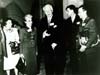
Her pioneering efforts extended beyond psychiatric treatment, profoundly influencing the psychiatric reform movement by promoting patient-centered and non-violent care, advocating for deinstitutionalization and community-based psychiatric treatment as a means of reintegrating patients into family life. In 1952, she founded the Museum of Images from the Unconscious, a realization of her innovative vision, preserving works and creative expressions produced by psychiatric patients to foster a deeper understanding of the phenomenology of mental illness.12,13
Nise's legacy is evident in any discussion regarding the ethics of psychopharmacological interventions and invasive or non-invasive therapeutic approaches. Her emphasis on art, empathy, and symbolic communication as alternatives to conventional treatments continues to inspire therapeutic practices worldwide,12-14 while her humanized, pioneering, creative, and challenging vision compels us to question the psychiatric practices we employ daily and reinforces the importance of offering respectful and dignified treatment within ethical boundaries.
Celebrating the 120th anniversary of Nise da Silveira's birth is not merely a way to acknowledge the humanization of psychiatric treatment, but also an opportunity to recognize that mental suffering has infinite layers and nuances. Artistic expression remains one of the ways through which patients can speak the unspeakable, express the inexpressible, and communicate what causes them pain and seems "unutterable."
ACKNOWLEDGEMENTS
The authors gratefully acknowledge Ms. Christina Gabaglia Penna and the Society of Friends of the Museum of Images from the Unconscious for her gracious support and for granting permission to reproduce the photograph of Nise da Silveira with Carl Gustav Jung.
 PDF
 Print
 Send this article by email
 How to cite this article
 Submit a comment
 Mendeley
 Pocket
 Share on Facebook
 Share on Twitter