



ABSTRACT:
OBJECTIVE: To compare early intervention strategies for psychosis between community-based Psychosocial
Care Centers (Centros de Atenção Psicossocial) and a specialized university service
(Grupo de Atenção às Psicoses Iniciais) in Brazil, assessing early intervention fidelity,
recovery-oriented practices, and professional stigma.
METHODS: The First Episode Psychosis Services Fidelity Scale, Recovery Self-Assessment, and
a stigma questionnaire evaluated early intervention fidelity, recovery-oriented practices,
and stigma. Data from both services were analyzed to examine correlations.
RESULTS: There was greater fidelity to early intervention strategies in the specialized university
service, whereas the Psychosocial Care Centers scored higher in recovery-oriented
practices. Despite their lower overall early intervention fidelity, the Psychosocial
Care Centers already incorporated several components of early intervention. No significant
differences in stigma levels were observed. Higher recovery-oriented practices correlated
with fewer negative stereotypes, while greater early intervention fidelity correlated
with fewer positive stereotypes.
CONCLUSIONS: The findings highlight the complementary strengths of both service models. Although
improving early intervention fidelity in Psychosocial Care Centers is a priority,
their existing community-based structure and orientation toward recovery offer a strong
platform for expanding these services. An integrated approach combining specialized
early intervention strategies with robust recovery-oriented practices could optimize
outcomes and reduce stigma.
Keywords: First episode psychosis; mental health services; low and middle income countries; schizophrenia; community; early intervention; psychosocial care.
FIGURES
| Note: How to cite this article: Pilar P, Gomes J, Gadelha A, Noto C. Early psychosis care in Brazil: a comparative study of a specialized university center and community-based services. Braz J Psychiatry. 2026;48:e20254230. http://doi.org/10.47626/1516-4446-2025-4230 |
| Received: March 16 2025; Accepted: August 10 2025 |
INTRODUCTION
The early stages of psychosis are a critical period for intervention, with early detection and treatment significantly improving long-term outcomes.1,2 However, in low and middle income countries, such as Brazil, barriers such as stigma, limited access to specialized care, and insufficient recovery-oriented practices (ROP) persist.3 Despite the robust structure of Brazil's mental health network, including over 2,800 Psychosocial Care Centers (Centros de Atenção Psicossocial [CAPS]), no specific policies for early psychosis intervention are in place.4
Greater understanding of psychosis has shifted the perspective from a deteriorating, irreversible, and highly disabling health condition to a more hopeful view of clinical outcomes.5 Early detection and intervention, attention to cognitive deficits in early stages of the disease, integration of medical and psychosocial care, and stigma mitigation have directed focus toward better prognosis.6,7
The duration of untreated and active psychosis has been increasingly demonstrated as a prognostic marker, corroborating a neuroprogressive trajectory throughout life.7,8 Late treatment is associated with poor recovery, substance abuse, higher levels of stress, disruption of daily activities, violence, impaired social relationships, caregiver burden, and increased treatment resistance and costs.9
Based on the hypothesis that the initial years following the first-episode psychosis (FEP) are a malleable period and are critical and for interventions,10 early intervention programs have spread worldwide, focusing on recovery-oriented strategies.11 These programs require immediate symptom assessment and pharmacological and psychosocial interventions to minimize treatment delay, prevent relapses, and increase recovery rates.12,13 Although these programs have proven cost-effective,14,15 there are still few specialized early intervention centers, especially in low and middle income countries. In Latin America, for example, such centers are limited to research facilities in major cities and tertiary health care levels.3,16
Mental health care in Brazil has been undergoing a process of deinstitutionalization and reorientation for nearly 4 decades, resulting in a robust and well-structured public mental health network integrated into the Brazilian Unified Health System (Sistema Único de Saúde).17 This network is designed to provide comprehensive and integrated care to individuals, with CAPS serving as its cornerstone.18 Currently, Brazil has 2,836 CAPS units distributed across 1,910 municipalities.4 In the city of São Paulo, there are 33 CAPS units for children and adolescents, 35 for alcohol and drug-related issues (CAPS Álcool e Drogas), and 34 for adults, totaling 102 units.19
Despite the well-established structure of Brazil's mental health network, there is a notable lack of specific policies and programs targeting early intervention in psychosis. While international evidence highlights the benefits of early detection and specialized care for FEP, such practices remain underdeveloped in Brazil, particularly within the CAPS framework. This study aims to address this gap by comparing early intervention strategies between CAPS and a specialized outpatient service for FEP (Grupo de Atenção às Psicoses Iniciais [GAPi]), assessing their effect on ROP and stigma among health care professionals. By identifying the strengths and limitations of both service models, this study is an effort to facilitate the development of tailored early intervention programs that align with Brazil's mental health system while incorporating evidence-based practices to improve outcomes for individuals experiencing psychosis.
METHODS
Study design
This cross-sectional observational study compared early intervention strategies between CAPS and GAPi and explored potential associations with ROP and stigma level among health care professionals.
Study sites and participants
This study was conducted in five mental health service centers in São Paulo, Brazil, all located within the catchment area of the Southeast Regional Health Coordination (Coordenadoria Regional de Saúde Sudeste), which ensured geographical consistency across services. The Southeast Regional Health Coordination covers a densely populated region (2.66 million inhabitants over 210.9 km2) characterized by social diversity and a notable concentration of homeless individuals (28.3% of the city's homeless population), reflecting complex social challenges that demand integrated health and social care responses.
The sample comprised mental health professionals from two adult CAPS units (Sapopemba and Vila Monumento), two child & adolescent CAPS units (Vila Prudente and Sapopemba), and GAPi, a university outpatient clinic. The inclusion criteria were location in the Southeast Regional Health Coordination region, care provision for adolescents and adults with psychosis, and the presence of a multidisciplinary team. Alcohol & drug CAPS units were excluded, as psychosis is not their primary treatment focus, and patients with psychosis are typically referred to other units. The inclusion of both adult and child & adolescent CAPS units reflects the typical age range of FEP, i.e., late adolescence to early adulthood. All CAPS units selected for the study operated under the administrative oversight of Southeast Regional Health Coordination, ensuring a consistent regional framework for service delivery and care pathways. Once the services were selected, all mental health professionals from the permanent staff of these units were invited to participate in the study.
CAPS units are public community-based services providing multidisciplinary care for individuals with severe and persistent mental disorders and/or intense psychological distress. The services are tailored to the needs of different populations, including adults, children, adolescents, and individuals with substance use disorders. CAPS units operate either on a 24-hour basis or during daytime hours, offering individualized therapeutic plans developed collaboratively by health care teams, patients, and families. Their services encompass psychotherapy, occupational therapy, social support, and community engagement, with referral, reference, and counter-referral processes integrated into Unified Health System protocols, emphasizing territorial linkages.
GAPi is an outpatient clinic affiliated with the Universidade Federal de São Paulo and located at the Centro de Atenção Integrada à Saúde Mental. It specializes in providing multidisciplinary, early intervention care to individuals aged 16-35 who are experiencing their FEP. Medical care, family and peer support, neuropsychological and cognitive rehabilitation, and social services are delivered by a team consisting of permanent staff and supervised students. GAPi follows an early intervention protocol and develops individualized care plans in collaboration with patients and families. Most referrals to GAPi originate from the Centro de Atenção Integrada à Saúde Mental emergency department, with counter-referrals managed through integrated networks within the Unified Health System.
Instruments
First Episode Psychosis Services Fidelity Scale
The First Episode Psychosis Services Fidelity Scale (FEPS-FS) is a 31-item scale used to assess the quality of early intervention programs, with item scores ranging from 1 to 5 (4 indicating satisfactory performance). The total score is the sum of all item scores, with a cut-off of 124 points indicating excellent fidelity. The information required to complete the scale is obtained from service descriptions, supplemented by administrative data, and details are provided by the unit manager.20 The FEPS-FS, originally developed by Addington et al.,20 was used in this study to evaluate the degree of implementation of evidence-based practices in early intervention services. Although the instrument has been validated in its original context, it has not yet been formally translated and culturally adapted to Brazilian Portuguese. For the purposes of this exploratory study, the research team performed an internal translation of the FEPS-FS to enable its preliminary use in Brazil, aiming to provide insight into the applicability and relevance of fidelity assessments for early psychosis services. Prior to its application, the evaluator reviewed the original publications and participated in internal training sessions with the research team, including practice applications, to ensure consistent and reliable use of the instrument during interviews with multidisciplinary teams.
Recovery Self-Assessment
The Brazilian version of the Recovery Self-Assessment (RSA-R) was applied. This 32-item scale assesses ROP, which are rated on a 5-point Likert scale, and is available at https://www.fcm.unicamp.br/fcm/laboratorio-saude-coletiva-e-saude-mental-interfaces/publicacoes/recovery-self-assesment-rsa-r. The application manual is provided in Erazo-Chavez et al.21 Higher scores indicate higher fidelity to recovery orientation practices.
Stigma questionnaire adapted from Loch et al.22
This instrument assesses stigma levels among health care professionals, with scores ranging from 1 to 3 (higher scores indicating greater stigma).22,23
Procedures
The researcher who administered the instruments (PP) was a professional with extensive knowledge of the functioning of the public health care system in Brazil and was able to gather public information prior to data collection. Following ethical approval and institutional authorization, the units were contacted by email. Upon receiving consent from the unit coordinators, two stages of data collection were scheduled.
Stage 1
The researcher completed the FEPS-FS in collaboration with the service manager, using institutional information and publicly available documents. The structure of the medical records and the procedures for case management were also presented. However, individual medical records were not accessed to ensure patient privacy. The assessment was conducted during a single meeting lasting approximately 2 hours.
Stage 2
All health care professionals from the five participating services were invited to the second stage of data collection: including 10 professionals from CAPS Vila Monumento, 10 from CAPS Sapopemba, 17 from CAPS Infantojuvenil Vila Prudente, 13 from CAPS Infantojuvenil Sapopemba, and five from GAPi, totaling 55 prospective participants. The professionals who agreed to participate took part in collective administration of the RSA-R and the stigma questionnaire, facilitated by the researcher. The questions were read aloud by the researcher and answered individually by each participant during a single meeting lasting approximately 2 hours.
Data analysis
Descriptive statistics were used to summarize the data, which are presented in frequency tables, graphs, and measures of central tendency and dispersion for each questionnaire, with missing items. Normality was assessed using the Shapiro-Wilk test, and non-parametric tests (Mann-Whitney, Spearman correlation) were applied in cases of non-normal data distribution. Statistical significance was set at a = 0.05. Non-parametric correlation analysis utilized the Spearman coefficient, and correlations were categorized as weak (0 < |?| < 0.4), moderate (0.4 = |?| < 0.7), or strong (0.7 = |?| < 1).24 All analyses were performed in R.
Ethics statement
This study was approved by the research ethics committees of the Universidade Federal de São Paulo and the Secretaria Municipal de Saúde de São Paulo (decision 52993521.7.3001.0086). A letter of authorization was also issued by the Secretaria Municipal de Saúde de São Paulo, and the Hospital São Paulo research ethics committee also granted permission to conduct the study at the selected sites. All participants provided written informed consent and were informed about the voluntary nature of their participation and the study procedures.
RESULTS
In step 1, five mental health units were evaluated, four CAPS units and GAPi. In step 2, 55 health professionals were assessed, including five (9%) from GAPi and 50 (91%) from the four CAPS units. The participants were predominantly women (87%), aged between 22 and 62 years, and had a mean age of 38.5 years (SD = 7.9). Most had a graduate degree (38.5%), and psychologist was the most common occupation (20%). Most participants had worked for 3 to 5 years (36%), followed by 6 to 10 years (22%). For sociodemographic information, see Table 1.
| Variable | CAPS | GAPi | Total |
|---|---|---|---|
| Educational level | |||
| High school | 14 (28) | 0 (0) | 14 (25) |
| Graduate school | 14 (28) | 3 (60) | 17 (31) |
| Post-graduation | 22 (44) | 2 (40) | 24 (44) |
| Occupation | |||
| Nursing assistant | 10 (20) | 0 (0) | 10 (18) |
| Social worker | 4 (8) | 0 (0) | 4 (7) |
| Pharmacy technician | 2 (4) | 0 (0) | 2 (4) |
| Care assistant | 5 (10) | 0 (0) | 5 (9) |
| Physical educator | 1 (2) | 0 (0) | 1 (2) |
| Nurse | 4 (8) | 0 (0) | 4 (7) |
| Doctor of medicine | 3 (6) | 2 (40) | 5 (9) |
| Psychologist | 8 (16) | 3 (60) | 11 (20) |
| Psychopedagogue | 1 (2) | 0 (0) | 1 (2) |
| Nursing technician | 1 (2) | 0 (0) | 1 (2) |
| Occupational therapist | 6 (12) | 0 (0) | 6 (11) |
| Pharmaceutical | 4 (8) | 0 (0) | 4 (7) |
| Speech therapist | 1 (2) | 0 (0) | 1 (2) |
| Age (years) | |||
| < 30 | 4 (8) | 0 (0) | 4 (7) |
| 30-39 | 29 (58) | 4 (80) | 33 (60) |
| 40-49 | 11 (22) | 1 (20) | 12 (22) |
| = 50 | 6 (12) | 0 (0) | 6 (11) |
| Sex | |||
| Female | 45 (90) | 3 (60) | 48 (87) |
| Male | 5 (10) | 2 (40) | 7 (13) |
| Time on job (years) | |||
| < 1 | 9 (18) | 1 (20) | 10 (18) |
| 1-2 | 3 (6) | 0 (0) | 3 (5) |
| 3-5 | 18 (36) | 2 (40) | 20 (36) |
Data presented as n (%).
CAPS = Psychosocial Care Centers (Centros de Atenção Psicossocial); GAPi = Grupo de Atenção às Psicoses Iniciais.
Early intervention strategies
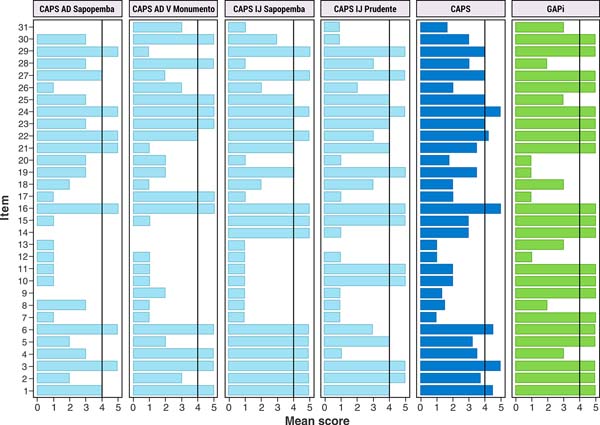
GAPi scored 123 on the FEPS-FS, just below the 124-point cutoff for excellence, while CAPS scores ranged from 81 to 99, indicating suboptimal practices. The child & adolescent CAPS units scored higher than the adult CAPS units (Table 2). Although our study compared types of services (CAPS vs. GAPi) in this analysis, an exploratory discriminant analysis was conducted of the four CAPS units to identify similarities and differences in early intervention strategies. GAPi outperformed all CAPS units and the overall CAPS mean. The adult CAPS unit in Sapopemba had the lowest performance.
| Center | Items | Missing | Mean/total | Satisfactory (%)┼ |
|---|---|---|---|---|
| General CAPS | 31 | 0 | 3.0/93.0 | 32.3 |
| CAPS IJ Sapopemba | 31 | 0 | 3.2/99.0 | 54.8 |
| CAPS IJ Vila Prudente | 30 | 1 | 3.1/94.0 | 50.0 |
| CAPS Sapopemba | 28 | 3 | 2.9/81.0 | 32.1 |
| CAPS Vila Monumento | 29 | 2 | 3.0/87.0 | 41.4 |
| GAPi | 31 | 0 | 4.0/123.0 | 64.5 |
CAPS = Centros de Atenção Psicossocial (Adult Psychosocial Care Centers); CAPS IJ = CAPS Infantojuvenil (Child & Adolescent Psychosocial Care Centers); GAPi = Grupo de Atenção às Psicoses Iniciais (Early Psychosis Care Group).
┼ Percentage of FEPS-FS items rated = 4, indicating satisfactory fidelity to early intervention strategies.
Figure 1 illustrates the mean scores per item for the four CAPS units and GAPi, as well as the mean overall CAPS scores. CAPS (overall) outperformed GAPi in six items (19.4%), the services performed equally in four items (12.9%), and GAPi performed better in the remaining 21 FEPS-FS items (67.7%).
Recovery-oriented practices
CAPS had significantly higher RSA-R scores than GAPi (3.7 [SD, 0.5] vs. 3.2 [SD, 0.5], p = 0.04), indicating more intensive ROP in CAPS (Table 3). Due to the non-normal distribution of CAPS total scores, the Mann-Whitney test was used, confirming significant differences between CAPS and GAPi.
| Domain/scale | CAPS (n=50) | GAPi (n=5) | Mann-Whitney p-value |
|---|---|---|---|
| RSA-R (total) | 3.7±0.5 | 3.2±0.5 | 0.04 |
| Stigma total | 2.1±0.2 | 2.0±0.1 | 0.21 |
| Positive stereotypes | 2.2±0.4 | 2.1±0.2 | 0.58 |
| Negative stereotypes | 2.1±0.4 | 2.1±0.1 | 0.92 |
| Prejudice | 2.5±0.3 | 2.5±0.4 | 0.89 |
| Social distance | 1.5±0.3 | 1.3±0.2 | 0.10 |
| Civil rights restrictions | 1.6±0.4 | 1.7±0.0 | 0.77 |
Mean ± SD presented.
CAPS = Centros de Atenção Psicossocial (Psychosocial Care Centers); GAPi = Grupo de Atenção às Psicoses Iniciais (Early Psychosis Care Group).
Normality assessed using the Shapiro-Wilk test; group comparisons made using the Mann-Whitney U test.
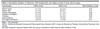
Regarding the association between RSA-R and FEPS-FS (n=5; four CAPS units and one GAPi unit), there was a strong negative correlation (r = -0.9, p = 0.037), indicating that higher early intervention strategy scores were associated with lower recovery practice scores.
Stigma level
No significant differences were observed in stigma levels between CAPS and GAPi (p > 0.05). Table 3 includes descriptive and inferential analyses for each stigma domain. Some stigma domains were non-normally distributed (p < 0.05) according to the Shapiro-Wilk test, while civil rights restrictions in GAPi had zero variance, preventing application of this test. The Mann-Whitney test indicated no significant differences in stigma between CAPS and GAPi.
Early intervention, recovery, and stigma
Table 4 summarizes the correlation coefficients between early intervention strategies, recovery practices, and stigma domains. A significant negative correlation was found between perceived prejudice and ROP (r = -0.34, p = 0.012), suggesting that higher perceived prejudice is associated with lower ROP. No significant correlation was found between ROP and positive stereotypes (p > 0.05). A strong negative correlation was also observed between early intervention strategies and positive stereotypes (r = -1.0, p < 0.001), indicating that increased early intervention efforts are related to a lower level of positive stereotypes. No significant correlations were found between early intervention strategies and total stigma or other domains (p > 0.05).
| Correlated variables | Correlation coefficient (r) | p-value |
|---|---|---|
| FEPS-FS vs. RSA-R | -0.90 | 0.037 |
| RSA-R vs. prejudice | -0.34 | 0.012 |
| FEPS-FS vs. positive stereotypes | -1.00 | < 0.001 |
| FEPS-FS vs. negative stereotypes | 0.30 | 0.620 |
| FEPS-FS vs. total stigma | -0.10 | 0.870 |
FEPS-FS = First Episode Psychosis Services Fidelity Scale; RSA-R = Recovery Self-Assessment.

DISCUSSION
This study compared early intervention strategies for psychosis in different mental health services in the city of São Paulo. As expected, GAPi - a specialized service for FEP - had the highest scores in specialized early intervention strategies. Nevertheless, it scored 123 points on the FEPS scale, slightly below the cutoff of 124 proposed by Addington et al.20 as the threshold for excellence, suggesting that some aspects still require improvement. These include: 1) active outreach, 2) community skills training, and 3) cognitive behavioral therapy.
The CAPS units, in contrast, scored between 81 and 99 points on the FEPS scale, below the threshold for specialized early intervention. Although this finding was anticipated, given that CAPS units serve a broader and often chronic population, it is noteworthy that these services still demonstrated partial adherence to practices associated with early psychosis intervention, which can be considered a significant and somewhat surprising finding.
This partial adherence can be interpreted from two complementary perspectives. The first is structural barriers to early intervention programs, as outlined by O'Connell et al.,25 such as lack of funding, political disinterest, the existence of pre-established services, socioeconomic inequalities, high rates of unemployment and psychosis in deprived areas, difficulty reaching marginalized groups (e.g., refugees and asylum seekers), and challenges specific to low-income countries. The second is the very nature of CAPS services, which are grounded in the ethical and political principles of Brazilian psychiatric reform, i.e., emphasizing subjective experience, individual needs, and community-based care.26 This ethos could challenge the implementation of more protocol-driven and standardized early intervention programs.
Despite these limitations, the CAPS units scored relatively high on six of the FEPS-FS items: 1) comprehensive assessment of psychosocial needs; 2) services for patients with substance use disorders; 3) active outreach; 4) community skills training; 5) multidisciplinary team; and 6) education targeting health/social/community service groups. These practices align with the principles of Brazil's national mental health policy,4 indicating that even though CAPS are not designed specifically for early intervention, they incorporate elements that support such an approach.
In addition, both CAPS and GAPi performed well on three essential items: 1) comprehensive clinical assessment; 2) having a designated case manager/care coordinator; and 3) having a psychiatrist on the multidisciplinary team. Conversely, both services scored low in individual or group cognitive behavioral therapy, despite the international evidence base supporting its use in early psychosis.1,27
In summary, while CAPS are not specialized early intervention services, the data suggest that they partially adopt early intervention practices, which is a relevant advancement aligned with Unified Health System principles.
The child & adolescent CAPS units scored higher in early intervention strategies than the adult CAPS units. This could reflect different patient profiles, since child & adolescent CAPS, by serving a younger population, are more likely to encounter individuals in the early stages of illness. In contrast, adult CAPS may predominantly serve more chronic cases. Although this hypothesis was not directly assessed in the present study, it warrants consideration and suggests that distinguishing between CAPS types in FEP care could help guide funding priorities and public policy planning.
Contrary to the initial hypothesis, there was a negative correlation between early intervention strategies and ROP: although GAPi demonstrated better fidelity to early intervention strategies, the CAPS units scored higher in ROP. Although the CAPS units had early intervention scores than GAPi, they had stronger ROP scores. The negative correlation observed in GAPi could likely be attributed to several interconnected factors. First, its function as a reference center for the most severe and complex cases might foster clinical pessimism, skewing the professionals' perspectives towards a uniformly dire prognosis - an outlook potentially amplified by the lack of interdisciplinarity among its predominantly psychiatric and psychological staff. This specialized focus can, in turn, create inherent tension with the core tenets of recovery, i.e., the service's rigid protocols, while ensuring fidelity to early intervention models, could clash with the flexibility and individual autonomy that are central to a person-centered approach. Finally, this emphasis on structured clinical plans naturally prioritizes individual treatment over broader social and community integration, a domain more central to the ethos of models like CAPS, thus potentially overlooking a critical dimension of holistic recovery. According to the RSA-R results,21 this suggests that CAPS services prioritize intensive, community-focused actions aimed at life goals, social and political inclusion, diverse treatment options, patient choice, and individualized care. This aligns with the broader objectives of CAPS services, which emphasize psychosocial rehabilitation and personalized support over standardized protocols.
Although weak, the significant negative correlation between perceived prejudice and ROP underscores the importance of promoting autonomy, social participation, and citizenship to reduce stigma and improve outcomes for individuals with mental disorders. However, anti-stigma interventions in low and middle income countries remain underdeveloped, requiring public policies, mental health education, and integration into primary care.28 Recovery, which relies on a sense of belonging, participation, and hope, is often hindered by stigma rooted in societal fears and prejudices.29,30 Substantial investment in initiatives that foster understanding of mental disorders is crucial to combat stigma both within and beyond mental health services.31
A significant negative correlation was found between early intervention scores (FEPS-FS) and positive stereotypes, suggesting that services with stronger early intervention strategies tend to have a less idealized view of schizophrenia. The diversity of professionals in CAPS, with their varied experiences and knowledge, can offer a broader understanding of patient needs, potentially fostering a more comprehensive approach to recovery. This contrasts with the potential for a narrower focus in specialized services like GAPi, where the emphasis on specific early intervention strategies could overshadow the importance of social inclusion and long-term recovery goals. The concept of recovery extends beyond preventing relapse and minimizing the impact of the illness. It encompasses the journey of patients toward reclaiming their life as equal citizens, engaging in a dialogical and relational process of social inclusion. While "realistic hope," i.e., focusing on achievable goals, is important, recovery also involves subjective values (Connectedness, Hope, Identity, Meaning, and Empowerment framework) that are not solely guided by objective criteria. Integrating both approaches, working with patients on realistic goals within a framework of personal aspirations, social inclusion, and citizenship, is essential in the recovery process.32
Our findings should be interpreted in light of some limitations. First, our study focused on a single specialized service for FEP (GAPi), which could limit the generalizability of the findings to similar services. Future research should include a broader range of specialized centers to identify common patterns and enhance external validity. Second, the unequal distribution of professionals between CAPS and GAPi created challenges in achieving sample equivalence, potentially affecting the comparability of results. Third, the data collected from managers relied heavily on subjective assessments and percentage estimates, underscoring the need for more objective and standardized data collection methods. Finally, the diversity of diagnoses among CAPS users hindered application of early intervention measurement tools specifically designed for psychosis, suggesting the need for more tailored instruments in future studies. Additional limitations could include the study's cross-sectional design, which limits causal inferences, and potential bias due to the self-reported data from health care professionals.
This study highlights critical gaps in early intervention practices in Brazil's mental health network, particularly in CAPS, despite their strengths in recovery-oriented care. While GAPi, a specialized service, demonstrated stronger early intervention strategies, it still fell short of the excellence threshold, indicating room for improvement in areas such as active outreach. The CAPS units scored significantly lower in early intervention but excelled in ROP, reflecting their emphasis on psychosocial rehabilitation and individualized care. The negative correlation between early intervention and ROP suggests the need for a more integrated approach, combining the strengths of both models: the specialized early intervention strategies of GAPi with the community-oriented, recovery-focused practices of CAPS. Such integration would provide comprehensive care that addresses the acute phase of psychosis while promoting long-term recovery and social inclusion. Additionally, the pervasive issue of stigma across both service models underscores the importance of anti-stigma initiatives to improve outcomes for individuals with psychosis.
To address these challenges, we recommend: 1) integrating evidence-based early intervention protocols into CAPS, tailored to the Brazilian context; 2) enhancing training and resources for health care professionals to improve implementation of early intervention strategies; 3) developing public policies and educational campaigns to reduce stigma and promote mental health awareness; and 4) fostering collaboration between specialized services like GAPi and community-based services like CAPS to share best practices and improve care coordination. Encouraging ROP in centers that follow a protocol model centered on biomedical practice requires a paradigm shift towards person-centered care. This can be achieved through training and education that emphasizes the importance of patient autonomy, empowerment, and social inclusion. Collaborative approaches, such as those between CAPS and GAPi, can facilitate an exchange of knowledge and best practices, promoting a more integrated care model. For instance, incorporating peer support workers into GAPi and integrating CAPS social inclusion programs into GAPi could help bridge the gap between the two approaches. By bridging the gap between specialized and general services, Brazil can advance its mental health reform goals and improve the lives of individuals experiencing early psychosis.
 PDF
 Print
 Send this article by email
 How to cite this article
 Submit a comment
 Mendeley
 Pocket
 Share on Facebook
 Share on Twitter



