



FIGURES
| Received: February 27 2020; Accepted: June 10 2020 |
Since bipolar disorder (BD) was first described, clinicians and researchers have been trying to help patients to overcome it and lead fulfilling lives. However, satisfactory clinical control is still rarely achieved: most individuals with BD require maintenance treatment to prevent new episodes and restore quality of life.1 Although it has been observed that BD patients undergo different phases according to treatment response, the literature describes them with inconsistent terminology, and we would like to reflect on the effects of this confusion.
From this perspective, there has been growing awareness of the need to determine a state of remission or euthymia. Therefore, we begin with a presentation of the basic concepts and recovery phases in the figure below.2
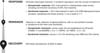
An interesting recent study by Rocha & Correia3 pointed out that, despite some recommendations, there is no precise description of the state of euthymia, which has led to widely varying definitions across studies. In fact, the remission cut-off points found in literature usually range from 6 to 14 for the Hamilton Depression Rating Scale, and from 6 to 12 in the Young Mania Rating Scale. Additionally, satisfactory clinical control is rarely achieved in BD: patients frequently maintain residual psychopathology, even in "euthymia," which raises questions about the validity of this concept.
Moreover, we would like to draw attention to another relevant problem: we have observed that subsyndromal and residual terms are being misguidedly bundled under the same rubric. Traditionally, the term subsyndromal has been used to describe symptoms with insufficient weight (in number or duration) to meet the criteria for a diagnosis. In BD, the same criteria are used to determine an episode in the course of the disorder, assessed through DSM or Clinical Global Impression. The term residual, however, denotes the persistence of any level of symptomatology falling below the predetermined cut-off points for euthymia in mood rating scales (i.e., the intensity of symptoms that remains during or after treatment). Therefore, subsyndromal indicates the quantity of mood symptoms (present or absent), while discussion of residual symptoms focuses on intensity.
A number of articles have treated subsyndromal and residual symptoms as synonymous, while others have understood them as complementary factors. To exemplify these discrepancies, we cite some of the most common divergences: a) the use of total Hamilton Depression Rating Scale/Young Mania Rating Scale scores to determine associations with subsyndromal symptoms; b) the definition of subsyndromal symptomatology using intensity below the threshold required for an episode; c) assessing the presence/absence of symptoms and labeling them as residual; d) discussing other symptoms (i.e. cognition, sleep), without measuring intensity, while referring to them as residual, etc. These disparities also contribute to a lack of standardized language among those who work with BD patients, which indicates the need for clarification.
Despite the fact that remission is typically defined using both symptomatic and syndromal elements, most clinicians and researchers only assess remission through total score thresholds, most often either the Hamilton Depression Rating Scale, the Bipolar Depression Rating Scale, the Young Mania Rating Scale or the Montgomery-Asberg Depression Rating Scale without referring to the recommended definition of syndromal. Although there might be several difficulties in measuring syndromal aspects in clinical and research practice, what does a single total score say in terms of clinical relevance?
Considering that the cumulative evidence points to the overwhelming impact of residual and/or subsyndromal symptoms on functional outcome levels4 and that their reduction is an important target for preventing relapse/recurrence, how can we precisely target these symptoms if we do not discriminate their boundaries? What is their real impact? How can we adapt pharmacological and psychosocial therapeutic strategies to the specific subsyndromal and residual symptoms expressed by the patients we treat?
No clear approach about how to validate these terms has been presented. We continue to see a gap between euthymia and recovery and a failure to distinguish between residual and subsyndromal symptoms, which indicate that we still have much to learn about scientific methodology. Thus, there is a need to standardize these terminologies, not just to facilitate comprehension of the disorder's evolution, but to enable comparisons between studies. By refining the dialogue between clinical and research practice, finer-grained management strategies can be developed. Finally, in light of the above, we suggest that greater effort should be made in this direction.
Disclosure
The authors report no conflicts of interest.
 PDF
 Print
 Send this article by email
 How to cite this article
 Submit a comment
 Mendeley
 Pocket
 Share on Facebook
 Share on Twitter



