


FIGURES
| Received: May 25 2020; Accepted: July 3 2020 |
Tokophobia is a pathological fear or avoidance of childbirth, which has received little attention and has been often neglected.1 This condition negatively influences the pregnant woman's life or the acceptance of her pregnancy; it leads to the extension of pregnancy duration or motivates requests for caesarean sections. After birth, tokophobia may also delay bonding between the mother and the newborn, leading to breastfeeding difficulties and increasing the risk of puerperal depression.2 Tokophobia is associated with intrauterine growth restriction, low birth weight, changes in fetal heartbeat, and prematurity, which are probably due to uterine artery dysfunction, a phenomenon that has been identified in pregnant women. However, the long-term effects on the child's development have not yet been established.3
Most surgeries are performed electively with no obstetric indication, using the phobia as an excuse. Due to the very peculiar characteristics of the judicialization of medicine, the convenience and financial accessibility of cesarean delivery, as well as the actual fear of childbirth, there has been a reduction in the incidence of vaginal birth, which has increased the cost of giving birth, as well as its complications.4
The lack of instruments or scales developed or validated in Portuguese for the Brazilian cultural context, as well as the impossibility of objectively identifying and measuring tokophobia, make adequate therapeutic guidance difficult.
A systematic review and meta-analysis was performed of the risk factors. The perception of tokophobia was assessed among pregnant women and prenatal health care professionals to identify the peculiarities of tokophobia in the Brazilian socio-cultural and clinical-obstetric context. The conceptual and psychometric analysis process allowed the development and validation of the Tokophobia Assessment Questionnaire (Questionário de Avaliação da Partofobia) in Brazilian Portuguese, available from the authors upon request. This research project was approved by the Universidade do Sul de Santa Catarina research ethics committee (protocol 87312818.0.0000.5369).
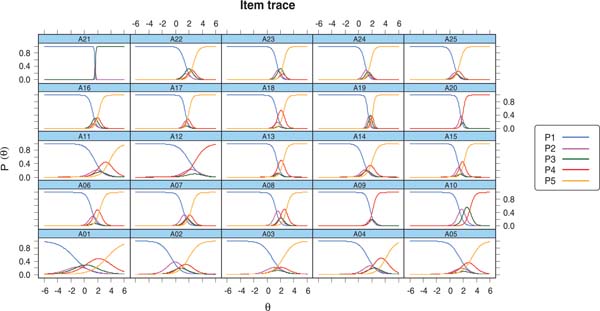
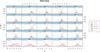
The Tokophobia Assessment Questionnaire has been validated5; its reliability was measured with the Pearson correlation coefficient (0.766) and the intraclass correlation coefficient (0.856). Bland-Altman analysis showed a central tendency between the difference and mean of the two Tokophobia Assessment Questionnaire applications in almost the entire sample. The general Cronbach's alpha was 0.935 (Table 1). The Kappa index was 0.444 and the Pearson correlation coefficient between the first application of the Tokophobia Assessment Questionnaire and the Depression, Anxiety and Stress Scale was 0.607. Exploratory factor analysis identified six factors categorized into conceptual groups: physical repercussions (factor 1); feeling of panic (factor 2); social involvement (factor 3); interference in daily habits (factor 4); pregnancy avoidance (factor 5); self-perception of tokophobia (factor 6) (Table 1). Use of the item response theory demonstrated the suitability of all items (Figure 1).
| Tokophobia Assessment Questionnaire subscales | Cronbach's a | Factor loading | |
|---|---|---|---|
| Factor 1 - Physical summation (7 items) - Cronbach's a = 0.910 | |||
| 15 | My fear of childbirth causes me nightmares. | 0.704 | 0.395 |
| 17 | I am so afraid of childbirth that I cannot feel pleasure in being pregnant. | 0.749 | 0.855 |
| 19 | I am so afraid of childbirth that it is causing me physical symptoms. | 0.775 | 0.823 |
| 20 | I am so afraid of childbirth that I have already thought of doing harm to myself. | 0.708 | 0.648 |
| 21 | I am so afraid of childbirth that I have already thought about terminating my pregnancy. | 0.716 | 0.887 |
| 22 | I am so afraid of childbirth that I feel that no one can help me. | 0.665 | 0.719 |
| 23 | I am so afraid of childbirth that I wish I had not become pregnant. | 0.673 | 0.723 |
| Factor 2 - Feeling of panic (4 items) - Cronbach's a = 0.873 | |||
| 16 | My fear of childbirth is causing me panic. | 0.710 | 0.672 |
| 18 | I am so afraid of childbirth that just talking about it makes me desperate. | 0.718 | 0.556 |
| 24 | I am so afraid of childbirth that I cannot think of anything else but childbirth. | 0.691 | 0.813 |
| 25 | I am so afraid of childbirth that I think I will panic when the time comes. | 0.632 | 0.841 |
| Factor 3 - Social involvement (4 items) - Cronbach's a = 0.820 | |||
| 05 | I avoid receiving or sharing information about childbirth. | 0.408 | 0.760 |
| 08 | My fear of childbirth is interfering with my housework. | 0.670 | 0.727 |
| 09 | My fear of childbirth is interfering with my relationship with my family. | 0.607 | 0.780 |
| 10 | My fear of childbirth is interfering with my relationship with my partner. | 0.699 | 0.567 |
| Factor 4 - Interference with daily habits (4 items) - Cronbach's a = 0.750 | |||
| 11 | My fear of childbirth is interfering with my eating habits. | 0.405 | 0.790 |
| 12 | My fear of childbirth is interfering with my physical activities. | 0.393 | 0.856 |
| 13 | My fear of childbirth is interfering with my work. | 0.655 | 0.573 |
| 14 | My fear of childbirth is interfering with my sleep. | 0.678 | 0.395 |
| Factor 5 - Avoidance of pregnancy (4 items) - Cronbach's a = 0.744 | |||
| 03 | I tried to avoid pregnancy as much as possible due to my intense fear of childbirth. | 0.482 | 0.785 |
| 04 | My fear of childbirth has prevented me from enjoying sexual intercourse. | 0.503 | 0.445 |
| 06 | My fear of childbirth increases when I see another pregnant woman. | 0.710 | 0.380 |
| 07 | My fear of childbirth is so great that I feel the need for some treatment to reduce it. | 0.668 | 0.453 |
| Factor 6 - Self-perception of tokophobia (2 items) - Cronbach's a = 0.599 | |||
| 01 | I consider childbirth to be extremely dangerous. | 0.272 | 0.880 |
| 02 | I am very afraid of childbirth and I consider this fear exaggerated. | 0.508 | 0.470 |
Therefore, the 25-item Tokophobia Assessment Questionnaire is reliable and valid and is the first instrument for assessing the clinical, emotional and psychiatric manifestations of tokophobia. Although developed for the Brazilian population, the instrument may have worldwide applicability.
ACKNOWLEDGEMENTS
This study was partially funded by the Coordenação de Aperfeiçoamento de Pessoal de Nível Superior (CAPES; financing code 001).
Disclosure
The authors report no conflicts of interest.
 PDF
 Print
 Send this article by email
 How to cite this article
 Submit a comment
 Mendeley
 Pocket
 Share on Facebook
 Share on Twitter