



ABSTRACT:
OBJECTIVES: To investigate the prevalence of and factors associated with chronic insomnia and
obstructive sleep apnea (CIOSA) comorbidity in obstructive sleep apnea (OSA) patients.
METHODS: Between March 2014 and March 2015, we conducted a prospective, cross-sectional study
of 238 adults diagnosed with OSA according to polysomnography and International Classification
of Sleep Disorders-Third Edition criteria.
RESULTS: The prevalence of CIOSA was 29%. There was a trend towards older age in the CIOSA
group. Sex was not associated with CIOSA. Sleep-maintenance and sleep-onset insomnia
predominated in the sample. Beck's depression and anxiety inventory scores were higher
in the CIOSA group. Both depression and anxiety symptoms were associated with CIOSA.
The arousal and apnea-hypopnea indices were lower in the CIOSA group. CIOSA was also
associated with age = 60 years and current tobacco use. Severe OSA and alcohol use
were negatively associated with CIOSA.
CONCLUSIONS: Chronic insomnia is prevalent among OSA patients. Our study highlights the need for
detailed evaluation of patients with sleep breathing disorders to diagnose other important
sleep and mood disorders (such as depression and anxiety), given their frequent association.
Keywords: Obstructive sleep apnea; chronic insomnia; epidemiology.
FIGURES
| Received: December 3 2019; Accepted: May 26 2020 |
INTRODUCTION
Chronic insomnia (CI) disorder and obstructive sleep apnea (OSA) are two of the most prevalent sleep disorders in general population.1-4 Despite their high prevalence, little is known about their interaction, clinical relevance, and associated factors.
OSA is characterized by recurrent episodes of upper airway obstruction during sleep. It occurs predominately in obese and middle-aged men. Polysomnography is the key to OSA diagnosis, which is based mainly on the apnea-hypopnea index (AHI).5 Large epidemiological studies have indicated that the prevalence of adult OSA associated with excessive daytime sleepiness was 3-7% in men and 2-5% in women.4
CI is characterized by persistent difficulty falling asleep or staying asleep despite adequate opportunity. To diagnostic criteria for CI in the International Classification of Sleep Disorders-Third Edition (ICSD-III) are symptoms that last = 3 months and occur = 3 nights/week.1 The prevalence of CI in the general population has been estimated at 4.4-6%,3 with a an increasing trend in more recent studies (approaching 10%)6 based on more recent ICSD-III criteria.
The prevalence of comorbid CI among OSA patients (CIOSA) has varied from 6.7 to 84% in previous studies.7-22 Differences in diagnostic criteria, study design, and patient selection might explain this wide range. Nevertheless, despite the methodological differences, three main common features have been identified in CIOSA: 1) significant changes in nocturnal sleep; 2) greater prevalence of psychiatric disorders; and 3) association with other sleep conditions, such as restless legs syndrome.17
Since the diagnostic criteria for CI and the polysomnography scoring criteria for OSA were developed after most of the studies in this field were published, the prevalence of comorbidity between these two conditions requires updating. The primary aim of this study was to investigate the prevalence of CI in a consecutive series of OSA patients, employing more recent criteria established for both conditions. Secondary objectives included determining the factors associated with both conditions.
METHODS
Study design
We conducted a prospective, cross-sectional study, including consecutive individuals referred for polysomnography at the Santa Casa de Misericórdia Hospital, Porto Alegre, Brazil, between March 2014 and March 2015. Before polysomnography, all patients answered a medical questionnaire on demographics, previous medical and neurological history, current medications, sleep habits, caffeine, tobacco, and alcohol use, and physical activity. Alcohol use was considered present when the frequency was > once a month in the last 12 months. DSM-5 criteria were used to determine alcohol use disorder.23 The questionnaires included Beck's Anxiety Inventory (BAI),24 Beck's Depression Inventory (BDI-II),25 and the Brazilian version of Epworth Sleepiness Scale.26 The BAI was used to assess the patient's anxiety level, with a cutoff value = 16 for clinically relevant anxiety. The BDI-II was used to screen for depressive symptoms, and the cutoff value for depression was set at = 20. The Epworth Sleepiness Scale is a simple method for evaluating excessive daytime sleepiness; the cutoff value was > 10.
Population
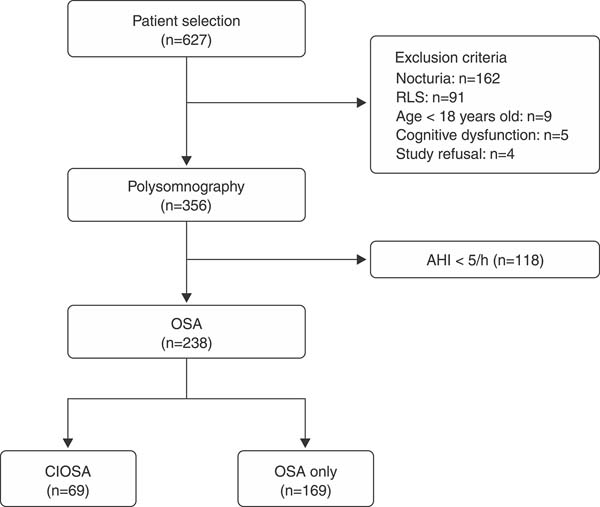
The initial sample consisted of 627 adult participants. The main exclusion criteria were AHI < 5/h (n=118), a diagnosis of restless legs syndrome according to International Restless Legs Syndrome Study Group criteria27 (n=91), and nocturia (defined as waking up for more than twice per night to urinate (n=162). Additional exclusion criteria were refusal (n=4), age < 18 years (n=9), intellectual disability (n=3), and dementia (n=2). The study flowchart is presented in Figure 1.
Definitions and criteria
CI was diagnosed using ICSD-III criteria.1 Three temporal insomnia patterns were identified: 1) difficulty falling asleep; 2) difficulty staying asleep; and 3) waking up earlier than desired. Participants were asked to estimate their insomnia frequency in the last month, and CI was diagnosed when participants estimated a frequency = 3 nights/week, for = 3 months associated with sleep dissatisfaction and daytime symptoms (such as excessive daytime sleepiness, irritability, fatigue, and cognitive impairment). Since all participants were diagnosed with OSA, ICSD F criteria were not considered (i.e., sleeping/waking difficulty that was not better explained by another sleep disorder). We excluded participants diagnosed with restless legs syndrome and nocturia, since both conditions are frequently associated with insomnia symptoms. The sample was divided into two groups according to CI diagnosis (a CIOSA group and an OSA-only group).
OSA was diagnosed when an AHI = 5 obstructive events/hour was associated with at least one of the following: 1) excessive daytime sleepiness, nonrestorative sleep, fatigue, or insomnia symptoms; 2) breath holding, gasping, or choking spells during sleep; 3) habitual snoring, breathing interruptions, or both during sleep; 4) diagnosis of hypertension, mood disorder, cognitive dysfunction, coronary artery disease, stroke, congestive heart failure, atrial fibrillation, or type 2 diabetes mellitus (assessed with the questionnaire). OSA severity was graded as mild (5 < AHI < 15/h), moderate (15 < AHI < 30/h), or severe (AHI = 30/h).1
The polysomnography results were analyzed according to American Academy of Sleep Medicine criteria.5 All polysomnography was performed in a laboratory with a SonolabT system (Meditron, São Paulo, Brazil). Apnea was considered a peak signal excursion drop (detected with an oronasal thermal sensor) = 90% of the pre-event baseline lasting = 10 seconds. Hypopnea was defined as a peak signal excursion drop (detected with a nasal pressure sensor) = 30% of the pre-event baseline lasting = 10 seconds, associated with an oxygen desaturation = 3% of the pre-event baseline and/or including an arousal.
Statistical analysis
Statistical analysis was performed in SPSS version 20. Categorical variables are shown as absolute and relative frequencies. The results for continuous variables are expressed as mean and standard deviation (±SD) or median and dispersion (minimum and maximum values). Proportions were compared with the chi-square test. Continuous variables were compared using two-tailed Student's t-tests and the Mann-Whitney U test. Multivariate logistic regression analysis (method = ENTER) was used to examine predictive factors for CI, including all significant factors (p > 0.05) associated with CI in univariate analysis. After collinearity analysis, variables with a variance inflation factor > 3.0 were eliminated from the multivariate logistic regression model, unless otherwise specified. The results are presented as odds ratios (OR) with 95% confidence intervals (95%CI). All statistical tests were two-tailed with a 0.05 significance level.
Ethics statement
All participants provided written informed consent. The study protocol was previously approved by the Santa Casa ethics committee (protocol 839.497).
RESULTS
The study sample included 238 individuals, whose mean age was 49.5±13.8 years old. The majority of the participants were men (60.9%), and almost half were obese (47.1%). The women were older than the men (53.6±13.4 vs. 46.8±13.5 years old; p < 0.0001). OSA was mild in 25.2%, moderate in 30.7%, and severe in 44.1%. Table 1 shows the main characteristics of our sample.
| Parameter | Total(n=238) | CIOSA(n=69) | OSA only(n=169) | p-value |
|---|---|---|---|---|
| Age (years), mean ± SD | 49.5±13.8 | 52.0±13.6 | 48.5±13.8 | 0.068 |
| Female sex | 93 (39.1) | 32 (46.4) | 61 (36.1) | 0.146 |
| Weight (kg), mean ± SD | 86.9±17.9 | 85.1±15.8 | 87.7±18.7 | 0.426 |
| Height (m), mean ± SD | 1.69±0.09 | 1.68±0.09 | 1.69±0.09 | 0.347 |
| BMI (kg·m-2), median (min-max) | 29.4 (20-61.9) | 29 (20.8-47.8) | 29.4 (20-61.9) | 0.658 |
| Obesity | 112 (47.1) | 32 (46.4) | 80 (47.3) | 1.000 |
| Subjective sleep duration (h), median (min-max) | 7 (4-13) | 7 (4-11) | 7 (4-13) | 0.275 |
| Lifestyle | ||||
| Daily caffeine use | 207 (87.0) | 61 (88.4) | 146 (86.4) | 0.833 |
| Alcohol use | 109 (45.8) | 21 (30.4) | 88 (52.1) | 0.003 |
| Current smoker | 28 (11.8) | 15 (21.7) | 13 (7.7) | 0.004 |
| Sedentary lifestyle | 159 (66.8) | 49 (71.0) | 110 (65.1) | 0.449 |
| Previous diseases and conditions | ||||
| Hypertension | 91 (38.2) | 33 (47.8) | 58 (34.3) | 0.057 |
| Diabetes | 22 (9.2) | 5 (7.2) | 17 (10.1) | 0.625 |
| Hypothyroidism | 16 (6.7) | 6 (8.7) | 10 (5.9) | 0.410 |
| Heart disease | 19 (8.0) | 7 (10.1) | 12 (7.1) | 0.437 |
| Fibromyalgia | 9 (3.8) | 5 (7.2) | 4 (2.4) | 0.124 |
| Psychiatric disease | 102 (42.9) | 32 (46.4) | 70 (41.4) | 0.564 |
| Previous stroke | 4 (1.7) | 3 (4.3) | 1 (0.6) | 0.075 |
| Menopause | 64/89 (71.9) | 25/30 (83.3) | 39/59 (66.1) | 0.134 |
| Excessive daytime sleepiness | 117 (49.2) | 35 (50.7) | 82 (48.5) | 0.777 |
| ESS, mean ± SD | 10.7±5.4 | 10.6±5.5 | 10.8±5.4 | 0.765 |
| Depression and anxiety scales scores | ||||
| BAI score, median (min-max) | 8 (0-48) | 11 (0-48) | 7 (0-43) | < 0.0001 |
| Anxiety | 50 (21.0) | 25 (36.2) | 25 (14.8) | < 0.0001 |
| BDI-II score, median (min-max) | 8 (0-33) | 11 (0-33) | 7 (0-28) | < 0.0001 |
| Depression | 28 (11.8) | 15 (21.7) | 13 (7.7) | 0.004 |
| OSA severity | ||||
| Mild | 60 (25.2) | 22 (31.9) | 38 (22.5) | 0.141 |
| Moderate | 73 (30.7) | 24 (34.8) | 49 (29.0) | 0.439 |
| Severe | 105 (44.1) | 23 (33.3) | 82 (48.5) | 0.044 |
Data presented as absolute (n) and relative (%) values, unless otherwise specified.
BAI = Beck Anxiety Inventory; BDI-II = Beck Depression Inventory; BMI = body mass index; CIOSA = chronic insomnia and obstructive sleep apnea; ESS = Epworth Sleepiness Scale; OSA = obstructive sleep apnea.
CI was diagnosed in 29% of the participants (n=69). If nocturia and restless legs syndrome patients had not been excluded from the analysis, the prevalence of CI would have been 36.7% (n=180/490). Sleep maintenance insomnia predominated in this sample (53.6%), followed by sleep onset insomnia (45.6%) and early awakening (34.8%). The median CI duration was 9.7 (0.3-60) years. The CIOSA group was not significantly older than the OSA-only group (52.0±13.6 vs. 48.5±13.8 years old; p = 0.068). The OR for CI in participants > 60 years of age was 1.74 (95%CI 0.92-2.39).
A total of 11.8% of the participants were current tobacco users, and tobacco use was more frequent among the CIOSA group (21.7 vs. 7.7%; p = 0.004; OR = 3.33 [95%CI 1.49-7.45]). Alcohol use was reported by 45.8% of the sample (n=109). No participant was diagnosed with alcohol use disorder. Alcohol use was more frequent among the OSA-only group (30.4 vs. 52.1%; p = 0.003; OR = 0.40 [95%CI 0.22-0.73]). The frequency of alcohol consumption was similar in both groups. Most participants were sedentary (66.8%), and sedentarism was equally prevalent in both groups (71.0 vs. 65.1%).
Nonrestorative sleep was a frequent complaint (45.4%), and it was more prevalent among the CIOSA group (58.0 vs. 40.2%; p = 0.015). Bodily pain on awakening (44.9 vs. 29%; p = 0.023); memory deficit (63.8 vs. 47.3%; p = 0.023), nightmares (14.5 vs. 4.7%; p = 0.015), and unpleasant leg sensations (55.1 vs. 34.9%; p = 0.006) were more frequent in the CIOSA group. Other symptoms, such as attention deficit, mood complaints, lack of energy, erectile dysfunction, and leg movement during sleep were of equal frequency in both groups (data not shown).
The CIOSA group had higher BAI scores (11 [0-48] vs. 7 [0-43]; p < 0.0001) and BDI-II scores (11 [0-33] vs. 7 [0-28]; p < 0.0001) than the OSA-only group. Anxiety was present in 21% of the participants and was more frequent in the CIOSA group (36.2 vs. 14.8%; p < 0.0001; OR = 3.27 [95%CI 1.71-6.26]). Depression was diagnosed in 14.1% of the participants and was more frequent in the CIOSA group (21.7 vs. 7.7%; p = 0.004; OR = 3.33 [95%CI 1.49-7.45]).
Hypnotics were prescribed to 7.1% of the sample and were more frequent in the CIOSA group (18.8 vs. 2.4%; p < 0.0001; OR = 9.6; 95%CI 3.0-30.6). Benzodiazepine was the most common hypnotic in both groups (CIOSA n=12/13 [92.3%] and OSA n=4/4 [100%]). Antidepressants were prescribed to 16.8% of the participants, the most common types being serotonin reuptake inhibitors (62.5%) and tricyclic antidepressants (15%). Antidepressant use was more frequent in the CIOSA group (27.5 vs. 12.4%; p = 0.007; OR = 2.70; 95%CI 1.3-5.4). Sedative antidepressants (tricyclic antidepressants, trazodone, and mirtazapine) were prescribed more frequently in the CIOSA group (10.1 vs. 1.8%; p = 0.007). No participant was in behavioral-cognitive therapy during the survey. Sleep hygiene and other non-pharmacological treatments for CI were not evaluated.
Severe OSA was more prevalent among the OSA-only group (33.3 vs. 48.5%; p = 0.004; OR = 0.53; 95%CI 0.29-0.95). Table 2 shows the polysomnographic findings. Most findings (arousal index and AHI) reflect an association between severe OSA and lower CI prevalence, except sleep time below 90% oxygen saturation.
| Parameter | Total (n=238) | CIOSA (n=69) | OSA only (n=169) | p-value |
|---|---|---|---|---|
| Sleep latency (min) | 12.5 (1.5-147.0) | 9.7 (2.0-147.0) | 18.7 (1.5-117.5) | 0.547 |
| REM sleep latency (min) | 108.5 (31.0-413.5) | 110.0 (35.0-413.5) | 108.0 (31.0-390.0) | 0.656 |
| Sleep efficiency (%) | 86.2 (9.5-98.9) | 85.1 (30.6-98.4) | 86.4 (9.5-98.8) | 0.533 |
| Total sleep time (min) | 377.0±56.5 | 383.1±58.0 | 375.0±56.0 | 0.261 |
| Time stage (%) | ||||
| N1 | 4.4 (0.3-21.9) | 4.1 (0.3-11.9) | 5.7 (0.5-21.9) | 0.028 |
| N2 | 57.4±10.6 | 59.4±10.0 | 56.6±10.8 | 0.096 |
| N3 | 22.4±10.2 | 21.4±8.3 | 22.8±10.9 | 0.348 |
| Time REM sleep (%) | 14.4±6.0 | 14.6±6.4 | 14.9±5.8 | 0.943 |
| Arousal index (/h) | 32.2 (8.4-108.5) | 27.7 (11.5-94.1) | 34.6 (8.4-108.5) | 0.013 |
| AHI (/h) | 25.8 (5.1-122.1) | 21.6 (5.1-101.0) | 29.3 (5.1-122.1) | 0.016 |
| O2 saturation (%) | ||||
| Basal | 94.0 (81-99) | 94.0 (90-98) | 95.0 (81-99) | 0.180 |
| Mean | 92.4±2.5 | 92.2±2.34 | 92.4±2.5 | 0.391 |
| Minimum | 80 (61-98) | 81 (61-92) | 80 (61-98) | 0.793 |
| Maximum | 98 (76-100) | 98 (88-100) | 98 (76-100) | 0.537 |
| Sleep time O2 < 90% (%) | 9.8 (0.0-95.8) | 11.0 (0.0-94.4) | 9.7 (0.0-95.8) | 0.049 |
| PLMS index (/h) | 0 (0.0-37.4) | 0 (0.0-37.4) | 0 (0.0-30.9) | 0.108 |
Data presented as median (minimum-maximum) or mean ± standard deviation.
AHI = apnea-hypopnea index; CIOSA = chronic insomnia and obstructive sleep apnea; N1 = non-REM sleep stage 1; N2 = non-REM sleep stage 2; N3 = non-REM sleep stage 3; O2 = oxygen; OSA = obstructive sleep apnea; PLMS = periodic leg movements on sleep; REM = rapid eye movement.
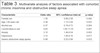
Table 3 shows the results of the multivariate analysis. In the collinearity analysis, the variance inflation factor was > 3.0 for depression, anxiety, age, and severe OSA. Since these factors were considered clinically important for CI in OSA, they were entered in the multivariate analysis model. Severe OSA and alcohol use were negatively associated with CIOSA. On the other hand, age = 60 years old, current tobacco use, anxiety, and depression were associated with CIOSA.
| Characteristic | Odds ratio | 95% confidence interval | p-value |
|---|---|---|---|
| Female sex | 1.36 | 0.66-2.58 | 0.442 |
| Age = 60 years old | 2.38 | 1.13-5.04 | 0.023 |
| Alcohol use | 0.37 | 0.19-0.73 | 0.004 |
| Current tobacco use | 4.62 | 1.85-11.55 | 0.001 |
| Anxiety | 3.12 | 1.49-6.54 | 0.003 |
| Depression | 3.15 | 1.26-8.10 | 0.017 |
| Severe obstructive sleep apnea | 0.49 | 0.25-0.94 | 0.033 |
DISCUSSION
Almost a third of adult OSA patients fulfilled diagnostic criteria for CI in this sample. Sleep maintenance and sleep-onset insomnia were the most frequent patterns of CI. CI was more prevalent in older participants. CIOSA was associated with a more complicated clinical picture, including a higher prevalence of memory deficit, nonrestorative sleep, bodily pain on awakening, and nightmares. There was a higher frequency of hypnotic and antidepressant drug use among the CIOSA group. In multivariate analysis, CIOSA was associated with older age (= 60 years old), current tobacco use, and depression. Severe OSA and alcohol use were negatively associated with CIOSA.
We found a higher prevalence rate for CI among OSA patients than the general population, which is estimated between 3.9 and 22.1% using DSM-5 criteria.27 Nevertheless, our CIOSA prevalence was lower than the majority of previous studies, which have ranged from 6.7 to 84%.7-12,14-22,28 We believe that this wide variation in CIOS prevalence was due to different study designs (retrospective or prospective), populations (sleep centers or community), CI criteria (insomnia symptoms vs. CI, frequency, and duration), and OSA criteria (clinical vs. polysomnographic criteria, different IAH cutoff values). Revised DSM-IV criteria were used in one previous study.21 Some authors have used the Insomnia Severity Index to diagnose insomnia.7,8,13,19 Most previous studies have used subjective sleep latency and the presence/frequency of insomnia symptoms, rather than established criteria or severity scores. To our knowledge, no study has evaluated CIOSA using stricter and more recent ICSD-III diagnostic criteria for CI or polysomnography scoring criteria. Our study involves the most recent set of ICSD-III criteria, including symptom frequency and duration, as well as daytime symptoms. We also excluded restless legs syndrome and nocturia patients, unlike previous studies. These factors could partially explain our sample's lower CI prevalence.
Older age was associated with higher CIOSA prevalence, similar to the results of some studies.11,12 Since age is a risk factor for both CI and OSA, it is expected that CIOSA would be more prevalent in older individuals.17 However, unlike our findings, most studies found no association between insomnia and age in OSA patients,10,16,17,21 and Vozoris et al.22 even found that age over 60 years was a protective factor against insomnia in individuals with OSA.
CIOSA was not associated with female sex in our sample. Several studies have found that, in adult OSA patients, CI was more prevalent among women.11,16,22,28 We believe the lack of association between CIOSA and female sex was due to age-related confusion among women and higher severe OSA among men.
Chronic tobacco use was more prevalent in the CIOSA group than the OSA-only group, and it was one of the most important positive associations with CI in this sample. Tobacco use was not evaluated in previous CIOSA studies. In the general population, current tobacco exposure is associated with poorer sleep quality and shorter sleep duration.29,30
Alcohol use was lower in the CIOSA group than the OSA-only group, similar to the results of Krell & Kappur.16 On the other hand, Saaresranta et al.11 found no association between alcohol consumption and insomnia among OSA patients.
Despite the relatively CI high prevalence in this sample, no participant was in cognitive-behavioral therapy for insomnia and less than 15% of this sample was on hypnotics or sedative antidepressants. As expected, hypnotic-sedative medication use was higher among CIOSA patients, as also described by Lang et al.14 and Krakow et al.7
Anxiety and depression were associated with CIOSA in multivariate analysis and the CIOSA group had higher anxiety and depression scales scores. Anxiety10,21 and depression10,17,21,22,28 have been previously associated with CIOSA.
Severe OSA was associated with lower CI prevalence in our sample. In the literature, data related to OSA severity and CI are contradictory. Consistent with our findings, a negative association between OSA severity and insomnia has been observed in several other studies.11,14,15,18,31 On the other hand, Krell & Kappur16 found lower OSA severity among insomnia patients. Benetó et al.17 found a similar AHI in CIOSA and OSA-only groups. We speculate that severe OSA, which is associated with more intense sleep fragmentation, may be a protective factor against CI, given its potential relation to daytime sleepiness.
In our sample, the main polysomnographic differences related to CI (higher AHI and arousal indices) were secondary to a lower prevalence of severe OSA in the CIOSA group. The exception to this relationship was greater time at < 90% O2 saturation in the CIOSA group. We failed to identify some expected polysomnographic alterations in CIOSA participants, such as reduced sleep efficiency.7-9,17 Nevertheless, our findings are in line with other studies which found that sleep efficiency does not differ between CIOSA and OSA-only patients.10,15,16,28,31
As far as we know, this is the first prospective, cross-sectional study to assess the association between CI and OSA in a Brazilian population. We tried to fill the knowledge gap stemming from the lack of studies involving more recent clinical criteria for CI and current polysomnography parameters. More studies are needed in this area to better clarify the association between CI and OSA, as well as the impact of each condition on treatment and prognosis. From a clinical point of view, our results highlight the importance of a detailed medical evaluation, since many sleep and mental conditions may overlap, such as depression, chronic tobacco use, CI, and OSA.
Our study has some limitations. First, the sample was relatively small. Since this was a cross-sectional study, we could not draw causal inferences. Although our CI criteria were based on the ICSD-III, we used no standardized tools to diagnose CI or determine its severity, since no relevant scales have been validated in Brazilian Portuguese. Furthermore, the cross-sectional design made the diagnosis dependent on participant recall. Using sleep diaries and a follow-up period might have resolved this setback. A single-night study for diagnosing OSA may have limited the assessment of individuals with CI, mainly due to first-night effect. Our definition of OSA did not include respiratory effort-related arousal scores and, thus, OSA severity might have been underestimated. The participant selection process may have involved referral bias, since patients selected from sleep clinics are more likely to have more severe problems, hence the potential for an inflated insomnia prevalence. Finally, we did not evaluate the impact of CI and OSA treatment.
In conclusion, the prevalence of CI among OSA patients was 29%, lower than the majority of previous studies. The disease burden was higher among CIOSA patients, since many symptoms, such as nonrestorative sleep, memory deficits, and unpleasant lower limb sensations, were more common in this group. We found no association between CIOSA and sex. In the multivariate logistic regression analysis, CI was strongly associated with older age, depression, anxiety, and current tobacco use. On the other hand, CIOSA was negatively associated with alcohol use and severe OSA. Our results highlight the importance of a thorough evaluation of OSA patients, since insomnia could have an impact on OSA treatment, which could lead to reduced adherence to continuous positive airway pressure and drug treatments for insomnia, especially benzodiazepines, which could affect OSA treatment.
Disclosure
The authors report no conflicts of interest.
 PDF
 Print
 Send this article by email
 How to cite this article
 Submit a comment
 Mendeley
 Pocket
 Share on Facebook
 Share on Twitter



