



| Received: November 23 2020; Accepted: November 30 2020 |
The burden of mental illnesses worldwide transcends their evident impact on individuals and their families, and has become an urgent issue in public policy. Previous studies have suggested a 44.8% lifetime prevalence of mental disorders in Brazil.1 Doran & Kinchin2 report that the annual cost of mental illness to developed countries is about 4% of gross domestic product. According to the World Health Organization,3 mental disorders accounted for 25.3% of all years lived with a disability in low-income countries, and an estimated 33.5% in middle-income countries.
Between 2007 and 2017, mental and behavior problems were the third leading cause of sick leave in Brazil. For the same period, sick leave represented 52% of all social benefits disbursed, and around 50% of claims were associated with mood disorders.4
We report an analysis of official data obtained from the Citizen Information Service of the National Social Security Institute (SIC INSS) regarding sick leave and ill-health pensions in Brazil from January to November 2020. Considering all information where an ICD code was provided, mental illness was the fourth leading cause of ill health retirement (7.2% of reported ICD codes) and the third leading cause of temporary sick leave (13.7% of reported ICD codes).
We also report an analysis of official data provided by the Unified Benefits Information System (Sistema Único de Informações de Benefícios, SUIBE) regarding all active benefits paid to people with mental disorders. As of October 2020, there were 65,453 employed individuals temporarily off work due to mental illness, representing around 8% of all sick-leave benefits paid. Furthermore, 284,292 citizens are currently retired due to mental health disorders (around 9% of all current permanent benefits paid by the social security system). Considering the total costs of social security for the year 2019 (BRL 50.5 billion), we consider that the annual cost to taxpayers of care for mental illness by the public social security system in Brazil could be estimated at BRL 7.4 billion (USD 1.37 billion).5
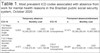
The leading psychiatric diagnostics related to sick leave and retirement due to illness is presented in Table 1. Mood, anxiety, and psychotic disorders seem to be more associated with both sick leave and retirement due to disability. Since the diseases or disorders related to temporary and permanent absence from work are the same (or, at least, remarkably similar), questions are arising about the relevance of increasing the availability of efficacious medical and psychological therapies before disorders worsen to the point of excluding these individuals from the workforce.
| Temporary absence | Permanent absence/retirement | ||||||
|---|---|---|---|---|---|---|---|
| ICD-10 | n | Monthly cost* | ICD-10 | n | Monthly cost* | ||
| F32 Major depressive disorder, single episode | 6,063 | BRL 10,240,203.05 | USD 1,896,333.90 | F20 Schizophrenia | 37,471 | BRL 59,384,285,64 | USD 10,997,089,93 |
| F32.2 Major depressive disorder, single episode, severe without psychotic features | 4,473 | BRL 7,728,474.49 | USD 1,431,198.98 | F20.0 Paranoid schizophrenia | 26,081 | BRL 40,274,920,36 | USD 7,458,318,59 |
| F33 Major depressive disorder, recurrent | 3,744 | BRL 6,035,068.86 | USD 1,117,605.34 | F32 Major depressive disorder, single episode | 15,493 | BRL 31,422,114,03 | USD 5,818,910,01 |
| F33.2 Major depressive disorder, recurrent severe without psychotic features | 3,172 | BRL 5,211,706.73 | USD 965,130.88 | F29 Unspecified psychosis not due to a substance or known physiological condition | 14,724 | BRL 25,186,149,80 | USD 4,664,101,81 |
| F31 Bipolar disorder | 3,065 | BRL 4,866,832.51 | USD 901,265.28 | F33 Major depressive disorder, recurrent | 11,529 | BRL 22,040,327,96 | USD 4,081,542,21 |
| F20 Schizophrenia | 2,782 | BRL 3,905,623.17 | USD 723,263.55 | F31 Bipolar disorder | 10,644 | BRL 20,061,330,40 | USD 3,715,061,19 |
| F41.2 Mixed anxiety and depressive disorder | 2,694 | BRL 4,753,812.89 | USD 880,335.72 | F32.2 Major depressive disorder, single episode, severe without psychotic features | 10,451 | BRL 22,470,816,50 | USD 4,161,262,31 |
| F20.0 Paranoid schizophrenia | 2,533 | BRL 3,573,492.81 | USD 661,757.93 | F33.3 Major depressive disorder, recurrent, severe with psychotic symptoms | 9,544 | BRL 18,241,257,26 | USD 3,378,010,60 |
| F32.3 Major depressive disorder, single episode, severe with psychotic features | 2,516 | BRL 3,818,689.78 | USD 707,164.77 | F33.2 Major depressive disorder, recurrent severe without psychotic features | 9,255 | BRL 19,125,799,46 | USD 3,541,814,71 |
| F41 Other anxiety disorders | 2,449 | BRL 4,326,960.67 | USD 801,289.01 | F32.3 Major depressive disorder, single episode, severe with psychotic features | 8,878 | BRL 17,857,124,23 | USD 3,306,874,86 |
Source: Sistema Único de Informações de Benefícios (SUIBE).
* USD exchange rate = 5.40 BRL (November 10th, 2020).
It is also important to consider other forms of impairment, such as absenteeism, presenteeism, reduced work quality and efficiency, and staff overload. Therefore, to address the growing challenge posed by the increasing incidence of mental disorders, mental health professionals must be aware of working conditions, promote early diagnosis, and develop evidence-based treatments.
One particular, urgent concern is the added burden of mental health disorders during the COVID-19 pandemic as an issue for public policy.6 In particular, the impact of workplace stress on mental health during pandemics is worrisome7 and may have further impact on the workforce, prompting even further increases in sick leave and permanent disability.
Although this is not yet reflected by the data, we do expect a possible rise in requests for sick leave in the upcoming months, related both to the advancing "fourth wave"6 of the COVID-19 epidemic and to the current prediction of a prolonged pandemic state. These worrisome scenarios will cause public expenditure on social security to rise in a background of population-wide mental health issues. Also, our country may face yet-unknown short- and long-term impacts on the economy due to the ensuing reduction of the economically active population.
Finally, evidence-based practices suggest that, besides early diagnosis and treatment, prevention and mental health promotion strategies are cost-beneficial, desirable resources to be adopted and encouraged by clinicians and policymakers. In particular, "lifestyle factors" such as physical activity, diet quality, less smoking, and sleep quality are strongly related to mental health. These factors can be considered targets for interventions to improve quality of life in patients with prevalent mental disorders such as major depression, ADHD, schizophrenia, and drug addiction,8 especially during this difficult, stressful period of the COVID-19 pandemic.
Disclosure
The authors report no conflicts of interest.
 PDF
 Print
 Send this article by email
 How to cite this article
 Submit a comment
 Mendeley
 Pocket
 Share on Facebook
 Share on Twitter



