



ABSTRACT:
OBJECTIVES: To investigate the patterns of impairment in decision-making abilities and their relationship
with cognitive and clinical symptoms in people with Alzheimer's disease. We hypothesized
that decision-making abilities would not be impaired at the same level and would be
related to impairment of global cognition and other clinical symptoms of the disease.
METHODS: Using a cross-sectional design, we included a consecutive sample of 102 people with
Alzheimer's disease and their respective caregivers. We investigated the relationship
between decision-making capacity and quality of life (QoL), disease awareness, mood,
functionality, neuropsychiatric symptoms, and cognition.
RESULTS: Different levels of impairment were observed in the participants' decision-making
abilities. Understanding, appreciation, and reasoning were correlated, but expressing
a choice was only correlated with appreciation. Deficits in understanding were related
to impaired disease awareness, lower self-reported QoL, and lower comprehension of
spoken language. Better appreciation was related to better orientation and lower age.
Better reasoning was related to better orientation and better self-reported QoL. Deficits
in expressing a choice were related to lower self-reported QoL.
CONCLUSION: The pattern of impairment in decision-making abilities was not linear. Each decision-making
ability was related to different cognitive and clinical deficits. Therefore, cognitive
functioning is an insufficient criterion for judging an individual's decision-making
ability.
Keywords: Alzheimer's disease; cognition; decision-making capacity; competence.
| Received: August 11 2021; Accepted: October 16 2021 |
INTRODUCTION
Decision-making capacity is a complex mental process involving four abilities1- 5: 1) understanding is the ability to receive, store, and recall the meaning of information; 2) appreciation measures the ability to apply relevant information to one's situation or condition; 3) reasoning is the use of logical processes to compare response alternatives; 4) expression of choice is the ability to communicate a choice and consistently maintain it until implementation. Any interference in these abilities impairs decision-making capacity.5- 7 These difficulties are worsened in cases of progressive cognitive impairment, such as in Alzheimer's disease (AD).2,8- 10
Several studies11- 14 have suggested that people with AD have globally impaired decision-making capacity, especially the moderate or severe stages of the disease or when they are unaware of their diagnosis and prognosis.13,15,16 However, studies of people with mild AD show that decision-making capacity tends to be partially preserved.17,18 For example, Hamann et al.18 suggested that although people with AD have deficits in decision-making capacity, they tend to wish for greater involvement and participation in decisions about their treatment, especially when their performance on cognitive screening tests is better.
Commonly, the cognitive domains that appear to predict decision-making capacity include episodic memory, confrontational naming, working memory, and executive function.19 Studies have shown the impact of episodic memory deficits, executive functioning, verbal memory, and phonemic fluency on the understanding domain.19,20 It has been reported that deficits in working memory, processing speed, and episodic memory are related to impairment in the appreciation domain.17,20 In addition, changes in reasoning have been related to deficits in executive function, episodic memory, and expressive language.17,19 Conversely, few studies have investigated the relationship between decision-making capacity and the clinical variables of AD. In a previous study with a small sample,21 we found that understanding, appreciation, and reasoning were correlated with each other, but expressing a choice was not correlated with the other abilities. Additionally, decision-making abilities have been associated with cognitive impairment and other clinical deficits of AD, such as functional level or disease awareness.21 Therefore, we aimed to clarify patterns of impairment in decision-making abilities and their relationship with cognitive and clinical factors in people with AD. We hypothesized that decision-making abilities would not be impaired at the same level and that they would be related to impairment of global cognition and other clinical symptoms of the disease.
METHODS
Participants
This cross-sectional study included a consecutive sample of 102 people with mild or moderate AD who were treated at the outpatient unit of the Center for Alzheimer's Disease (Centro para Doença de Alzheimer e Outros Transtornos Mentais na Velhice), Institute of Psychiatry (Instituto de Psiquiatria), Universidade Federal do Rio de Janeiro (IPUB-UFRJ), as well as their respective caregivers. All participants had been diagnosed by their psychiatrist with possible or probable AD according to the DSM-IV.22 The diagnosis was determined through clinical interviews, screening tests for cognitive impairment, and laboratory and imaging tests. Only individuals with mild or moderate AD according to the Clinical Dementia Rating (CDR)23 and with scores between 11-26 on the Mini-Mental State Examination (MMSE)24 were included in the study.
To avoid interference from other clinical conditions, we excluded people with a history of previous psychiatric conditions, aphasia, cranial traumatism, substance abuse, and epilepsy.
The person responsible for supervising and caring for the participant with AD was considered the primary caregiver. We included only informal primary caregivers who had been previously informed about the care recipient's AD diagnosis by the physician in charge.
Instruments and procedures
Trained psychologists and neuropsychologists performed the assessments. We collected the sociodemographic data from the participants' medical records and performed interviews with their caregivers. To ensure the anonymity of the responses and to prevent the participants and caregivers from discussing answers, both were interviewed separately. The participants with AD completed assessments about decision-making capacity, quality of life (QoL), cognition, and disease awareness. The caregivers provided the following information about their patient: demographics, ability to perform activities of daily living (ADL), disease awareness, neuropsychiatric symptoms, mood, and dementia severity, and QoL.
Instruments
Decision-making capacity
The MacArthur Competence Assessment Tool for Treatment (MacCAT-T)21 is a semi-structured interview about the respondent's symptoms, diagnosis, treatment options, risk and benefits, and alternative treatments. The tool includes items assessing understanding, appreciation, reasoning, and expression of choice. The section on Understanding is subdivided into understanding - disorder, understanding - treatment, and understanding - benefits/risks of treatment. This section also assesses whether the respondent can paraphrase information that was just provided. If the respondent lacks a clear understanding of the information, the interviewer may repeat this step. The Appreciation section assess whether respondents can apply information to their context (appreciation of the disorder) and whether they can recognize the possible benefits of treatment (appreciation of the treatment). The Reasoning section assesses whether respondents can determine any consequences of the treatment alternatives (consequential reasoning), compare the alternatives (comparative reasoning), and describe other consequences not previously offered by the interviewer (generating consequences). This section also assesses the logical consistency of their choice. In the Expression of choice section, respondents must establish a preference for one treatment option. The scores for each item are 2 (adequate), 1 (partially adequate), and 0 (inadequate). There is one quantitative score for each ability: 0-6 for Understanding, 0-4 for Appreciation, 0-8 for reasoning, and 0-2 for Expression of choice. The MacCAT-T has no total score or a cut-off score indicating whether respondents can competently make decisions about their treatment because the interviewer's judgment must consider all relevant information about the patient's global clinical status.
Disease severity
The stages of the full Clinical Dementia Rating protocol23 range from 0 (no dementia) to 3 (severe dementia), according to the degree of cognitive, behavioral, and ADL impairment.
Global cognition
The MMSE24 includes the assessment of temporal-spatial orientation, short delay memory, language, comprehension, and basic motor abilities. Scores range from 0 to 30, with lower scores indicating more impaired cognition.
The Alzheimer's Disease Assessment Scale - Cognitive Subscale (ADAS-Cog)25 assesses the intensity of the cognitive impairment. The ADAS-Cog assesses word recall, naming objects and fingers, following commands, constructional praxis, ideational praxis, orientation, word recognition, remembering test instructions, spoken language ability, word finding difficulty, and comprehension of spoken language. The maximum score is 70, with higher scores indicating cognitive impairment.
The Digit Span subtest of the Wechsler Adult Intelligence Scale26 includes direct order (DO) and inverse order (IO). The DO task assesses attention by having the respondent immediately repeat a numeric sequence spoken by the examiner. In the IO task, which assesses cognitive flexibility, the respondent must repeat the given items in their inverse order. The maximum score is 30 points: 16 in the DO and 14 in the IO.
Functionality
The Pfeffer Functional Activities Questionnaire27 includes 10 items on functional abilities. Each item is rated from normal (0) to dependent (3), and the maximum score is 30 points. Higher scores indicate greater functional impairment.
Neuropsychiatric symptoms
The Neuropsychiatric Inventory,28 which is taken by the caregiver, includes 12 items assessing the presence of delusions, hallucinations, dysphoria, anxiety, agitation/aggressive behavior, euphoria, disinhibition, irritability/emotional lability, apathy, aberrant motor activity, nocturnal behavior problems, and nutrition and appetite changes in the care recipient. The frequency of each symptom is reported on a scale from 1 (less frequent) to 4 (most frequent). The severity of each symptom is reported on a scale from 1 (mild) to 3 (intense). Total scores vary from 0 to 144, with higher scores indicating greater neuropsychiatric symptoms.
Mood
The Cornell Scale for Depression in Dementia29 is used to evaluate physical signs, circadian cycle, and behavioral symptoms related to depression in people with dementia. Scores above 13 indicate the presence of depression.
Disease awareness
The Assessment Scale of Psychosocial Impact of the Diagnosis of Dementia,30 a 30-item scale for caregivers of AD patients, evaluates disease awareness in AD by scoring conflicting responses across its domains, which include awareness of cognitive deficits and health conditions, awareness of emotional state, awareness of social functioning and relationships, and awareness of ADL. Total scores vary between 0 and 30. Disease awareness may be preserved (scores 0-4), mildly impaired (scores 5-11), moderately impaired (scores 12-17), or absent (scores above 18).
Quality of Life
The Quality of Life in Alzheimer's Disease31 scale includes 13 dimensions (physical health, energy, mood, living situation, memory, family, marriage, friends, self as a whole, ability to do chores around the house, ability to do things for fun, money, and life as a whole). Total scores vary between 13 and 52, with higher scores indicating better QoL. We considered both the patient's reported QoL and the caregiver's opinion of the patient's QoL.
Statistical analysis
We performed the statistical analysis in IBM SPSS version 22.0. The Kolmogorov-Smirnov and Levene tests were used to verify the normality of the distribution and the homoscedasticity of the data, respectively. Parametric variables were described as mean and standard deviation (SD), while non-parametric variables were described as median and range. The sociodemographic and clinical characteristics of the participants with AD were analyzed using descriptive statistics. Matrices of Spearman's correlations were created to investigate the associations among the study variables (understanding, appreciation, reasoning, and expressing a choice) with the other cognitive and clinical variables. Correlations were interpreted as small (0.10), medium (0.30), or large (0.50) in the magnitude of effect sizes. Based on the significant correlations identified between understanding, appreciation, reasoning, expressing a choice, and the other variables, multivariate linear regressions were performed to determine the factors related to decision-making abilities. To avoid type II error, we included only variables with strong correlations (p = 0.01) in the linear regression models. Linear regression models were created to identify the strongest explanatory power among the fewest variables. Linear regressions were performed using the 'enter' method. The adjusted model was used to compare independent variables and explain the variation of dependent variables (understanding, appreciation, reasoning, and expressing a choice). The best models were selected according to a trade-off between the highest explained variance (R2) and the highest cross-validity (adjusted R2).
All significance tests were performed at a two-tailed level of p = 0.05.
Ethics statement
This study was approved by the IPUB-UFRJ ethics in research committee (CAAE 19656413.6.0000.5263). All patients and their caregivers provided written informed consent to participate.
RESULTS
Sociodemographic data
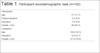
We assessed 102 participants with mild (n=68) or moderate AD (n=34). The sample mainly consisted of women (64.7%), whose mean age was 77.7 (7.1) years and who had 7.6 (3.9) years of education. Table 1 presents the sociodemographic data.
| Participants | |
| Age | 77.7 (7.1) |
| Disease duration | 5.2 (3.5) |
| Education | 7.6 (3.9) |
| Female, n (%) | 66 (64.7) |
| Caregivers | |
| Age | 58.0 (14.3) |
| Education | 12.2 (3.1) |
| Female, n (%) | 81.0 (79.4) |
Data presented as mean (standard deviation [SD]), unless otherwise specified.
Assessment of MacCAT-T domains
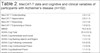
The participants presented different levels of impairment in the abilities of decision-making: understanding (3.8, SD 1.2), reasoning (3.2, SD 1.6), appreciation (2.8, SD 1.1), and expressing a choice (1.8 SD, 0.5). The sample also showed moderate cognitive impairment according to the MMSE (19.2, SD 4.2), mild impairment in disease awareness (9.5, SD 5.3), moderate functional impairment (17.5, SD 8.2), and a mild level of neuropsychiatric symptoms (15.2, SD 12.6) and depressive symptoms (7.7, SD 5.5). The MacCAT-T data, the clinical variables, and the cognitive assessment of AD participants are presented in Table 2.
| MacCAT-T Understanding | 3.8 (1.2) |
| MacCAT-T Appreciation | 2.8 (1.1) |
| MacCAT-T Reasoning | 3.2 (1.6) |
| MacCAT-T Expressing a Choice | 1.8 (0.5) |
| MMSE | 19.2 (4.2) |
| ADAS-Cog Total | 25.4 (10.3) |
| ADAS-Cog Immediate word recall | 7.0 (1.6) |
| ADAS-Cog Naming objects and fingers | 1.3 (1.2) |
| ADAS-Cog Following commands | 0.6 (0.9) |
| ADAS-Cog Constructional Praxis | 1.2 (0.9) |
| ADAS-Cog Ideational Praxis | 1.1 (1.3) |
| ADAS-Cog Orientation | 3.7 (2.1) |
| ADAS-Cog Word recognition | 7.3 (3.5) |
| ADAS-Cog Remembering test instructions | 1.0 (1.4) |
| ADAS-Cog Spoken language ability | 0.5 (0.9) |
| ADAS-Cog Word-finding difficulty in spontaneous speech | 0.9 (1.0) |
| ADAS-Cog Comprehension of spoken language | 0.7 (0.9) |
| Digit Span Test, direct order | 7.1 (2.6) |
| Digit Span Test, inverse order | 3.0 (1.7) |
| CDR 1, n (%) | 68 (66.7) |
| CDR 2, n (%) | 34 (33.3) |
| ASPIDD | 9.5 (5.3) |
| NPI | 15.2 (12.6) |
| CSDD | 7.7 (5.5) |
| PFAQ | 17.5 (8.2) |
| Self-report QoL-AD | 33.8 (5.1) |
| QoL-AD Caregivers' Report | 29.8 (5.9) |
Data presented as mean (standard deviation [SD]), unless otherwise specified.
AD = Alzheimer's disease; ADAS-Cog = Alzheimer's Disease Assessment Scale - Cognitive Subscale; ASPIDD = Assessment Scale of Psychosocial Impact of the Diagnosis of Dementia; CDR = Clinical Dementia Rating; CSDD = Cornell Scale for Depression in Dementia; MacCAT-T = MacArthur Competence Assessment Tool for Treatment; MMSE = Mini-Mental State Examination; NPI = Neuropsychiatric Inventory; PFAQ = Pfeffer Functional Activities Questionnaire; QoL-AD = Quality of life in Alzheimer's Disease.
Univariate analysis
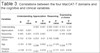
Understanding, appreciation, and reasoning were positively correlated (understanding/appreciation - r 0.583, p = 0.001; understanding/reasoning - r 0.565, p = 0.001; appreciation/reasoning - r 0.370, p = 0.001). Expressing a choice was only correlated with appreciation (r 0.253, p = 0.01).
The correlations between the decision-making domains and the cognitive variables showed that understanding was positively correlated with global cognition according to the MMSE (r 0.264, p = 0.01) and cognitive flexibility (r 0.258, p = 0.01). Understanding was negatively correlated with the ADAS-Cog subitems orientation (r-0.328, p = 0.001), spoken language ability (r-0.300, p = 0.01), word finding difficulty (r-0.332, p = 0.001), and comprehension of language (r-0.340, p = 0.001). Therefore, inadequate understanding was related to lower global cognition. Appreciation was positively correlated with global cognition according to the MMSE (r 0.272, p = 0.01) and negatively correlated with the ADAS-Cog subitems word recall (r -0.279; p = 0.01), orientation (r -0.363, p = 0.001), and word finding difficulty (r -0.293; p = 0.01). Difficulties in appreciation were related to lower global cognition. Reasoning was only negatively correlated with the ADAS-COg subitem orientation (r -0.290, p = 0.01). Expressing a choice was not correlated with cognition.
We also investigated the correlations between decision-making domains and clinical data. We observed that understanding was negatively correlated with lower disease severity (r -0.336, p = 0.001), better functionality (r -0.406, p = 0.001), preserved disease awareness (r -0.498, p = 0.001), and was positively correlated with lower self-reported QoL (r 0.153, p = 0.001). Appreciation was negatively correlated with lower disease severity (r -0.254, p = 0.01), better functionality (r -0.286, p = 0.01), and preserved disease awareness (r -0.337, p = 0.001). Reasoning was negatively correlated with preserved disease awareness (r -0.283, p = 0.01) and lower self-reported QoL (r -0.308, p = 0.01). Finally, expressing a choice was positively correlated with self-reported QoL (r 0.056, p = 0.0006). The data is available in Table 3.
| Variables | Understanding | Appreciation | Reasoning | Expressing a choice | ||||
|---|---|---|---|---|---|---|---|---|
| R | p-value | R | p-value | R | p-value | R | p-value | |
| Understanding | 0.583 | 0.001** | 0.565 | 0.001** | 0.153 | 0.124 | ||
| Appreciation | 0.583 | 0.001** | 0.370 | 0.001** | 0.253 | 0.01* | ||
| Reasoning | 0.565 | 0.001** | 0.370 | 0.001** | 0.165 | 0.098 | ||
| Expressing a choice | 0.153 | 0.124 | 0.253 | 0.01* | 0.165 | 0.098 | ||
| Age | - 0.161 | 0.106 | - 0.296 | 0.003* | - 0.153 | 0.124 | - 0.028 | 0.776 |
| Disease duration | - 0.158 | 0.113 | - 0.081 | 0.419 | - 0.135 | 0.177 | 0.01 | 0.918 |
| Sex | 0.09 | 0.371 | 0.052 | 0.606 | 0.11 | 0.272 | 0.009 | 0.928 |
| Education | 0.02 | 0.841 | 0.08 | 0.426 | 0.147 | 0.139 | 0.04 | 0.691 |
| MMSE | 0.264 | 0.007* | 0.272 | 0.006* | 0.216 | 0.029 | 0.053 | 0.598 |
| ADAS-Cog Immediate word recall | -0.216 | 0.029 | -0.279 | 0.005* | -0.208 | 0.036 | -0.031 | 0.755 |
| ADAS-Cog Naming objects and fingers | -0.117 | 0.242 | -0.232 | 0.019 | -0.055 | 0.582 | 0.057 | 0.567 |
| ADAS-Cog Following commands | 0.004 | 0.967 | -0.153 | 0.125 | 0.056 | 0.573 | 0.058 | 0.560 |
| ADAS-Cog Constructional praxis | -0.075 | 0.453 | -0.184 | 0.064 | -0.120 | 0.228 | -0.136 | 0.172 |
| ADAS-Cog Ideational praxis | -0.094 | 0.349 | 0.074 | 0.461 | -0.242 | 0.014 | 0.009 | 0.926 |
| ADAS-Cog Orientation | -0.328 | 0.001** | -0.363 | 0.001** | -0.290 | 0.003* | -0.016 | 0.870 |
| ADAS-Cog Word recognition | -0.181 | 0.069 | -0.153 | 0.126 | -0.194 | 0.050 | -0.032 | 0.751 |
| ADAS-Cog Remembering test instructions | -0.234 | 0.018 | -0.171 | 0.085 | -0.135 | 0.176 | 0.035 | 0.723 |
| ADAS-Cog Spoken language ability | -0.300 | 0.002* | -0.227 | 0.022 | -0.211 | 0.030 | -0.139 | 0.164 |
| ADAS-Cog Word-finding difficulty in spontaneous speech | -0.332 | 0.001** | -0.293 | 0.003* | -0.154 | 0.121 | -0.071 | 0.476 |
| ADAS-Cog Comprehension of spoken language | -0.340 | 0.001** | -0.188 | 0.058 | -0.190 | 0.056 | -0.144 | 0.148 |
| Digit Span Test, direct order | 0.206 | 0.038 | 0.164 | 0.099 | 0.098 | 0.328 | -0.114 | 0.254 |
| Digit Span Test, inverse order | 0.258 | 0.009* | 0.128 | 0.201 | 0.110 | 0.270 | 0.017 | 0.867 |
| CDR | -0.336 | 0.001** | -0.254 | 0.01* | -0.229 | 0.021 | -0.031 | 0.758 |
| ASPIDD | -0.498 | 0.001** | -0.337 | 0.001** | -0.283 | 0.004* | -0.227 | 0.022 |
| NPI | -0.116 | 0.246 | 0.023 | 0.821 | -0.045 | 0.656 | -0.105 | 0.295 |
| CSDD | -0.016 | 0.872 | 0.050 | 0.620 | -0.011 | 0.910 | 0.011 | 0.911 |
| PFAQ | -0.406 | 0.001 | -0.283 | 0.004* | -0.249 | 0.012 | -0.197 | 0.047 |
| Self-reported QoL-AD | -0.362 | 0.001 | -0.206 | 0.038 | -0.308 | 0.002* | -0.270 | 0.006* |
| Caregiver reported QoL-AD | 0.153 | 0.125 | 0.080 | 0.425 | 0.133 | 0.182 | 0.056 | 0.575 |
ADAS-Cog = Alzheimer's Disease Assessment Scale - Cognitive Subscale; ASPIDD = Assessment Scale of Psychosocial Impact of the Diagnosis of Dementia; CDR = Clinical Dementia Rating; CSDD = Cornell Scale for Depression in Dementia; MacCAT-T = MacArthur Competence Assessment Tool for Treatment; MMSE = Mini-Mental State Examination; NPI = Neuropsychiatric Inventory; PFAQ = Pfeffer Functional Activities Questionnaire; QoL-AD = Quality of life in Alzheimer's Disease.
* p < 0.01
** p < 0.001
Multivariate analysis
Four linear regression models were constructed for understanding, reasoning, appreciation, and expressing a choice. In each model, we included variables that were significantly correlated with each of the dependent variables.
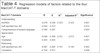
Deficits in understanding were related to impaired disease awareness (p = 0.001), lower self-reported QoL (p = 0.05), and lower comprehension of spoken language in the ADAS-Cog (p = 0.01). Better appreciation was related to better performance in the ADAS-Cog orientation subscale (p = 0.001) and to lower participant age (p = 0.001). Better reasoning was related to a better orientation score (p = 0.01) and a higher self-reported QoL (p = 0.01). Deficits in expressing a choice were only related to lower self-reported QoL (p = 0.01). The adjusted R2 values and the parameter estimates of the four regressions are shown in Table 4.
| MacCAT-T domains | B | ß | R2 | Adjusted R2 | Significance |
|---|---|---|---|---|---|
| Understanding | |||||
| ASPIDD | -0.079 | -0.356 | 0.353 | 0.333 | 0.001 |
| Self-reported QoL-AD | -0.050 | -0.212 | 0.015 | ||
| Comprehension of spoken language | -0.346 | -0.261 | 0.003 | ||
| Appreciation | |||||
| Age | -0.046 | -0.308 | 0.231 | 0.215 | 0.001 |
| Orientation | -0.203 | -0.403 | 0.001 | ||
| Reasoning | |||||
| Self-reported QoL-AD | -0.087 | -0.285 | 0.161 | 0.144 | 0.003 |
| Orientation | -0.184 | -0.251 | 0.008 | ||
| Expressing a choice | |||||
| Self-reported QoL-AD | -0.025 | -0.264 | 0.070 | 0.061 | 0.007 |
ASPIDD = Assessment Scale of Psychosocial Impact of the Diagnosis of Dementia; MacCAT-T = MacArthur Competence Assessment Tool for Treatment; QoL-AD: Quality of life - Alzheimer's disease patient.
DISCUSSION
Our study investigated patterns of impairment in decision-making abilities and their relationship with cognitive and clinical factors in people with AD. The different levels of impairment in decision-making abilities we observed indicate that the pattern of impairment is not linear and, most likely, primary impairment is attributable to understanding and reasoning deficits. Moreover, we found that each decision-making ability may be related to different cognitive and clinical deficits caused by the disease process. Thus, we can assume that cognitive functioning is an insufficient criterion for judging an individual's decision-making ability.
Our analysis demonstrated an association between deficits in understanding and impaired disease awareness, lower self-reported QoL, and lower comprehension of spoken language. Interestingly, this finding suggests that people with preserved disease awareness tend to have better understanding of the reasoning behind their decisions. Our sample mainly consisted of AD patients with mildly impaired awareness; studies report that people who are aware of the disease tend to be partially or fully competent to make decisions about their treatment.20,32 Nevertheless, few studies have investigated the relationship between awareness and decision-making capacity to consent to treatment.15,32,33 This finding indicates the importance of including an awareness assessment when evaluating decision-making capacity in dementia.
We also found that better understanding was related to better comprehension of spoken language in the ADAS-Cog. This result is in line with the finding that understanding is the ability that most depends on global cognitive functioning, specifically language and cognitive flexibility.34,35 Stormoen et al.14 observed that language function is the most important predictor of decision-making capacity. Decision-making assessment involves tasks based on an oral and written presentation of information and the interaction between the AD patient and the health professional. During the tasks, the patient should apprehend, codify, and evoke the benefits and risks of accepting treatment and should verbally indicate a choice.14
Furthermore, difficulties in understanding have been associated with lower self-reported QoL. This might be due to preserved comprehension of the characteristics and prognosis of the disease. Clinically, this point highlights the need to balance support and empowerment, as well as to balance increasing awareness and the potential to cause harm. Kiriaev et al.36 recently suggested that since people with dementia often have a diminished capacity to express their preferences, healthcare decisions are usually made by family caregivers and physicians, who underestimate the patient's autonomy and decisions, which could reduce the quality of their life decisions.
We found that difficulties in appreciation were related to deficits in the ADAS-Cog orientation subitem and older age. Time and spatial orientation tended to contribute to appreciating and reasoning about pieces of information or orientation. Moreover, it could be more challenging for older people to appreciate and develop a rational process about alternatives. Thus, people with orientation difficulties tend to misjudge the applicability of information regarding their ADL. In addition, the association between appreciation and age might be related to decreased stimuli. Usually, people with AD have fewer requirements and are less intellectually active, which would hinder their orientation and more objective judgment.21 This important finding supports the benefits of cognitive stimulation for people with AD.
Deficits in reasoning and expression of choice were also related to lower self-reported QoL. This relationship shows that AD is more than just a cognition disorder, since people with AD are involved in different social environments, and their decisions exist in a context.37 QoL in dementia involves cognitive functioning, ADL, social interaction, and psychological well-being.31 Recently, a systematic review38 summarized the stated preferences of people with dementia, finding that the essential patient-related outcomes were QoL and self-efficacy, which indicates the relationship between reasoning and QoL. Another possible explanation for the relationship between reasoning, expression of choice, and self-reported QoL could be the indirect role of disease awareness in this relationship. A previous study39 by our group found a bidirectional association between lower mood and functionality levels, impaired disease awareness, and decreased functionality, as well as that all these variables were associated with self-reported QoL. Further studies using a path analysis model could better clarify the relationship between reasoning, expression of choice, and self-reported QoL.
It would be helpful to add a comment here about expression of choice. Although understanding, appreciation, and reasoning were correlated, expression of choice was only correlated with appreciation. This finding aligns with Moye et al.,11 suggesting that appreciation may be less commonly impaired in individuals with dementia. Thus, although most of the patients in this study might choose a treatment, their expression of this choice was not always supported by adequate understanding and reasoning. Clinically, our data is fundamental for health professionals and family members, since they must help increase the autonomy of dementia patients through a supervised decision-making process.40 Another point related to expression of choice is the assessment instrument. In general, understanding has more robust measures than the other components.19 For example, in the MacCAT-T, expression of choice is assessed with one item, whereas there are 13 items related to understanding. Such differences could affect the correlations between decision-making abilities.
Our study has some limitations. The fact that our sample was drawn from an outpatient unit may prevent generalization of the results. We also could have included a control group of cognitively healthy individuals to compare the decision-making capacity to consent to treatment. Furthermore, our findings may not be considered actual predictors of decision-making capacity, but rather predictors of decision-making capacity according to MacCAT-T results.
Our data suggest that there is a correlation between the different abilities involved in decision-making capacity to consent to treatment. However, although people with AD may express a choice, they may not be cognitively able to express a logical decision about their treatment. Nevertheless, these patients usually want to participate in decision-making about their treatment and have greater participation, especially in mild AD. Although understanding, appreciation, and reasoning are related to cognitive functioning, our findings also highlight the role and impact of clinical aspects, such as disease awareness, in decision-making capacity. Additionally, the observed relationship between decision-making abilities and QoL indicates ethical and clinical challenges for caregivers and physicians. Caregivers and health professionals should not exclude AD patients from the decision process, since this may decrease their subjective sense of QoL. We suggest assisted proxy decision-making as a way to include the patient and avoiding risky, possibly inappropriate decisions. We also suggest a capacity-building approach that can include recourse to a living will and advance care directives, as well as to personal values or belief systems. Our data can contribute to the development of assisted decision-making protocols and interventions that to help individuals understand their disease and treatment.
ACKNOWLEDGMENTS
MCND is a level 2 researcher funded by the Conselho Nacional de Desenvolvimento Científico e Tecnológico (CNPq) and the Fundação de Amparo à Pesquisa do Estado do Rio de Janeiro (FAPERJ).
Disclosure
The authors report no conflicts of interest.
 PDF
 Print
 Send this article by email
 How to cite this article
 Submit a comment
 Mendeley
 Pocket
 Share on Facebook
 Share on Twitter



