



| Received: January 29 2022; Accepted: February 3 2022 |
The aims of current therapeutic drugs for Alzheimer's disease (AD) are to restore the cognitive and functional capacity of individuals to some extent, while preserving autonomy and quality of life. Although important, clinical practice has shown that these objectives are insufficient. Future perspectives indicate more ambitious directions, such as halting neurodegeneration by modifying the disease's natural history. Continuing efforts toward disease-modifying AD treatments have led to the (albeit controversial) approval of aducanumab in July 2021 by the U.S. FDA. The anti-amyloid agents developed in the last few years have reinforced the "amyloid cascade" hypothesis as the main pathological pathway underlying the disease. However, the fact that most of these agents have failed to demonstrate significant benefits has led researchers to question whether the amyloid theoretical model is sufficient.
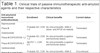
Currently, 126 registered therapeutic agents are being studied for AD treatment. These include agents developed based on a myriad of pathways and pathological models, such as oxidative stress, gut-brain axis, vasculature, inflammation, tau, and obviously, amyloid. On the amyloid front there are two main strategies: passive and active immunotherapy.1 Researchers have had better success with agents that follow the passive immunotherapy strategy. The main objective of these agents is to reduce the brain amyloid burden using exogenous monoclonal antibodies directed at different portions of the amyloid-ß (Aß) peptide, i.e., monomers, oligomers, protofibrils, and fibrils. The agents developed so far are expensive and require multiple injections. However, these treatments can be promptly interrupted when adverse events occur.2 Some of these agents have successfully removed amyloid-ß from the brain parenchyma, although the concurrent removal of amyloid-ß from vessels has led to vasogenic edema and microbleeding, as observed in phase I and II of clinical trials for the monoclonal antibody bapineuzumab. These adverse events were subsequently classified as amyloid-related imaging abnormalities (ARIA), representing a whole spectrum of neuroimaging findings observed in other clinical trials using these antibodies.3 The risk of vasogenic edema and other related extravasated fluid phenomena (ARIA-E) observed in magnetic resonance is increased at higher doses and in apolipoprotein E ?4 allele carriers. There is also little information about the clinical course of patients who present these magnetic resonance imaging findings, most of whom have no or transient mild symptoms. Microbleeding/microhemorrhaging and hemosiderin deposits (ARIA-H) are also related to increased vascular permeability; their relationship with ARIA-H and ARIA-E findings is not yet fully understood.4 Bapineuzumab, solanezumab, gantenerumab, and crenezumab had similar outcomes regarding these adverse events (ARIA-E and ARIA-H) and resulted in no improvement in clinical endpoints. They were finally discontinued after futility analysis (Table 1). Initially, aducanumab had the same outcome in the PRIME, ENGAGE, and EMERGE clinical trials. However, further analysis, a longer follow up, a larger sample, and the exclusion of outliers showed that a higher dosage (10 mg/kg) had therapeutic benefits, which led to regulatory filing for Biogen®. Initially, the FDA Statistics and Advisory Committees were against approval, although the Office of Neurological Drugs was in favor of it, fast-tracking the drug through the accelerated approval pathway. The agent has shown significantly greater therapeutic benefits than other available treatments, although further study is still required.5 Despite aducanumab's approval and benefits, there are many challenges to the development of therapeutic agents for AD. These challenges include anticipating interventions, focusing efforts on preclinical AD, improving methods of subject selection for clinical trials using specific and validated biomarkers, and, finally, the inclusion of other mechanisms of action than the long-established amyloid cascade, considering that multiple pathways may underlie AD's clinical phenotype.
| Anti-amyloid-ß monoclonal antibodies/study | Enrollment | Clinical benefits | Current status |
|---|---|---|---|
| Bapineuzumab | |||
| Phase III | Probable AD; CDR 1-2 | No clinical benefits. ARIA-E (dose- and APOE-?4 related). | Terminated |
| Solanezumab | |||
| Phase III EXPEDITION 1,2 | Probable AD; CDR 1-2 | No clinical benefits (cognition and functional status). | Terminated |
| Phase III EXPEDITION 3 | Aß-PET +; CDR 0.5 | No clinical benefits (cognition and functional status). | Terminated |
| Gantenerumab | |||
| Phase III Scarlet RoAD | Probable AD; CDR 0.5 | No clinical benefits. ARIA-E (dose- and APOE-?4 related). | Discontinued (futility analysis) |
| Phase III GRADUATE 1,2 | Aß-PET + or CSF Aß42 + CDR 0.5-1.0 | Ongoing trial. | Recruiting |
| Solanezumab and gantenerumab | |||
| Phase II/III DIAN-TU | ADAD; CDR 0-1 | So far, no clinical benefits. Ongoing trial. | Recruiting |
| Crenezumab | |||
| Phase II ABBY | Probable AD; CDR 1-2 | No clinical benefits. | Terminated |
| Phase II BLAZE | Probable AD; CDR 1-2 | No clinical benefits. Safety parameters (ARIA) were met. | Completed |
| Phase III CREAD I and II | Aß-PET +; CDR 0.5 | Analyses indicated that crenezumab was unlikely to meet its primary endpoint. | Discontinued (futility analysis) |
| Phase II API-ADAD | PSEN 1 E280A mutation + | Ongoing trial. | Active, not recruiting |
| Aducanumab | |||
| Phase III ENGAGE | Aß-PET +; CDR 0.5 | No clinical benefits. | Discontinued (futility analysis) |
| Phase III EMERGE | Aß-PET +; CDR 0.5 | Clinical improvement trend with higher dosage. | FDA approval for clinical practice. |
Aß-PET = amyloid-ß positron emission tomography; AD = Alzheimer's Disease; ADAD = autosomal-dominant Alzheimer's disease; API-ADAD = Alzheimer's Prevention Initiative Autosomal-Dominant Alzheimer's disease; APOE = apolipoprotein E; ARIA-E = amyloid related imaging abnormalities-edema; CDR = clinical dementia rating; CSF = cerebrospinal fluid; DIAN-TU = Dominantly Inherited Alzheimer Network Trial Unit; PSEN 1 = presenilin 1.
Disclosure
The authors report no conflicts of interest.
 PDF
 Print
 Send this article by email
 How to cite this article
 Submit a comment
 Mendeley
 Pocket
 Share on Facebook
 Share on Twitter



