



ABSTRACT:
OBJECTIVE: Recent studies have revealed a heterogeneous prevalence and presentation of post-traumatic
stress disorder across countries. It is crucial to assess the methodological and item-level
measurement factors that contribute to variations in mental disorder rates across
cultures. This study aimed to investigate the traumatic experiences of hospital workers
by employing item analysis of the Impact of Event Scale-Revised.
METHODS: Data were collected from 1,000 employees of a large hospital during the coronavirus
disease 2019 pandemic and were analyzed according to item response theory analysis
regarding item pool discrimination (a) and difficulty (b) parameters.
RESULTS: The Impact of Event Scale-Revised items had good discriminative ability (a) and covered a range of distress severity (b) associated with traumatic experiences. According to our results, the Impact of Event
Scale-Revised is a reliable and informative instrument for assessing individuals with
moderate to severe trauma-related distress across the spectrum of trauma symptoms.
In particular, items 10 ("jumpy or easily startled") and 6 ("I thought about it when
I didn't mean to") reflected the post-traumatic stress disorder domains of hyperarousal
and intrusion and excelled in discriminating between different levels of post-traumatic
distress. Conversely, items related to avoidance and sleep disturbance showed lower
discriminative ability.
CONCLUSIONS: Item analysis of the Impact of Event Scale-Revised may be used to assess trauma symptoms
in the context of a trauma exposure, identifying the most discriminative and informative
items for measuring post-traumatic stress disorder in our context. Our findings may
help refine the Impact of Event Scale-Revised and facilitate the development of a
more effective scale with optimized item parameters.
Keywords: Psychometrics; item response theory; impact of event scale; psychological trauma; hospital personnel.
FIGURES
| Note: How to cite this article: Petrilli-Mazon VA, Carvalho-Alves MO, Miguel EC, Corchs F, Curi M, Wang YP. Item-wise validity study of the Impact of Event Scale-Revised: self-reported reactions of hospital personnel exposed to a stressful workplace. Braz J Psychiatry. 2025;47:e20243882. http://doi.org/10.47626/1516-4446-2024-3882 |
| Received: August 11 2024; Accepted: November 4 2024 |
INTRODUCTION
Since the inclusion of post-traumatic stress disorder (PTSD) as an official diagnostic category in 1980,1 research has shifted toward assessing traumatic experiences.2 This construct was subsequently expanded to civilians based on trauma-related events, such as civil conflict, natural disasters, epidemics, and urban violence.3 Direct or indirect exposure to trauma can be considered a stressor event,1 with indirect exposure being particularly relevant in professional contexts, for example among health care workers who treat emergency victims.
However, the nature of human response to traumatic stress has been the subject of debate4 due to the fact that many trauma-exposed individuals report partial PTSD associated with significant impairment and help-seeking behaviors. There also seems to be considerable cross-cultural variation in PTSD prevalence. For instance, it has been estimated that 0% of the population of Nigeria5 and 6.8% of the population of the United States6 meet the diagnostic criteria for PTSD. This has led to concerns about the suitability of measurement tools for post-traumatic distress. It is important to note that not all manifestations of trauma are universally perceived and reported in the same manner in different cultures.7 Consequently, methodological and item-level measurement factors that influence the observed variation in mental disorder rates across cultures and racial groups must be assessed.8
A number of psychometric tools have been proposed to describe the results of experiencing or witnessing a traumatic event.9-14 The Impact of Event Scale-Revised (IES-R)15 is a self-report measure that has gained considerable use for post-traumatic distress symptom assessment. Its items are derived from the reports of individuals who have experienced life changes and symptoms of distress in the past week. These symptoms are classified in three dimensions: intrusion, avoidance, and hyperarousal.
The majority of evidence supporting the reliability, validity, and clinical utility of the IES-R16-19 is derived from the true score and measurement error framework of classical test theory. This traditional framework assumes that any observed test score consists of true scores and measurement errors.20 However, person parameters (true scores) and item parameters (item difficulty and discrimination) are reliant on the specific test and the examinee's ability, creating internal dependencies that penalize practical application of person-centered and item-based statistics.21 Other studies have used the Rasch model with the IES-R22,23 and IES-6 (a reduced version of the IES-R,),24 as well as a bifactor item response theory (IRT) model for the IES.25 Nevertheless, to the best of our knowledge, no study has analyzed IES-R item performance using 2-parameter logistic IRT models, such as that of Samejima.26
IRT encompasses a family of nuanced and flexible models that describe the relationship between one or more latent traits (?) and an individual's response to multiple-choice items. Latent traits represent unobserved quantitative attributes or constructs evaluated through observable variables. The item response function posits a non-linear association between the respondents' level of ? and their likelihood of endorsing an item that measures the latent construct. Two common types of parameters are those associated with the person (latent trait ?) and those associated with the item (usually, discrimination and difficulty/threshold parameters). Further details are provided in the specific literature.27,28
In the case of trauma, as exemplified by the IES-R, the underlying construct - trauma-related distress severity - does not directly correspond to specific PTSD symptoms. Rather, it serves as a continuous measure of distress across a spectrum. Therefore, while the IES-R focuses on individual symptoms, the latent trait provides a broader, more comprehensive assessment of distress severity, which enables clinicians to evaluate the full impact of trauma. The clinical significance of identifying discriminative items lies in their capacity to differentiate between individuals who are experiencing disparate levels of trauma-related distress. Highly discriminating items allow more precise identification of symptom severity and clinical significance, thereby facilitating more tailored interventions. A more challenging item (one that requires a higher level of distress to be endorsed) can help clinicians identify more severe cases that may require urgent attention.
The advantage of IRT over classical test theory21,29,30 is most attributable to the latent trait, which should be constant regardless of specific items. Item parameters (a and b) remain steady across respondent groups, ensuring test-independent measurement. Nevertheless, IRT requires a large sample size to obtain stable item parameters and it involves complex computational models. We hypothesized that the overall performance of the IES-R may be enhanced through IRT, possibly extending its application to diverse populations and contexts.
Recent extensive use of mental health measurement tools has led to much interest in item analysis. Based on data from hospital workers during the COVID-19 pandemic, this study analyzed IES-R item performance as an illustration of the IRT approach in psychiatry. Items with poor discrimination were identified and the test's optimal performance range in population sub-groups was determined; implications of this analysis will then be discussed.
METHODS
Study design and sampling
This is a validation study of the IES-R using an item analysis framework. Cross-sectional data were collected online between July 1 and August 28, 2020, the first peak period of the COVID-19 pandemic in Brazil. To ensure exposure to a stressful environment, eligible participants had to be active employees at the Hospital das Clínicas, Faculdade de Medicina, Universidade de São Paulo at the time of data collection. When the baseline survey was conducted, the hospital complex employed 22,056 individuals. An online invitation was distributed to all hospital workers via institutional e-mail, and the study was advertised through social media and posters displayed throughout the hospital. Participants were also encouraged to share the online survey with eligible colleagues. Through non-probabilistic sampling, data were gathered from 1,377 respondents. After eliminating respondents who incompletely filled out the surveys, 1,000 participants were included in the analysis.31
Table 1 shows the descriptive information on the sample (n = 1000). The participants were 83.9% women, 34.3% were aged between 30 and 40 years, 72.9% had a university-level education or higher, and 74.1% were health care workers. Further details can be found in the primary study.31
| Characteristics | |
|---|---|
| Age group (years) | |
| 18-30 | 211 (21.1) |
| 30-40 | 343 (34.3) |
| 40-50 | 252 (25.2) |
| >50 | 194 (19.4) |
| Gender | |
| Female | 839 (83.9) |
| Male | 159 (15.9) |
| Other | 2 (0.2) |
| Marital status | |
| Unmarried | 426 (42.6) |
| Married | 574 (57.4) |
| Education level | |
| < University graduate | 271 (27.1) |
| = University graduate | 729 (72.9) |
| Living with older adults (> 60 years) | |
| Yes | 233 (23.3) |
| No | 767 (76.7) |
| Living with children | |
| Yes | 450 (45.0) |
| No | 550 (55.0) |
| Occupation | |
| Medical doctor | 140 (14.0) |
| Nurse and nursing assistants | 348 (34.8) |
| Other healthcare professionals┼ | 253 (25.3) |
| Administrative workers╬ | 259 (25.9) |
| Direct contact with COVID-19 patients (hours per week) | |
| 0 | 204 (20.4) |
| 1-20 | 311 (31.1) |
| 21-40 | 285 (28.5) |
| > 40 | 200 (20.0) |
| Infected with COVID-19 (self-reported) | |
| Yes | 328 (32.8) |
| No | 672 (67.2) |
| Close family or friend who was hospitalized/died due to COVID-19 | |
| Yes | 386 (38.6) |
| No | 614 (61.4) |
| Changes in daily routine due to the pandemic | |
| Financial failure | 387 (38.7) |
| Lack of public safety | 199 (19.9) |
| Lack of public transport | 297 (29.7) |
| Lack of medical care | 292 (29.2) |
| Distancing from family and friends | 620 (62.0) |
| Previous psychiatric or psychological treatment | |
| Yes | 280 (28.0) |
| No | 720 (72.0) |
| Previous disorder diagnosis (self-reported) | |
| Anxiety | 91 (9.1) |
| Depression | 78 (7.8) |
| PTSD | 6 (0.6) |
| Previous psychotherapy treatment | 199 (19.9) |
| Previous pharmacological treatment | 177 (17.7) |
| Psychological or psychiatric treatment after pandemic beginning | 138 (13.8) |
| Protective health actions | |
| Physical activities | 274 (27.4) |
| Meditative practices | 182 (18.2) |
| Leisure activities/hobbies | 320 (32.0) |
| Religious practices | 310 (31.0) |
| I'm not doing anything in this sense | 354 (35.4) |
| Ethical conflict | 119 (11.9) |
Data presented as n (%).
PTSD = post-traumatic stress disorder.
┼ Other healthcare professionals: dentists, speech therapists, psychologists, occupational therapists, dieticians, physical therapists, social workers, pharmacists, clinical laboratory technicians, and radiological technologists.
╬ Administrative workers: receptionists, information technicians, secretaries, and security guards.
Assessment tool
Along with complementary scales, the IES-R was self-administered during a period in which the respondents were exposed to infected patients in the hospital, aiming to assess 22 symptoms of post-traumatic distress in the past 7 days. This revised scale is divided into three subscales: eight items on intrusion, eight items on avoidance, and six items on hyperarousal. The items are rated on an ordinal scale, with responses ranging from 0 (not at all) to 4 (extremely). Total scores range from 0 to 88, with classical test theory-based calculated cut-off scores of 9, 26, and 44 indicating mild, moderate, and severe post-traumatic distress symptoms, respectively.32 We considered a cut-off score of 26 as the PTSD threshold,33 which resulted in 46.8% probable cases of PTSD or a greater than moderate-to-severe level of post-traumatic distress.
We used the Brazilian Portuguese version of the IES-R,34 although evidence of its validity and clinical utility in different samples is still incomplete. The internal consistency of the IES-R was assessed using Cronbach's alpha coefficient, which was found to be a = 0.96.
Statistical analysis
We initially examined endorsement patterns for the 22 IES-R items by calculating the proportion of respondents who selected each score option, which ranged from 0 to 4. We calculated the conditional reliability of the IES-R, which considers both scale information and errors. After calculating marginal reliability as an overall measure of the scale's reliability, we plotted the conditional reliability curve along the ? dimension to visualize the variation in scale reliability according to the underlying trait.
Prior to running the 2-parameter logistic graded response model,26 we examined the scale's dimensionality, local independence, and monotonicity. Dimensionality was determined through exploratory factor analysis in R using the psych package. The Bartlett test of sphericity yielded a ?2 value of 17,527.55 (p < 0.001), and the Kaiser-Meyer-Olkin measure of sampling adequacy reached 0.98. The results of the Kaiser eigenvalues > 1 criterion and Cattell's scree plot inspection indicated a one-factor solution. The assumption of local independence was verified by examining between-item correlations, which were controlled for a single factor.
We then estimated the graded response model via the full-information maximum likelihood fitting function of the mirt package in R. Four indexes were used to assess the model fit: the standardized root mean square residual (SRMSR), the comparative fit index (CFI), the Tucker-Lewis index (TLI), and the root mean square error of approximation (RMSEA). The recommended cut-off criteria for each index are SRMSR = 0.08, CFI/TLI = 0.95,35 and RMSEA = 0.10.36 The estimated values in the present study were SRMSR = 0.067, CFI = 0.96, TLI = 0.96, all of which favored using the graded response model, and RMSEA = 0.1, which is marginally acceptable. We assessed item fit by using the S-?2 index to calculate the RMSEA value. All IES-R items presented an RMSEA = 0.06, indicating adequate fitness.
The 2-parameter logistic graded response model was used to estimate the relationship between IES-R responses and the underlying latent trait ? (the severity of post-traumatic distress). The graded response model is suitable for items with more than two ordered response categories and extends the 2-parameter logistic model commonly used for dichotomous items. It allows grading responses across multiple categories, such as the 0-4 point range in the IES-R. The model is based on cumulative logits and captures the ordered nature of response categories, representing the degree of achievement, level of agreement, or frequency of a statement.
In this model, the discrimination parameter (a) differentiates individuals with varying ? levels. Graphically, the slope of the item response function at the inflection point indicates the item's discrimination, with a steeper slope indicating higher discriminatory power. The values can be interpreted as very low (0.01 to 0.24), low (0.25 to 0.64), moderate (0.65 to 1.34), high (1.35 to 1.69), or very high (> 1.7).37 However, category threshold parameters (b i) indicate the trait level where a respondent has a 0.50 probability of responding above the threshold. Higher threshold levels require more severe trait levels to endorse an item.
In addition to examining the item discrimination (a) and item difficulty/threshold parameters (b), we plotted category response curves, item information curves, and the test information curve. All analyses and graphics were made in R 4.0.4 (https://www.r-project.org). The R codification can be provided upon request.
Ethics statement
The survey included an informed consent form that provided participants with information about the study design, objectives, and procedures. The study was approved by the institutional research ethics committee (decision 30710620.2.0000.0068).
RESULTS
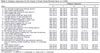
Table 2 presents the distribution of responses for individual IES-R items. It provides an overview of the proportion of participants who endorsed each category for each item, indicating the frequency of each response type across the scale. In general, the proportion of each response category decreases as the frequency increases, from 0 (not at all) to 4 (extremely). The items with the most responses at the lower end of the continuum (0 - not at all) were 19 "Reminders of it caused me to have physical reactions, such as sweating, trouble breathing, nausea, or a pounding heart" and 20 "I had dreams about it," with frequencies of 52.5 and 51.2%, respectively. In contrast, items 15 "I had trouble falling asleep" and 2 "I had trouble staying asleep" had the most responses at the upper end, with frequencies of 13% and 9.5%, respectively. This variation suggests heterogeneous performance across IES-R items.
| Items | Category responses | ||||
|---|---|---|---|---|---|
| 0 | 1 | 2 | 3 | 4 | |
| 1. Any reminder brought back feelings about it | 297 (29.7) | 337 (33.7) | 166 (16.6) | 148 (14.8) | 52 (5.2) |
| 2. I had trouble staying asleep | 304 (30.4) | 264 (26.4) | 144 (14.4) | 193 (19.3) | 95 (9.5) |
| 3. Other things kept making me think about it | 215 (21.5) | 382 (38.2) | 159 (15.9) | 185 (18.5) | 59 (5.9) |
| 4. I felt irritable and angry | 277 (27.7) | 304 (30.4) | 157 (15.7) | 169 (16.9) | 93 (9.3) |
| 5. I avoided letting myself get upset when I thought about it or was reminded of it | 243 (24.3) | 380 (38.0) | 185 (18.5) | 150 (15.0) | 42 (4.2) |
| 6. I thought about it when I didn't mean to | 276 (27.6) | 323 (32.3) | 148 (14.8) | 172 (17.2) | 81 (8.1) |
| 7. I felt as if it hadn't happened or wasn't real | 480 (48.0) | 260 (26.0) | 116 (11.6) | 106 (10.6) | 38 (3.8) |
| 8. I stayed away from reminders of it | 390 (39.0) | 304 (30.4) | 163 (16.3) | 103 (10.3) | 40 (4.0) |
| 9. Pictures about it popped into my mind | 391 (39.1) | 285 (28.5) | 128 (12.8) | 146 (14.6) | 50 (5.0) |
| 10. I was jumpy and easily startled | 449 (44.9) | 241 (24.1) | 121 (12.1) | 143 (14.3) | 46 (4.6) |
| 11. I tried not to think about it | 230 (23.0) | 326 (32.6) | 170 (17.0) | 208 (20.8) | 66 (6.6) |
| 12. I was aware that I still had a lot of feeling about it, but I didn't deal with them | 298 (29.8) | 360 (36.0) | 169 (16.9) | 136 (13.6) | 37 (3.7) |
| 13. My feelings about it were kind of numb | 471 (47.1) | 287 (28.7) | 139 (13.9) | 77 (7.7) | 26 (2.6) |
| 14. I found myself acting or feeling like I was back at that time | 484 (48.4) | 271 (27.1) | 112 (11.2) | 104 (10.4) | 29 (2.9) |
| 15. I had trouble falling asleep | 304 (30.4) | 259 (25.9) | 123 (12.3) | 184 (18.4) | 130 (13.0) |
| 16. I had waves of strong feelings about it | 383 (38.3) | 239 (23.9) | 136 (13.6) | 152 (15.2) | 90 (9.0) |
| 17. I tried to remove it from my memory | 322 (32.2) | 294 (29.4) | 126 (12.6) | 193 (19.3) | 65 (6.5) |
| 18. I had trouble concentrating | 276 (27.6) | 319 (31.9) | 161 (16.1) | 160 (16.0) | 84 (8.4) |
| 19. Reminders of it caused me to have physical reactions, such as sweating, trouble breathing, nausea, or a pounding heart | 525 (52.5) | 189 (18.9) | 102 (10.2) | 115 (11.5) | 69 (6.9) |
| 20. I had dreams about it | 512 (51.2) | 229 (22.9) | 104 (10.4) | 107 (10.7) | 48 (4.8) |
| 21. I felt watchful and on-guard | 348 (34.8) | 319 (31.9) | 140 (14.0) | 137 (13.7) | 56 (5.6) |
| 22. I tried not to talk about it | 372 (37.2) | 280 (28.0) | 148 (14.8) | 138 (13.8) | 62 (6.2) |
Data presented as n (%).
0 = not at all; 1 = a little bit; 2 = moderately; 3 = quite a bit; 4 = extremely.
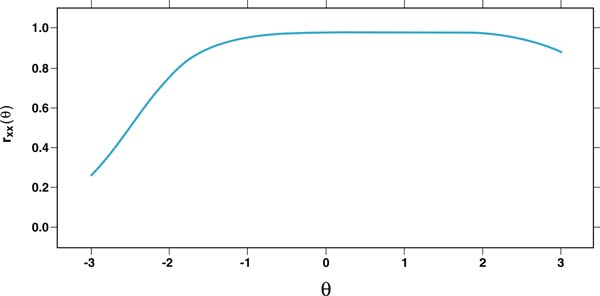
The IES-R's conditional reliability varied slightly along the ? dimension. The best range estimate for optimal reliability was broad, being set from -1 to +2 (Figure 1). The plot suggests good reliability (> 0.9) along the latent trait ? for post-traumatic distress. The marginal reliability was 0.95, indicating that the scale could assess a homogenous construct across ?.
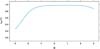
Table 3 shows the discrimination (a) and difficulty/threshold (b) parameters of the IES-R items. Item analysis generated a parameters ranging from 1.72 to 4.07, which are considered very high.37 The most discriminating items were 10 "I was jumpy or easily startled" (a = 4.07) and 6 "I thought about it when I didn't mean to" (a = 4.01). They reflected two core DSM criteria for PTSD diagnosis: the hyperarousal (item 10) and intrusion (item 6) dimensions. Item 14 "I found myself acting or feeling like I was back at that time" (related to flashbacks) was also discriminative, reflecting the intrusion dimension (a = 3.47). The least discriminating items were 8 "I stayed away from reminders of it" (a = 1.72), 7 "I felt as if it hadn't happened or wasn't real" (a = 1.87), and 20 "I had dreams about it" (a = 1.89). Two of these items (8, 7) reflected the avoidance domain, while item 20, which was related to nightmares, reflected the intrusion domain. Similarly, two items on sleep disturbance (2 and 15) also showed lower discriminative ability.
| IES-R items | Subscale | Discrimination | Threshold | |||
|---|---|---|---|---|---|---|
| a | b1 | b2 | b3 | b4 | ||
| 1. Any reminder brought back feelings about it | I | 2.81 | -0.57 | 0.42 | 0.98 | 1.84 |
| 2. I had trouble staying asleep | I | 1.90 | -0.66 | 0.26 | 0.77 | 1.74 |
| 3. Other things kept making me think about it | I | 3.45 | -0.83 | 0.3 | 0.78 | 1.68 |
| 4. I felt irritable and angry | H | 2.34 | -0.69 | 0.27 | 0.8 | 1.61 |
| 5. I avoided letting myself get upset when I thought about it or was reminded of it | A | 2.15 | -0.85 | 0.42 | 1.08 | 2.15 |
| 6. I thought about it when I didn't mean to | I | 4.01 | -0.57 | 0.31 | 0.74 | 1.46 |
| 7. I felt as if it hadn't happened or wasn't real | A | 1.87 | -0.06 | 0.8 | 1.36 | 2.36 |
| 8. I stayed away from reminders of it | A | 1.72 | -0.35 | 0.72 | 1.47 | 2.45 |
| 9. Pictures about it popped into my mind | I | 3.81 | -0.23 | 0.51 | 0.94 | 1.71 |
| 10. I was jumpy and easily startled | H | 4.07 | -0.08 | 0.55 | 0.96 | 1.73 |
| 11. I tried not to think about it | A | 2.17 | -0.88 | 0.26 | 0.8 | 1.88 |
| 12. I was aware that I still had a lot of feeling about it, but I didn't deal with them | A | 2.24 | -0.61 | 0.55 | 1.17 | 2.17 |
| 13. My feelings about it were kind of numb | A | 2.21 | -0.06 | 0.85 | 1.54 | 2.39 |
| 14. I found myself acting or feeling like I was back at that time | I | 3.47 | 0 | 0.75 | 1.21 | 2.01 |
| 15. I had trouble falling asleep | H | 2.07 | -0.64 | 0.22 | 0.64 | 1.44 |
| 16. I had waves of strong feelings about it | I | 3.81 | -0.26 | 0.37 | 0.78 | 1.43 |
| 17. I tried to remove it from my memory | A | 2.58 | -0.48 | 0.39 | 0.78 | 1.77 |
| 18. I had trouble concentrating | H | 2.42 | -0.69 | 0.31 | 0.85 | 1.66 |
| 19. Reminders of it caused me to have physical reactions, such as sweating, trouble breathing, nausea, or a pounding heart | H | 2.86 | 0.11 | 0.65 | 1.03 | 1.68 |
| 20. I had dreams about it | I | 1.89 | 0.05 | 0.83 | 1.32 | 2.20 |
| 21. I felt watchful and on-guard | H | 2.85 | -0.4 | 0.51 | 1.01 | 1.81 |
| 22. I tried not to talk about it | A | 1.98 | -0.38 | 0.54 | 1.11 | 2.00 |
A = avoidance; H = hyperarousal; I = intrusion.
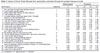
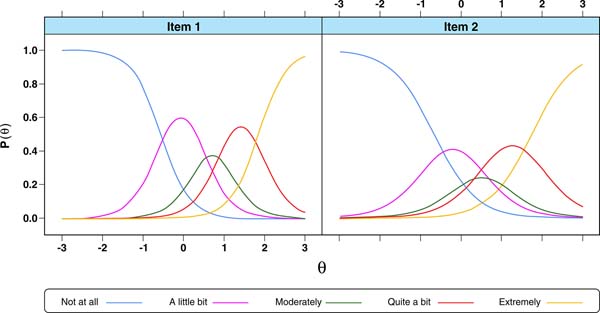
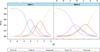
The difficulty/threshold (b) parameters ranged along the latent trait ? - the severity of post-traumatic distress - as follows: between -0.88 and 0.11 for the first parameter (b1), 0.22 and 0.85 for the second parameter (b2), 0.64 and 1.54 for the third parameter (b3), and 1.43 and 2.45 for the fourth parameter (b4). Figure 2 shows category response curves derived from the IRT model, which represent the endorsement probabilities for each IES-R response category. The curves correspond to "not at all," "a little bit," "moderately," "quite a bit," and "extremely," illustrating the relationship between ? and the response likelihood. As ? increases, the likelihood of endorsing a category initially rises, then decreases as responses shift to the next higher category. These estimates indicated that the IES-R could appropriately measure people with a moderate-to-severe level of trauma-related distress along the ? dimension.
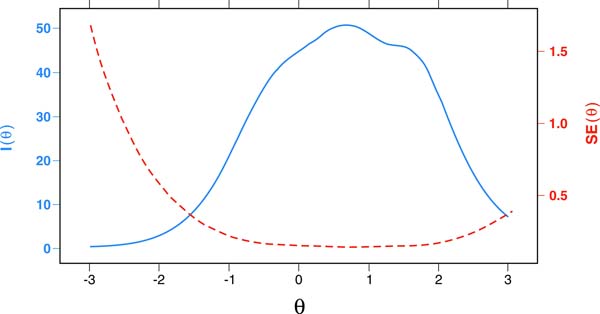
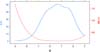
Scale performance is conveyed through the test information curve and standard error estimates (Figure 3). This curve illustrates the level of post-traumatic distress at which the IES-R provides the highest amount of information, which is observed within ? values of approximately -0.5 to 2. Individuals whose distress levels are average or high benefit the most from the IES-R in terms of reliability and meaningful information. Conversely, for ? values below -1 and above 2, the IES-R provides significantly less information. Consequently, the tool may not be suitable for assessing very low or very severe levels of post-traumatic distress.
DISCUSSION
The present study illustrates the item analysis paradigm in trauma research. Notably, the cutting-edge IRT has yielded a comprehensive perspective of self-reported psychopathology resulting from traumatic experiences. Overall, the scale demonstrated good reliability, and all items had high discrimination parameters, with thresholds indicating a right-skewed distribution of construct severity (?). Hyperarousal and intrusion were identified as central dimensions of traumatic experiences. The IES-R proved more informative for individuals with average or high levels of distress (around ? = 1), which raises concerns about its applicability in non-clinical populations. In the future, the scalable application of our item-based approach in psychiatry could improve measurement precision, scale reliability, and construct validity. This represents a significant advancement in the field. Moreover, our findings could help refine the widely-used IES-R by identifying the most relevant items.
All items in the IES-R questionnaire had high discrimination, indicating their ability to distinguish individuals with heterogeneous degrees of distress. Symptoms from the intrusion and hyperarousal domains emerged as core dimensions of traumatic experience, and should thus be considered in the next revision of PTSD criteria. Our findings are in line with those of Natesan Batley et al.,38 who employed IRT when applying the PTSD Checklist for DSM-5 to Indian and American samples. Except for traumatic amnesia, all items were highly discriminative for PTSD.
Unlike previous research with English-speaking populations,39 we found that items assessing the hyperarousal dimension were among the most discriminative. Items related to the avoidance dimension were the least discriminative but the most difficult to endorse, unlike the results of previous studies.39-42 In line with the literature, however, the item on the intrusive experience of flashbacks had high discrimination.8,41,43 Notably, the item assessing nightmares had low discrimination, which challenges the prevailing theoretical and empirical perspective on the role of nightmares as a core feature of PTSD.40,41,43,44 Our findings among Portuguese-speaking respondents indicate that the IES-R item pool may not have captured the same subjective experience of post-traumatic distress as in English-speaking respondents regarding discrimination and severity. Consequently, cross-cultural studies should compare individuals from different linguistic and cultural backgrounds.
Of note, the IES-R is more effective at providing information about individuals with moderate to severe distress levels, since the threshold parameters (b) for the majority of items ranged from medium to high. In general, the items were difficult to endorse, which implies that individuals with milder symptoms were less likely to endorse the items on the scale. For example, item 14, which pertains to flashbacks ("I found myself acting or feeling like I was back at that time"), was highly discriminative and indicative of severity.41,43 Conversely, sleep disturbances (intrusion and hyperarousal) were readily endorsed, which is consistent with their pervasive association with psychiatric disorders in general.45-47 It is important to recognize that sleep-related symptoms may serve as non-specific indicators of distress severity, since they are often present at an early stage in psychiatric disorders. In some cases, they may even precede the full disorder.
Thus, our IRT analysis provided numerous indicators regarding the boundaries at which the scale obtains maximum information about post-traumatic distress symptoms. The test information curve showed the maximized threshold range for scale performance. In the present study, the most informative ? range fell between 0 and 1.5, which suggests that the IES-R is suitable for identifying individuals with moderate-to-severe levels of post-traumatic distress. However, the IES-R's high marginal reliability suggested the possibility of redundant questions. Consequently, it may not be cost-effective to use this tool for epidemiological case-finding of subclinical or milder PTSD in non-clinical populations.38
Our results also corroborate a multi-symptomatic presentation of post-traumatic reactions, in which hyperarousal and intrusion dominate the underlying construct. Regarding the IES-R's suitability for assessing post-traumatic distress, we identified the severity level and threshold range at which the tool is most effective. The analysis also revealed variations in discrimination and threshold parameters among Brazilian respondents, suggesting potential cross-cultural differences. Therefore, IRT is a valuable approach for post-traumatic distress assessment in hospital workers, which could facilitate the development of tailored interventions and support strategies.
Certain limitations should be considered when interpreting our findings. First, although the sample size was sufficiently large, it was not representative of the entire population of workers at our institution. Although there could have been participation bias, IRT requires a large sample size, rather than a representative sample, for data modeling. Second, the possibility of response bias cannot be ruled out. The data were collected from hospital workers during a period of high workload and stress, which may have influenced the accuracy and completeness of their responses. Third, the sample's lack of representativeness (i.e., including only hospital workers during the pandemic period) may limit the generalizability of the findings to other populations. Although trauma research often relies on non-probability samples,48-50 future studies with diverse groups could increase the scale's applicability. Fourth, the cross-sectional design precluded longitudinal data on the effects of trauma, which limits the ability to track symptom progression over time. Although we could not address this in the present study, our research group has recently published data on longitudinal responses to the IES-R (among other scales), providing additional insight into the progression of trauma symptoms.51 Moreover, the computational complexity of IRT and its requirement for large sample sizes may restrict more widespread clinical use. However, the benefits of IRT are considerable, and we hope to encourage broader exploration of this methodology in diverse settings, perhaps through more user-friendly applications, to narrow the gap between research and clinical practice. Finally, the prevalence of preexisting or persistent mental health symptoms may have been underestimated among the workers due to overlap with new-onset symptoms resulting from traumatic experiences with patients. Symptom onset, chronicity, and persistence were not fully investigated, which may have resulted in incomplete data. Although 28% of the participants reported a history of mental disorders and treatment, the symptom rates in our study were notably higher than those found during the pre-pandemic period. Our study has demonstrated scale validity at an item level or the scale's latent trait. Future studies should report additional types of validity, including structural, criterion-based, and construct validity.
Item analysis of the IES-R among hospital workers during the pandemic revealed how symptoms manifested along the latent construct of post-traumatic distress. Our analysis suggested that the IES-R can identify individuals with higher levels of trauma symptoms. Understanding how people react after exposure to a traumatic event could enhance the applicability of scales and contribute to the ongoing debate about the current conceptualization of PTSD. Because IRT is already a thriving practice in different health sciences, researchers should be aware of its applicability in psychiatry.
ACKNOWLEDGEMENTS
The authors would like to thank the following colleagues for their involvement during the survey planning stage: Prof. André R. Brunoni, Dr. André Malbergier, Dr. Pedro Fukuti, Prof. Guilherme V. Polanczyk.
 PDF
 Print
 Send this article by email
 How to cite this article
 Submit a comment
 Mendeley
 Pocket
 Share on Facebook
 Share on Twitter



