



| Note: How to cite this article: Mathias NAO, Rodrigues FP, Brito LGC, Nardi AE. Artificial intelligence for depression: early detection and personalized treatment. Braz J Psychiatry. 2026;48:e20254543. Epub 2026 Jan 7. http://doi.org/10.47626/1516-4446-2025-4543 |
| Received: September 09 2025; Accepted: December 14 2025 |
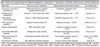
Clinical decision-making in depression still struggles with blurred diagnostic boundaries, heterogeneous treatment response, and nontrivial relapse risk - areas where artificial intelligence and machine learning have been proposed as pragmatic complements to clinical judgment, including in discussions previously hosted by the Brazilian Journal of Psychiatry.1 Recent work has shown that individualized response prediction is feasible in major depressive disorder through multimodal models2 and that attention to algorithmic fairness and transparent evaluation is indispensable for safe implementation in mental health.3 Here, we outline near-term opportunities for early detection and personalized treatment in depression using artificial intelligence/machine learning (Box 1), and we offer practical implementation guidance tailored to Brazil's Unified Health System (Sistema Único de Saúde).
| Application | Data source(s) & method(s) | Representative performance (metric) | Key reference(s) |
|---|---|---|---|
| Screening in primary & perinatal care | EHR-based features; gradient boosting/random forest | Postpartum depression AUC ?0.712 | Hochman et al.4 |
| Adolescent risk stratification | Surveys + school data; RF, SVMs | Depression/ideation AUC > 0.90 | Huang et al.5 |
| Personalized pharmacotherapy | Clinical + MRI multimodal model | Sertraline response AUC ~0.73 | Poirot et al.2 |
| TRD esketamine allocation | Baseline clinical profiles; RF | Response accuracy ~68.5% | Pettorruso et al.6 |
| Subtype differentiation | MRI connectivity; SVM | Unipolar vs bipolar accuracy ~87.5% | Zhang et al.7 |
| EEG-based differential diagnosis | Resting EEG; deep learning | MDD/bipolar/schizophrenia accuracy 90-100% | Ravan et al.8 |
| Digital phenotyping for monitoring | Smartphone/wearable signals; ML | Early relapse detection (proof-of-concept) | Zhang et al.,9 Metin et al.10 |
| Governance & fairness | Bias detection/correction pipelines | Improved parity across datasets | Dang et al.3 |
AUC = area under the curve; EEG = electroencephalography; EHR = electronic health record; MDD: major depressive disorder; ML = machine learning; MRI = magnetic resonance imaging; RF = random forest; SVM = support vector machine; TRD = treatment-resistant depression.
EARLY SCREENING AND RISK STRATIFICATION
Although early recognition improves prognosis, many cases remain undetected in primary care. In a nationwide cohort of perinatal patients, models trained on electronic health records predicted postpartum depression with an area under the receiver operating characteristic curve of approximately 0.712.4 Among adolescents, ensembles including random forests and support vector machines achieved areas under the curve > 0.90 for depression and suicidal ideation.5 As a rule of thumb, area under the curve values around 0.70 indicate moderate discrimination, whereas values =0.90 are excellent. However, clinical usefulness still depends on calibration, decision thresholds, and external validation. In Brazil's Unified Health System, these tools can facilitate triage, resulting in earlier and more consistent clinical assessment.
PERSONALIZED TREATMENT SELECTION
The trial-and-error cycle can be shortened when predictions guide initial choices. In treatment-resistant depression, a random-forest model predicted response to intranasal esketamine with roughly 68.5% accuracy over three months.6 Multimodal approaches combining symptoms, sociodemographics, and magnetic resonance imaging connectivity features predicted sertraline response with an area under the curve of approximately 0.73.2 While advanced imaging is not routine in the Unified Health System, the underlying logic of fusing diverse, routinely available data can be implemented using structured clinical and laboratory variables from electronic health records.
SUBTYPE DIFFERENTIATION WITH THERAPEUTIC IMPACT
Misclassifying bipolar depression as unipolar depression can precipitate antidepressant-induced switching, while the reverse may cause unnecessary exposure to mood stabilizers. Using functional connectivity, machine learning achieved an accuracy of about 87.5% in distinguishing unipolar from bipolar depression.7 Deep learning applied to resting-state electroencephalography reached 90-100% accuracy when separating major depressive disorder, bipolar disorder and schizophrenia.8 In Brazilian referral settings, electroencephalography is a cost-effective means of augmenting complex diagnostics; models should complement, not replace, longitudinal clinical assessment.
DIGITAL PHENOTYPING AND LONGITUDINAL MONITORING
Smartphones and wearables allow continuous capture of behavioral and physiological data (speech patterns, mobility, sleep architecture, heart-rate variability). Smartphones and wearables can passively capture speech patterns, mobility, and sleep architecture in real time, providing signals that precede full relapse and are amenable to machine learning analysis.9 Electroencephalography-based deep learning has also differentiated treatment-resistant depression from treatment-responsive depression with high accuracy, illustrating biomarker-guided monitoring.10 The goal is not surveillance, but earlier, patient-centered action.
IMPLEMENTATION PRIORITIES FOR BRAZIL
Three pillars should guide implementation: interpretability (e.g., Shapley additive explanations; feature importance; transparent decision paths), external validation across Brazil's diverse populations and care levels, and governance with fairness - including bias detection/correction and equity metrics in routine evaluation.3 Capacity-building through continuing education will ensure that artificial intelligence augments, rather than displaces, clinical expertise.
The first pillar is interpretability. In psychiatry, treatment choices and risk communication require reasoning that clinicians can investigate. Model-agnostic tools (e.g., Shapley additive explanations for local/global feature attribution), summaries of feature importance, and transparent decision paths (e.g., shallow trees, rule lists, or monotonic constraints for high-stakes triggers) make outputs auditable and support shared decision-making at the point of care.
The second is external validation for Brazil. Beyond internal cross-validation, we recommend multi-site testing across states and levels of care (primary, community, tertiary); temporal-split validation (train on earlier cohorts, test on later periods); calibration assessment (calibration plots/Brier score); and adherence to Transparent Reporting of a multivariable prediction model for Individual Prognosis or Diagnosis and the Prediction model Risk of Bias Assessment Tool. Where feasible, reserve a held-out hospital/municipality as a true external test to mitigate dataset shift.
The third is fairness and governance. Mitigate bias via representative sampling and reweighting, consider in-processing constraints (e.g., equalized odds) or post-processing calibration when disparities appear, and monitor fairness metrics (e.g., gaps in true positive rate/false positive rate) longitudinally. Use model cards/data sheets, ensure General Personal Data Protection Law-compliant de-identification, and favor privacy-preserving data sharing (e.g., federated learning) to enable reproducible, equitable artificial intelligence in the Unified Health System.
CONCLUSIONS
Evidence now supports feasible uses for artificial intelligence in early detection and personalized treatment for depression. With rigorous validation, transparency and equity, Brazil can translate these tools into better outcomes in real-world services.
 PDF
 Print
 Send this article by email
 How to cite this article
 Submit a comment
 Mendeley
 Pocket
 Share on Facebook
 Share on Twitter



