



FIGURES
| Note: How to cite this article: da Mota Gomes M, Najar LL, Nardi AE. Emil Kraepelin a century later: a reappraisal. Braz J Psychiatry. Epub 2026 Jan 7. 2026;48:e20254712. http://doi.org/10.47626/1516-4446-2025-4712 |
| Received: November 27 2025; Accepted: December 14 2025 |
One century after his death, Emil Wilhelm Magnus Georg Kraepelin (1856-1926) remains one of the most influential and contested figures in the history of psychiatry. His legacy has shaped diagnostic systems, research programs, and institutional structures worldwide. Contemporary historiography reveals a more complex and evolving thinker than the rigid "biological determinist" often evoked in modern debates.1,2 Recent historical analyses emphasize the diversity and evolution of his ideas, challenging long-standing assumptions about a uniformly biologicist framework.3 This reassessment is not merely an academic exercise - it is a necessary corrective to prevent oversimplified narratives that either idealize him as the uncontested father of modern psychiatry or condemn him solely as a precursor of reductionism and eugenics. Both extremes obscure a richer and more instructive legacy - one marked by scientific innovation, conceptual tension, and ethical ambiguity.
Kraepelin's intellectual formation occurred when psychology, neurology, and psychiatry were not yet distinct disciplines. His training under Wilhelm Wundt at Leipzig instilled a commitment to empirical investigation and experimental psychology, while his work with neurologist Wilhelm Erb reinforced a biological outlook.4 This scientific approach was solidified under Wundt, adopting the principle that mental processes must be measurable and objective. However, his dismissal of introspection and subjective experience as "unscientific" limited psychiatry's ability to understand patients' lived experiences of psychic suffering.
Kraepelin's early life in Neustrelitz indicates a formative duality: an artistically inclined but alcoholic father and a scientifically oriented older brother, a contrast that has been noted by biographers for its symbolic weight in shaping his intellectual trajectory.5 His father's gradual shift from opera performance to music teaching mirrors, in a sense, Kraepelin's own movement from youthful philosophical speculation to a lifelong commitment to empirical observation. This family context helps explain his enduring pursuit of a rigorously structured psychiatric nosology, one that privileged objectivity and classification even at the risk of marginalizing individual subjectivity. It also helps explain his later engagement with public health campaigns, particularly his outspoken activism against alcohol abuse, which he portrayed not only as a medical concern but as a social ill with profound implications for mental stability and collective well-being.6,7
As a clinician and academic working in Dorpat (now Tartu), Heidelberg, and later Munich, Kraepelin progressively shaped a diagnostic paradigm grounded in systematic observation, longitudinal clinical follow-up, and prognostic differentiation.5 He first articulated this outlook in the inaugural edition of his Kompendium der Psychiatrie (1883), a concise but pioneering handbook written in Dorpat that sought to systematize psychiatric knowledge on the basis of disease course and outcome. This early work would later expand into his much larger and more influential Psychiatrie: Ein Lehrbuch für Studierende und Ärzte, a comprehensive multi-edition textbook that became the cornerstone of his classificatory project. His years in Heidelberg (1886-1903) were decisive for the maturation of this program: there he refined sustained clinical observation, organized extensive case series, and advanced the hypothesis that psychiatric disorders could be better differentiated through their long-term trajectories than isolated symptomatic snapshots. This prognosis-centered framework - privileging disease course patterns over patients' subjective experiences - reached its first fully developed synthesis in the 6th edition of his Psychiatrie (1899), produced at the height of his tenure in Heidelberg.
Kraepelin's move to Munich in 1903 inaugurated a new developmental stage characterized by institutional expansion and the systematic incorporation of laboratory research into psychiatric practice. In Munich, he strengthened the psychiatric clinic, encouraged interdisciplinary scientific exchange, and deepened the biological underpinnings of his classificatory model. Across these two successive phases - methodological refinement in Heidelberg and institutional consolidation in Munich - Kraepelin elaborated the pivotal distinction between dementia praecox (later termed schizophrenia) and manic-depressive psychosis, a demarcation that would become foundational for twentieth-century psychiatric nosology.3,8 Yet the markedly pessimistic prognosis he associated with dementia praecox often operated as a self-fulfilling mechanism, intensifying stigmatization and constraining therapeutic perspectives.
Kraepelin's most celebrated contribution - this differentiation between dementia praecox and manic-depressive illness - fundamentally altered psychiatric reasoning.8 Even within his lifetime, he acknowledged exceptions, remissions, and atypical presentations. Toward the end of his career, he suggested that disease boundaries might be porous and that individual pathology could not be fully captured by nosological categories alone.3 These reflections complicate the narrative of Kraepelin as the architect of a rigid classificatory regime.
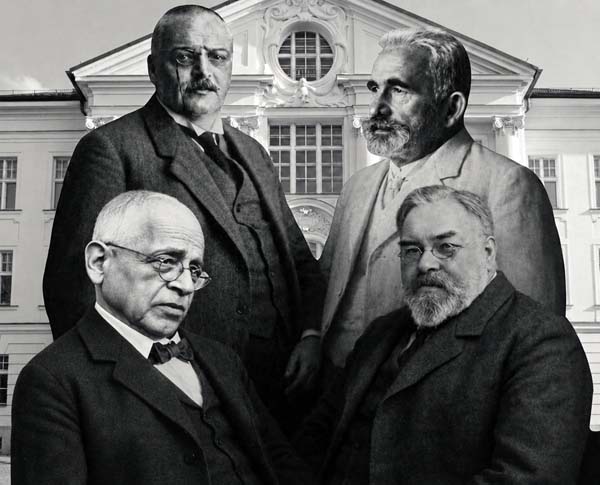
From 1903 to 1917, Kraepelin consolidated his influence by transforming the Munich Psychiatric Clinic into a leading center of the German Research Institute of Psychiatry (Figure 1). There, he pioneered a model of biological psychiatry that integrated laboratory science with clinical care.7 The establishment of the German Research Institute of Psychiatry in 1917 cemented psychiatry's turn toward biology and genetics. In his final publications (1915-1921), including the 8th edition of Psychiatry and Introduction to Clinical Psychiatry, he refined the description of schizophrenia into numerous subtypes and showed some openness to critics, such as Bleuler's concept of schizophrenia. Nevertheless, his system grew increasingly complex and maintained a rigid biological core.

Any responsible historical appraisal must acknowledge Kraepelin's involvement in eugenic discourse.6 He supported sterilization policies and expressed racially biased views consistent with the dominant scientific and political ideologies of his time, providing institutional backing for his interests in eugenics and racial hygiene. While his thought influenced later exclusionary policies, equating him directly with subsequent totalitarian abuses risks collapsing historical nuance into moral shorthand.2 His neglect of psychosocial factors and his eugenic views were later radicalized by the Nazi regime,6 and it is essential to understand this tension. It symbolizes the ethical risks inherent in any biomedical system that seeks certainty at the expense of subjectivity, context, and dignity.
Kraepelin's work laid the groundwork for the discovery and classification of neurodegenerative diseases, including Alzheimer's disease, as later documented by Hippius and Neundörfer.9
The legacy of the so-called "neo-Kraepelinian" movement has often privileged categorical certainty over clinical nuance, reinforcing rigid disease constructs. The historical record shows that this crystallization owed as much to post-war American psychiatry and institutional needs as to Kraepelin himself.1,10 Furthermore, although Kraepelin's ideas have traveled widely, their reception has been far from uniform. In Latin America, figures like Juliano Moreira, a Brazilian psychiatrist, selectively adopted his nosological framework while rejecting his racial and degenerative assumptions. In colonial settings, Kraepelinian concepts were appropriated to support administrative and political agendas, highlighting the global malleability - and potential ideological misuse - of his thought.11 This global circulation underscores that "Kraepelinian psychiatry" was never monolithic.
Kraepelin's legacy is not a doctrine to be accepted without question, nor is it a historical artifact to be abandoned. It is a call to critical engagement. His contributions - longitudinal observation, systematic classification, and the biological grounding of psychiatric disorders - remain foundational to modern diagnostic systems, including the DSM and ICD. Yet, his legacy also exposes the risks of overlooking sociocultural contexts, dismissing trauma, and ignoring the ethical consequences of scientific ambition. Kraepelin's passing in Munich on October 7, 1926, did not silence the debates he inspired: the balance between diagnostic rigor and humanistic care, and the responsibility to reconcile scientific progress with ethical vigilance.
To engage with Kraepelin today is to confront this complexity - to honor his scientific achievements while interrogating their limitations. By doing so, we can forge a psychiatry that is not only empirically robust but also historically informed, culturally sensitive, and ethically accountable.
 PDF
 Print
 Send this article by email
 How to cite this article
 Submit a comment
 Mendeley
 Pocket
 Share on Facebook
 Share on Twitter



