



ABSTRACT:
OBJECTIVE: Depression is highly prevalent in hemodialysis patients, but few studies have evaluated
older hemodialysis patients. The aim of this study was to evaluate the prevalence
of depression, its associated factors and its impact on quality of life in an older
population on hemodialysis.
METHODS: This was a cross-sectional study including 173 hemodialysis patients aged 60 years
or older in Recife, Brazil. Depression was evaluated using the Mini-International
Neuropsychiatric Interview when depressive symptoms (according to the 5-item Geriatric
Depression Scale) were present. Quality of life was assessed with the Control, Autonomy,
Self-realization and Pleasure Questionnaire (CASP-16). Data were also collected on
sociodemographic, laboratory (albumin, parathormone, hemoglobin, and phosphorus) and
dialysis (dialysis vintage, vascular access and hemodialysis adequacy) characteristics.
RESULTS: Depression was present in 22.5% of the sample. Depressed patients presented low CASP-16
quality of life scores (31.6 vs. 24.2, p < 0.001), twice the odds of albumin levels
< 3.8 g/dL (OR 2.36; 95%CI 1.10-5.07; p = 0.027) and higher parathormone levels (OR
1.06; 95%CI 1.00-1.13; p = 0.05).
CONCLUSION: Older hemodialysis patients have a high prevalence of depression. Depressed patients
presented poor quality of life, lower serum albumin and higher parathormone levels.
Teams dealing with older hemodialysis patients should include depression and quality
of life assessments in care protocols.
Keywords: Depression; aging; hemodialysis; quality of life.
| Received: November 20 2018; Accepted: May 3 2019 |
INTRODUCTION
In recent decades the global population has aged, and there has been an increase in the number of older people with chronic diseases, such as hypertension and diabetes mellitus (DM), which are the main risk factors for chronic kidney disease (CKD). Older people fall into the highest prevalence group for CKD, and in Brazil a third of dialysis patients are aged 65 years and older.1,2
In the hemodialysis (HD) population, depression is the main psychiatric disorder,3 with a varying prevalence according to the diagnostic tool used, ranging from 22.8% in standardized psychiatric interviews to 39.3% in screening tools for depressive symptoms.4 Few studies have specifically evaluated the prevalence of depression in older HD patients, and only one has assessed depression with a psychiatric interview. In that study, Balogun et al. assessed 62 elderly HD patients with the 15-item Geriatric Depression Scale (GDS-15) and the Beck Depression Inventory (BDI). All patients underwent a standard psychiatric interview (gold standard) to assess depression. Compared with the psychiatric interview, the accuracy of the GDS-15 and BDI, measured as the area under the curve, were 0.80 and 0.72, respectively.5 In the other studies, the sample sizes were generally small and the prevalence of depressive symptoms varied between 24.5 and 94.8%, depending on the study location and the diagnostic tool used.5-13
Depression is of both clinical and economic relevance, since it is associated with greater use of emergency services, hospitalization, and medical treatment costs, and it increases the risk of death by 45%.14 Another extremely significant issue related to depression is the deleterious impact it causes on the quality of life (QoL) of HD patients, which is even more relevant when it occurs in a population that often presents multiple comorbidities and a stressful routine involving high levels of physical and mental stress.15
Studies with larger sample sizes and greater methodological rigor, in which depression is diagnosed through the gold standard (standardized psychiatric interview), are lacking. Thus, the objective of the current study was to identify the prevalence of depression, its associated factors, and QoL in an older population on HD.
METHODS
Study design and participants
This cross-sectional study was carried out between February and October 2013 in Recife, the state capital of Pernambuco, Brazil, at the two clinics (Prontorim and Real Hospital Português) with the highest number of HD patients, which together account for around 700. The World Health Organization considers individuals at least 60 years of age as "older" people in developing countries, such as Brazil.16 Thus, patients aged 60 years or older who had been on HD for at least three months were included in this study. Patients on HD for less than 3 months and those with a lower level of consciousness (e.g., previous diagnosis of advanced dementia or neuropsychiatric sequelae of stroke) were excluded.
Patient data
To assess the sociodemographic and clinical data, the following variables were evaluated: marital status, schooling, family income, smoking, alcohol use, hypertension, DM, hospitalization during the previous year, previous kidney transplantation and previous depression.
Laboratory data were collected from medical records. For the analysis, we considered the mean levels of phosphorus, calcium, hemoglobin and albumin from the previous 3 months. However, for parathormone (PTH) levels, we considered the most recent available result from the previous six-month period, since, in accordance with Brazilian legislation at that time, it was collected every six months. Nutritional status was considered normal in patients with serum albumin levels = 3.8 g/dL. Information on dialysis treatment was also collected from medical records: cause of end-stage renal disease (ESRD), type of vascular access (definitive [arteriovenous fistula or arteriovenous graft] or temporary [hemodialysis catheter]), dialysis vintage (in months) and dialysis adequacy, assessed by Kt/V.
Instruments
Depression screening and diagnosis
Depressive symptoms were screened using the 5-item Geriatric Depression Scale.17 Screening was considered positive for scores of at least two points. The Mini-International Neuropsychiatric Interview (MINI) depression diagnostic module was applied to confirm a diagnosis of depression. The MINI is compatible with DSM-IV-TR criteria.18
Quality of life assessment
QoL was evaluated using the Portuguese version of the Control, Autonomy, Self-realization and Pleasure Questionnaire (CASP-16), an instrument based on the positive aspects of aging. It includes 16 easy-to-understand items across four domains: control (4 items), autonomy (5 items), self-realization (4 items) and pleasure (3 items). Scores are directly proportional to a better QoL and range from 0 (no QoL) to 48 (total satisfaction in all domains).19,20
Procedures
Patients were assessed and data were collected just before or during HD sessions. After obtaining informed consent, the 5-item Geriatric Depression Scale was applied to screen for depressive symptoms, and the CASP-16 was applied to assess QoL. In patients who screened positive for depressive symptoms, the MINI was applied to confirm the diagnosis by authors 1 (lead author), 4, and 5. The authors were specifically trained to apply the MINI at the Universidade de Pernambuco's Geriatric Depression Outpatient Clinic.
Statistical analysis
Statistical analyses were performed using Stata version 11®. Descriptive analysis of the sample was based on frequency distribution for categorical variables, mean standard deviation (SD) for quantitative variables, and median and interquartile range for non-normally distributed variables. Normality was verified with the Kolmogorov-Smirnov test. To determine associations between the socioeconomic characteristics, habits, and clinical and laboratory data, the Pearson chi-square test and Student's t-test were used for categorical and quantitative variables, respectively. Associations (odds ratio [OR]) were estimated using the respective confidence intervals. We performed a stepwise multivariate logistic regression by introducing variables whose statistical significance in bivariate analysis was below 20% (p < 0.2) to model factors related to depression. Variables with a statistical significance below 10% (p < 0.1) remained in the model.
Ethic statement
The project was approved by the Universidade de Pernambuco ethics committee (CAAE no. 08295313.6.0000.5207).
RESULTS
The sample included a total of 173 patients, whose characteristics are described in Table 1. The mean age of the participants was 68.7 years, and most were males (58.4%). Hypertension was present in 78% and DM in 44.5%, the main described causes of end-stage renal disease (ESRD), and 35.7% of those with hypertension and 16.7% of those with DM had ESRD. Depressive symptoms were present in 75 (43.3%) and depression in 39 (22.5%) patients. There was a trend towards a higher prevalence of depression amongst women, those with less schooling, and those without partners. There was no relation between current diagnosis of depression and a history of the condition.
| Depression | p-value | |||
|---|---|---|---|---|
| Characteristics | General sample | Yes | No | |
| Number of older adults | 173 | 39 (22.5) | 134 (77.5 ) | |
| Sociodemographic | ||||
| Age (years) | 68.7±6.9 | 68.7±6.5 | 68.6±7.0 | 0.935 |
| Gender | ||||
| Male | 101 (58.4) | 18 (17.8) | 83 (82.2) | - |
| Female | 72 (41.6) | 21 (29.2) | 51 (70.8) | 0.081 |
| Marital status | ||||
| Married/stable union | 105 (60.7) | 19 (18.1) | 86 (81.9) | - |
| Single/widowed/divorced | 68 (39.3) | 20 (29.4) | 48 (70.6) | 0.084 |
| Education (years) | ||||
| Illiterate | 33 (19.3) | 9 (27.3) | 24 (72.7) | - |
| 1 to 3 | 41 (24) | 11 (26.8) | 30 (73.2) | 0.966 |
| 4 to 7 | 66 (38.6) | 15 (22.7) | 51 (77.3) | 0.619 |
| 8 or more | 31 (18.1) | 3 (9.7) | 28 (90.3) | 0.083 |
| Family income* | ||||
| < 1 | 23 (14.4) | 5 (21.7) | 18 (78.3) | - |
| 1 to 5 | 130 (81.2) | 30 (23.1) | 100 (76.9) | 0.888 |
| > 5 | 7 (4.4) | 2 (28.6) | 5 (71.4) | 0.709 |
| Habits | ||||
| Smoking | ||||
| No | 137 (79.6) | 30 (21.9) | 107 (78.1) | - |
| Yes | 35 (20.4) | 8 (22.9) | 27 (77.1) | 0.903 |
| Alcohol use | ||||
| No | 129 (74.6) | 33 (25.6) | 96 (74.4) | - |
| Yes | 44 (25.4) | 6 (13.6) | 38 (86.4) | 0.108 |
| Clinical data | ||||
| Hypertension | ||||
| No | 38 (22) | 9 (23.7) | 29 (76.3) | - |
| Yes | 135 (78) | 30 (22.2) | 105 (77.8) | 0.849 |
| DM | ||||
| No | 96 (55.5) | 21 (21.9) | 75 (78.1) | - |
| Yes | 57 (44.5) | 18 (23.4) | 59 (76.6) | 0.814 |
| Hospitalization previous year | ||||
| No | 97 (56.1) | 21 (21.6) | 76 (78.4) | - |
| Yes | 76 (43.9) | 18 (23.7) | 58 (76.3) | 0.751 |
| Previous kidney transplantation | ||||
| No | 168 (97.1) | 38 (22.6) | 130 (77.4) | - |
| Yes | 5 (2.9) | 1 (20.0) | 4 (80.0) | 0.890 |
| Previous depression | ||||
| No | 135 (78.5) | 31 (23.0) | 104 (77.0) | - |
| Yes | 37 (21.5) | 8 (21.6) | 29 (78.4) | 0.863 |
| Laboratory data | ||||
| Phosphorus (mg/dL) | 4.68±1.27 | 4.79±1.17 | 4.65±1.30 | 0.533 |
| Calcium (mg/dL) | 8.72±0.75 | 8.88±0.92 | 8.67±0.70 | 0.137 |
| Albumin (g/dL) | 3.79±0.46 | 3.67±0.46 | 3.83±0.45 | 0.053 |
| Nutritional status | ||||
| Normal | 99 (58.2) | 17 (17.2) | 82 (82.8) | - |
| Malnutrition | 71 (41.8) | 21 (29.6) | 50 (70.4) | 0.058 |
| PTH (pg/dL), median (P25; P75) | 284.5 (132; 585) | 431 (108; 873) | 282 (132; 491) | 0.101 |
| Hemoglobin (g/dL) | 10.8±1.68 | 10.6±1.65 | 10.8±1.69 | 0.409 |
| Dialysis | ||||
| Vascular access type | ||||
| Temporary | 41 (23.8) | 12 (29.3) | 29 (70.7) | - |
| Definitive | 131 (76.2) | 27 (20.6) | 104 (79.4) | 0.250 |
| Dialysis vintage (months), median (P25; P75) | 34.5 (15; 72) | 30.5 (19; 69) | 35 (14; 80) | 0.891 |
| < 1 year | 30 (17.5) | 7 (23.3) | 23 (76.7) | - |
| = 1 year | 141 (82.5) | 31 (22.0) | 110 (78.0) | 0.872 |
| Kt/V | 1.61 | 1.64±0.49 | 1.61±0.39 | 0.714 |
| Quality of life | ||||
| CASP-16 | 29.9±8.8 | 24.2±8.3 | 31.6±8.3 | < 0.001 |
Data presented as n (%) or mean ± standard deviation, unless otherwise specified.
CASP-16 = Control, Autonomy, Self-realization and Pleasure Questionnaire; DM = diabetes mellitus; PTH = parathormone; SD = standard deviation.
* Brazilian law stipulates a minimum monthly salary, and for demographic purposes income is assessed in multiples of this minimum.
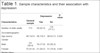
Patients with depression tended towards higher PTH levels (431 vs. 282 pg/dL, p = 0.101) and lower serum albumin levels (3.67 vs. 3.83 g/dL, p = 0.053) in the univariate analysis. No differences were observed between groups concerning other habits and clinical, laboratory and dialysis-related data (Table 1). Table 1 compares the mean CASP-16 scores. The mean score of the general sample was 29.9. Depressed patients had lower QoL scores than non-depressed patients (24.2 vs. 31.6, p < 0.001).
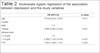
The variables age, sex, albumin and PTH levels were included in the multivariate logistic regression. In the final model, only albumin levels lower than 3.8 g/dL (OR 2.36; p = 0.027) and higher PTH levels (OR 1.063; p = 0.05) were associated with depression. It was observed that for each 100 pg/dL increase in PTH levels, there was a 6.3% greater chance of meeting the criteria for depression (Table 2).
| OR (95%CI) | p-value | |
|---|---|---|
| Age | 1.016 (0.916-1.073) | 0.571 |
| Gender | ||
| Male | 1.0 | - |
| Female | 2.066 (0.967-4.416) | 0.061 |
| Albumin level | ||
| = 3.8 g/dL | 1.0 | - |
| < 3.8 g/dL | 2.366 (1.102-5.079) | 0.027 |
| PTH* | 1.063 (1.000-1.131) | 0.050 |
95%CI = 95% confidence interval; OR = odds ratio; PTH = parathormone.
* Risk related to an increase of 100 pg/dL in PTH levels.
DISCUSSION
In this study of older Brazilian HD patients, it was observed that 43.3% and 22.5% of the patients presented with depressive symptoms and depression, respectively. The major factors associated with depression were hypoalbuminemia and higher PTH levels. Depressed patients also had lower QoL scores.
The prevalence of depression we observed was significantly higher than what has been previously reported for older community dwellers, which ranges from 4.7 to 18.2% in low-income countries.21 However, our results are similar to those of the general HD population (i.e., studies that did not exclusively focus on older patients): 39.3% for depressive symptoms and 22.8% for depression.4
Few studies, however, have specifically assessed depression in older HD patients, the largest of which included 162 patients.9 In most cases, only screening scales were applied, and a wide variation in the prevalence of depressive symptoms were found.4 Variations in geographic and sociocultural factors, as well as screening tool, could have contributed to the differences in prevalence. Only one study performed a psychiatric interview standardized with DSM-IV criteria: its assessment of 62 older dialysis patients found a depression prevalence of 30.6%.5
In the present sample, we observed that a history of depression and other sociodemographic characteristics were not associated with a diagnosis of depression, except for a trend towards a higher prevalence in females in the multivariate analysis. However, we observed relevant results regarding hypoalbuminemia, higher PTH levels and depression.
Hypoalbuminemia is a marker of poor prognosis in HD patients, being associated with depression, poor outcomes and higher mortality.22,23 In our study, we observed that patients with serum albumin levels < 3.8 g/dL were twice as likely to be depressed. Low levels of serum albumin may reflect malnutrition, which is a risk factor for depression in older people.24,25 Hypoalbuminemia is also found in the context of an inflammatory state, which has also been associated with depression and anxiety.26 However, in the BDI hypoalbuminemia has been correlated with a depressive status in HD patients, regardless of the levels of inflammatory markers such as C-peptide, high sensitive C-reactive protein, interleukin-6, and adiponectin.22
We demonstrated that for each 100 pg/dL increase in PTH levels, there was a 6.3% increase in the probability of depression. Similar results have been reported for ESRD patients needing parathyroidectomy, whose BDI scores correlated with PTH concentration.27 Two studies also reported higher PTH values in patients with symptoms of depression (a mean PTH of 217 vs. 75 pg/dL),28 although the mean patient ages were 55 and 49.1 years, respectively. Interestingly, older CKD patients have higher PTH levels than a younger population with matched estimated glomerular filtration rates,29 while in HD patients there is an inverse relationship between age and PTH levels.30 It remains unknown whether the depressive status of ESRD patients improves when hyperparathyroidism has been resolved.
The QoL scores we reported were almost 25% lower among depressed patients (the mean CASP-16 scores were 31.6 and 24.2 in non-depressed and depressed patients, respectively). These results are significantly lower than those described in Brazilian community-dwelling older people (mean score 37.6)31 and in older UK residents who were working beyond state pension age, whose mean CASP-19 scores were 42.2 out of a maximum of 57 points,32 which reflects QoL impairment in the HD population.
The QoL of older HD patients is frequently compromised, since they often present with symptoms such as pruritus, sexual dysfunction, physical limitations, and are routinely submitted to thrice-weekly sessions of hemodialysis, which are painful due to the punctures involved in vascular access and collection for laboratory exams. It is vital to identify conditions such as depression, which may contribute to a poorer QoL. This is a relevant issue, since a low QoL is related to a greater likelihood of death and hospitalization in older patients receiving HD.33
We consider that the main limitation of our study was its cross-sectional character, which does not allow causal relationships to be established among the associations. It is also important to consider that serial parathyroid measurements reflect parathyroid status better than isolated measurements. The main positive points were the sample size and the use of rigid criteria for diagnosing depression, which was based on a standardized interview and an assessment of data related to the clinical, laboratory and dialysis characteristics of these patients. These results may be useful to encourage teams dealing with older HD patients to include an assessment of mental health in the care protocols, particularly regarding depression, which greatly compromises the QoL of these patients.
Disclosure
The authors report no conflicts of interest.
 PDF
 Print
 Send this article by email
 How to cite this article
 Submit a comment
 Mendeley
 Pocket
 Share on Facebook
 Share on Twitter



